Donald Sherman wrote:
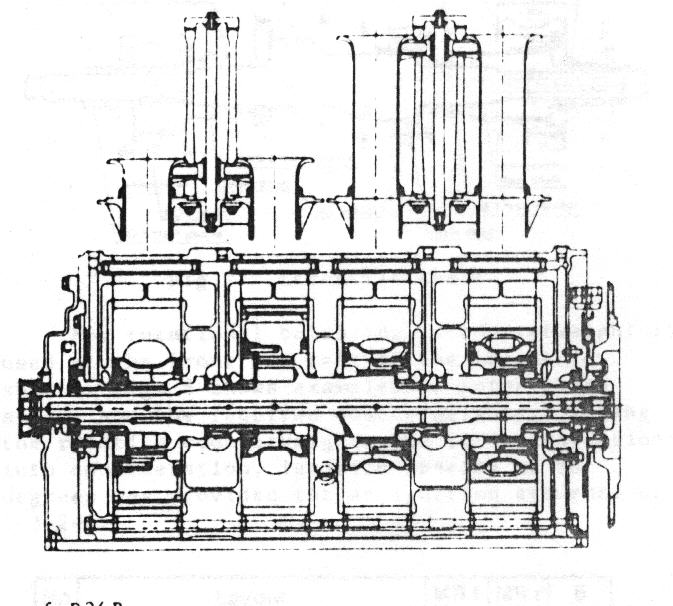
Two end plates are aluminum, two are iron.  The stress levels I'm refering
to have to do with the eccentric shaft coupling.  According to Jim, the
front extension goes out of true with the back piece as a result of
counterbalancer loads.
That drag racer makes ultra short duration runs.  That ain't how an
airplane gets off the ground to a safe altitude as you well know.
If you want a weight estimate, ask Jim instead of guessing.  Like all real
aircraft applications, a booster device is necessary to compensate for
altitude.  In the case of a 3-rotor, that device is heavy, bulky, and
expensive.  As in inconel alloy.  DS
Turbonetics sells Inconel turbines for $800. Try $110,000 for an Orenda
and $250,000 for a turbo prop if you want expensive.

Cast iron end housing weigh 35 pounds apeice. I have several sitting
right  here. Rotors weigh 9 pounds. Alloy end housings are probably half
the weight of cast iron.

I would guess that turbo weighs less than 50 pounds.
Most weigh 35 pounds.
Contrast this with the weight of the Orenda at 750 pounds.

The three rotor coupling is exactly the same as the four rotor coupling.

The cast iron rotor is a tremendous advantage when it comes to turbo
charging. You can't melt it unlike a piston. The same goes for the
steel liner in the rotor housing. The silcon nitride ceramic apex seals
show all signs of lasting for at least 3000 hours if not forever.

Face it Don, the turbo rotary has tremendous advantages for aircraft
use.


Paul Lamar            4rotshaf.jpg

The Aircraft Rotary Engine Newsletter.              Powered by Linux.

http://home.earthlink.net/~rotaryeng/            http://www.linux.org