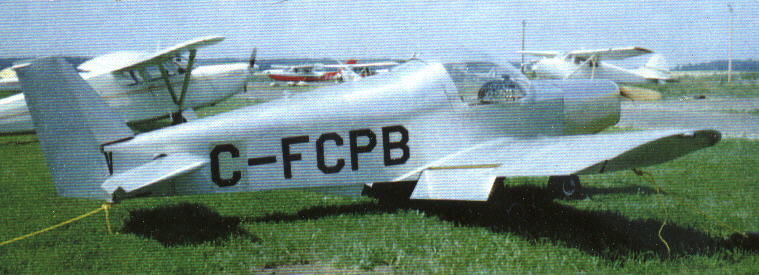
Yvon Cournoyer wrote:
Good morning ;
I offer some thoughts on the use of Mazda's oil metering pump.
By September 1993, after about 100 hours airtime, I had an in-flight partial
failure of the metering oil pump system. One of the four oil hoses melted
completely through, close to the metering pump, I believe from the heat of the
exhaust pipes. I found out only after landing. An oil drip alerted me. I replaced
the melted oil hose and installed an aluminum plate as a heat shield between the
exhaust pipes and the oil hoses.
But, I could no longer entirely trust those oil
hoses after that, so, at 150 hours air time, (June 1995), I removed the metering
oil pump, hoses and nozzles and plugged up all the holes. I never opened a rotary
engine, so the metering oil pump drive is still in place inside the engine. Since
that modification, the oil pressure gage shows a rapid small amplitude vibration
between idle and 2500 rpm. The vibration does not show at higher rpm. However,
the oil pressure is steady at 60 psi at high rpm and that is reassuring. Since
the removal of the metering oil pump system, I was using an oil to fuel ratio of
1:180, as recommanded by the Racing Beat people.
I now believe this ratio is
better adapted to high performance automotive use of the Rotary. During the
winter of 1997-98, I reviewed Tracy Crook's recommendations and other data and
decided to use a higher oil to fuel ratio of 1:125 in future. I believe this
latter ratio is better adapted to the lubrication requirements of aircraft engine
use. I have used snowmobile and motorcycle oil, but I prefer outboard motor two
stroke  injection oil. I use mogas whenever I can and the oil is mixed with the
gasoline before it is poured in the fuel tank.
May 99: As I learn more and more about the rotary engine, (especially on Paul
Lamar's rotary engine net), I wonder about the effect of the oil metering pump
lubrication, on the longevity of the engine in aircraft engine use.
Mazda's 1986 RX-7 workshop manual page 2-7 state the metering pump maximum
standard discharge of oil at 2000 rpm to be 132 cc/hr. My engines burn 30
litres/hr of fuel, from startup to shutdown, so I calculated that with the oil
metering pump, I was using an oil to fuel ratio of 1:227, on my first two
engines.
This is very far from the ratio of 1:128 advocated by Paul Lamar and all
and which I agree is entirely necessary if you are going to cruise the engine at
5000+rpm in aircraft use. Thinking back on my first two engines, which I ran with
only the metering pump and did not add oil in the fuel, I now wonder to what
extent that was instrumental in their failure.
If one were determined to  use the metering pump in aircraft use, I recommend
adding two stroke oil in the fuel as well.
With the use of fuel injection systems, which constantly recirculate the fuel, I
believe the oil gets well distributed thoughout  the whole of the fuel.
Thanks  Yvon. Sorry to hear about the early engine failures.
I greatly respect your perseverance  You are a true pioneer.
I am glad you discovered us.

If you have the time please let us know what happened to the
first two engines.

cornzeni.jpg

Paul Lamar

The Aircraft Rotary Engine Newsletter.              Powered by Linux.

http://home.earthlink.net/~rotaryeng/            http://www.linux.org