This has nothing to do with rotaries but I thought I would
share it with you anyway,

I was reading the KIS TR-4 construction manual this morning
getting ready to close out the vertical stabilizer
and it called for bonding the ribs in from one side
with bid in the conventional manner of forming fillets
with micro and then laying up tapes in the corners.
The ribs are cut out from 1/4 inch thick honeycomb
panels.

All well and good until it came time to bond on the other
side of the vert. stab. As I understood the KIS manual you
merely coated the edge of the 1/4 inch rib with flox
and stuck on the other side of the vert stab and hoped
for a good bond.

This obviously works as there are quite a few KIS's flying.
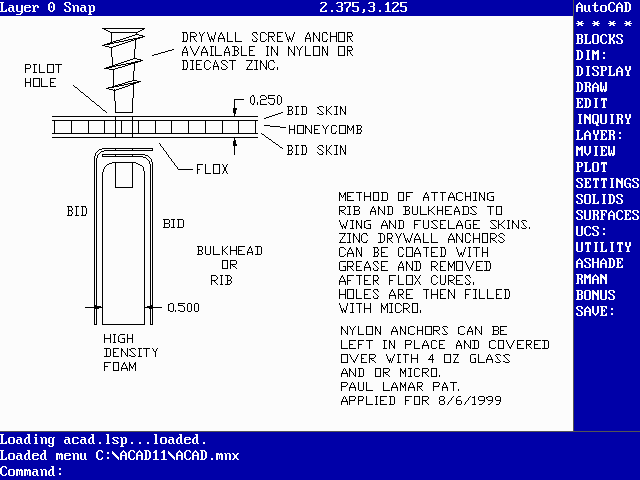
I thought however that I could come up with a better
method that would provide a larger bond area without
adding excess weight. This is the trick I came up with.

See the scale drawing below.  skin-rib.gif

You can buy these drywall anchores in bulk at 100 to the
box. They are very cheap particularly the nylon version.
The nylon versions are also extremely light weight.

As far as bulkheads in the fuselage are concerned there
would be no need to lie inside the fuselage and lay up
tape around the joints. Everything could be done from
the outside once the bulkhead was coated with flox
and positioned inside the skin. A light shining through
the honeycomb skin should show where to drill the pilot
holes and screw in the drywall anchors.

Don't be fooled by the "patent applied for". Its just one
of my sick jokes. Anybody is free to use this idea if they
so desire.

So Vance what do you think of this idea?

Paul Lamar

The Aircraft Rotary Engine Newsletter.              Powered by Linux.

http://home.earthlink.net/~rotaryeng/            http://www.linux.org