tcarrico wrote:
I know that the two cycle race guys pay a lot of money for trick port
timing.
We may be able to learn something there, but they operate in an RPM range
way
out of our league.  I thought Racing beat had templates for this?  I also
think
they sell the housings already ported.  That and lapped housings and you
have
pretty good start on an aircraft engine <grin>.

tc
There is another factor here too. The diameter of the pipe
changes its tuning. Going from 2 inch tubing to 1 5/8 dia
will lower the tuned RPM about 500 RPM keeping the runner
a constant length. The volumetric efficiency will not
change. If you increase the length without changing the
dia the tuned RPM will be lowered AND the volumetric
efficiency will increase at the same time. All this according
to Heisler's Advanced Engine Technology.

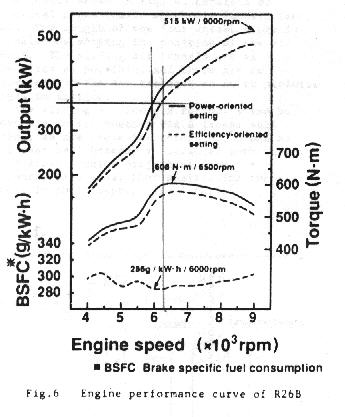
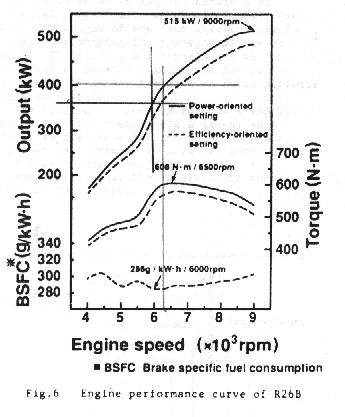
So the hot tip is use a large and long pipe. Mazda did so on
the normally aspirated four rotor Lemans winning PP engine and got
about 120 HP per rotor or 240 HP at 6000 RPM from a 13B. Not only
that the BSFC was at its lowest point throughout the range.
In other words an improvement of 30 HP is possible over
the Power Sport engine. Probably with lower fuel burn.

As I recall the pipe was about 24 inches long and two
inches in diameter.

See the lemanhp.jpg HP chart below.

Paul Lamar

The Aircraft Rotary Engine Newsletter.              Powered by Linux.

http://home.earthlink.net/~rotaryeng/            http://www.linux.org