Al Gietzen wrote:
Sven Talo wrote;

Gentlemen,

Yes, there is a number of Mazda's in the air and are flying
successfully, however each installation is different, the point I'm
trying to make is to make any progress with the Rotary as a reliable
aircraft powerplant some degree of standardization must be achieved.

Just because you asked:
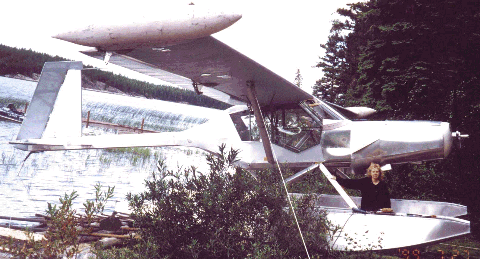
My latest creation (#8) was built during 1998-1999 and is the first
aircraft that I designed using a "automotive"power plant. She is a
turbocharged 1987 Mazda 13 B( 264 Hp) built and dyno tested by Paul Yaw.
A lot of external modifications was necessary to install her in the
airframe, I took a lot of photos,and logged all the necessary mod's with
the intent of compiling them into a manual showing how our installation
was done which you could copy to a degree, and thereby save some money
and eliminate a lot of re-work.

Here is some aircraft data:

Fuselage length                     29 ft
Wing span                           46 ft
Wing area                          208 sq.ft
Span of one flap                    32 ft
Flap/Wing span ratio                0.69
Flap/Wing chord ratio               0.33
Maximum wing loading                20 lbs/sq.ft
Empty weight on wheels               1550 lbs
Empty weight on 2970's               1975 lbs
Maximum take off mass                4160 lbs

The first taxi tests was done in late August, we had some cooling
problems with both the water and the oil temperatures  hitting the red
line (I 'm using Mazda Factory sender locations and limits) within a few
minutes, some changes to the ducting was all that was needed to solve
the problem.
The aircraft have not been flying as of this writing, we have done a lot
of high speed runs, but have not been able to get her up on the "step",
I believe the problem is the propeller,( we are using an IVO Magnum,
3-blades, electrically controlled pitch with a diameter of 76").
Run out of soft water in October, but we will continue testing next
summer.

Sven
Picture of Sven's float plane from Paul Yaw's web site.
The drawback to high gross weight is big floats.

Paul Lamar

The Aircraft Rotary Engine Newsletter.              Powered by Linux.

http://home.earthlink.net/~rotaryeng/            http://www.linux.org