-- Mike Wills wrote:
At 04:33 PM 12/20/1999 -0800, you wrote:
If the shape of the bottom of the duct is curved properly you
don't need guide vanes. Guide vanes generate aero losses all on their
own. Use a wind speed meter to check the uniform airflow through
the rad to be sure you have the right duct curve under the rad.
The duct should be bell shaped.
Paul Lamar
Paul,

  I went back and looked through my own personal archive and also looked
around on the ACRE site. I couldnt find any pictures/drawings depicting the
appropriate diffuser shape that you came up with a couple of months back.
Everything I found showed the wedge shaped duct with the sharp angle at the
rear. Do you have a drawing (preferably with some dimendions) of the duct
that you tested with the curved rear wall? If so could you post here and to
the ACRE site?

Thanks,

Mike Wills
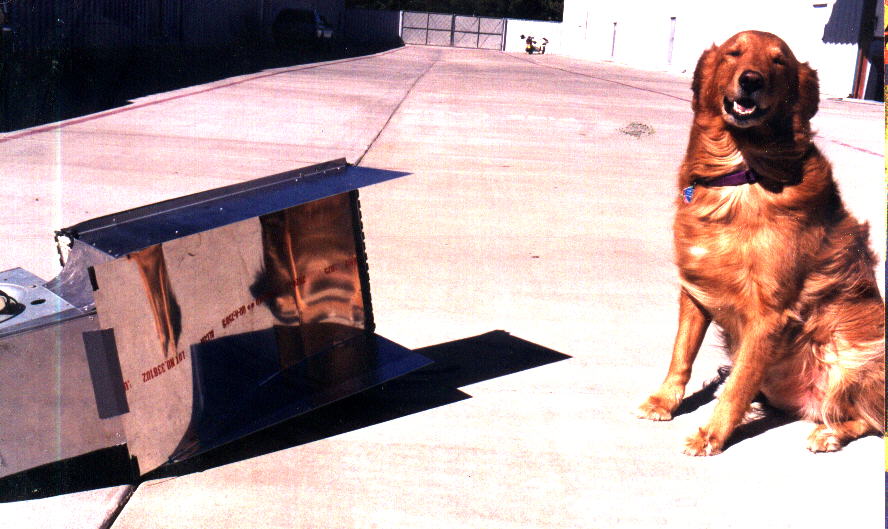
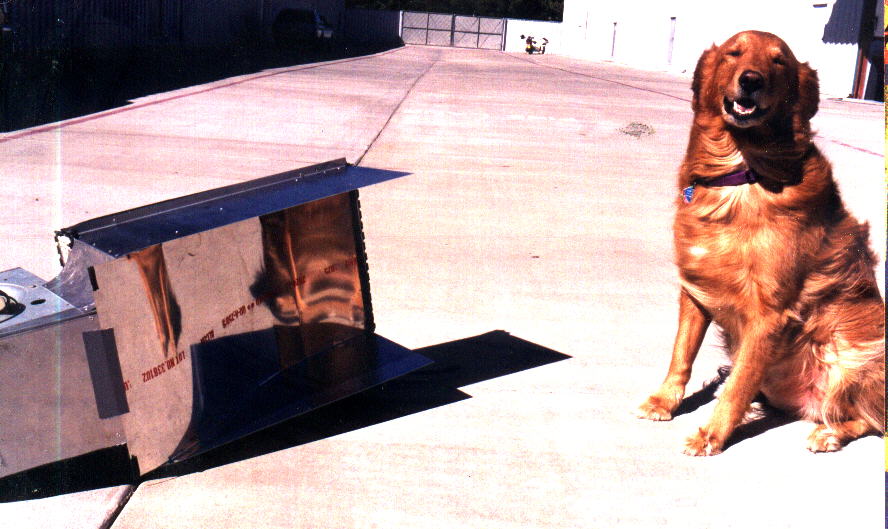
It is there on the Cozy I think but here is another picture
of the test rig. I did not do an extensive study for all angles
so you will have to check yours for uniform flow distribution.

Starting at the back end of the 20 inch long rad here are the numbers
for the curve. This is just an eye ball curve but it worked
way better than I expected..

L   Height
0.     0
3     .25
6     .62
9     1.3
12    2.5
15    4.1
18    6.2
21    7.9

Intake end.

BTW the tubes in this rad run the wrong way.
This is a side to side flow rad.
They run in the long direction.

The Mustang and most Toyota rads run the other way.
the flow runs up or down. The short way.

I noticed the flow was a wee bit stronger around
the center of the rad. I don't have my
flow sensor working yet so I will have better data
on this next week hopefully.

Also this is for a pressure difference down around
1/2 inch of water, and a flow rate of about
20 fps. I suspect this could change at higher
pressures and flow rates because of the velocity squared
factor in the resistance of the rad to air flow.

What I am trying to say is the pressure over the
front side of the rad might try to equalize more at
high flow rates. Pure speculation on my part.
We need to test for this possibility in a real airplane.

Paul Lamar

The Aircraft Rotary Engine Newsletter.              Powered by Linux.

http://home.earthlink.net/~rotaryeng/            http://www.linux.org