grobbins wrote:
Paul wrote:
Paul Lamar wrote:
This is not relevant to what we are talking about here. If you take this
same piece of steel and bolt stiff collars, two inches wide and three inches
high
all around the out side edge on both sides of the steel plate the situation
will
change drastically.
grobbins wrote:
It will. But the pressures (of a running engine) will be drastically different
too.

Paul Lamar wrote:

In what way will the pressures be different than 800 psi?
Assume a turbocharged rotary engine with an output of 300hp @ 6000 rpm. This equals
262.6 ft lbs of torque. Divided between 2 rotors, 131.3 ft/lbs per rotor. This
rotational torque comes thru an eccentric shaft offset of .591". The E-shaft has to
see at least 2666 lbs of mean pressure to produce this output thru the e-shaft
offset. The rotational motion of the rotor thru the phasing gear adds no power, as
the design is said to be able to run (didn't say it would start) without the gear.
The rotor is on a bearing, and supposedly no load on the gear, so pressure
difference from one area of the rotor housing to the other is the only driving
source. The rotor is 3.14 wide, but it's tough to get an effective number for the
length multiplier of the effective area due to the complex rotor motion.
The 2666 lbs is the mean pressure. AFTER all the friction, pumping, and thermal
losses. Peak pressure is much higher. I suspect the 800 lbs is a mean number.
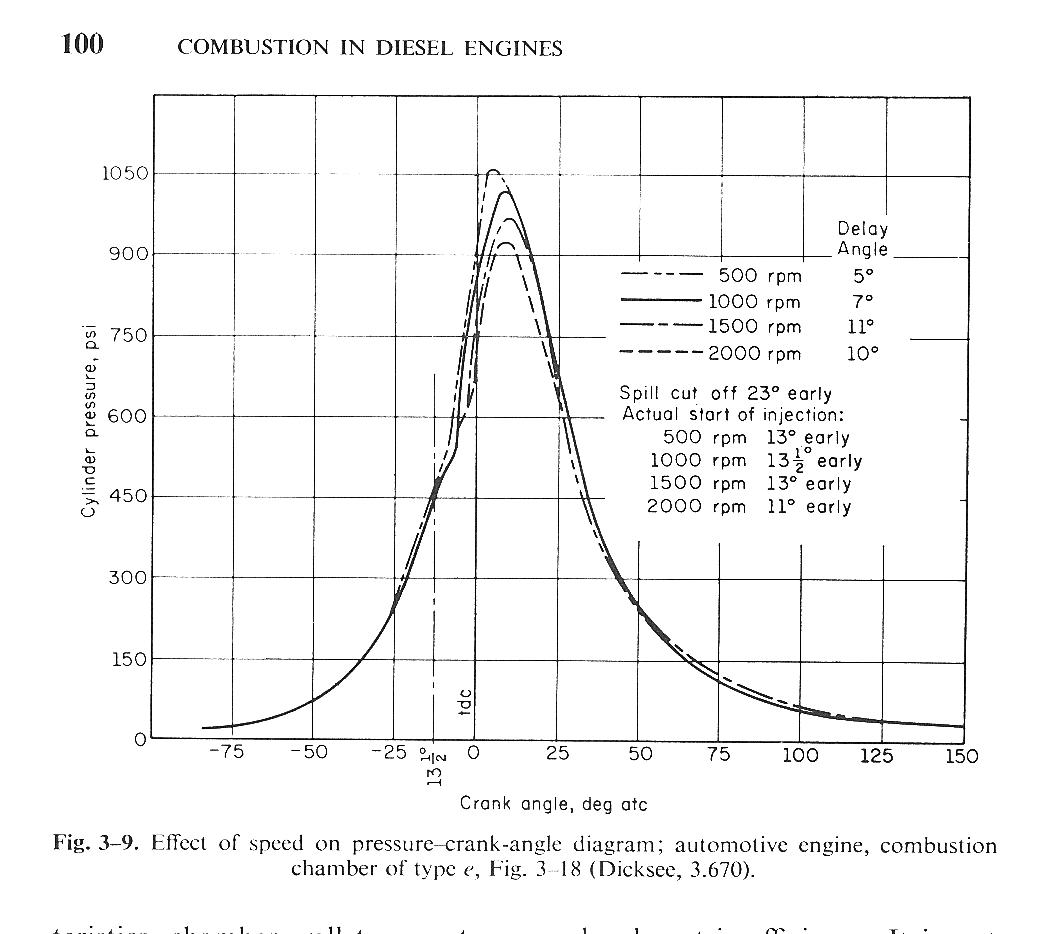
You are way off on this number. Even disel engines are less than 1000 PSI
peak and that drops off rapidly. The mean pressure is way less than that.

You are forgetting to divide by the area of the rotor face.

Paul Lamar

The Aircraft Rotary Engine Newsletter.              Powered by Linux.

http://home.earthlink.net/~rotaryeng/            http://www.linux.org