charles harbert wrote:
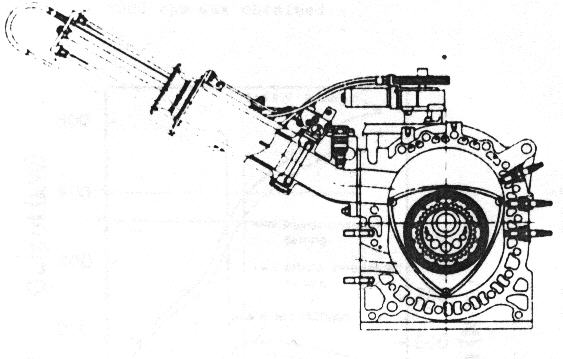
Paul, I suspect (guess) that the reason that they're  getting 280 hp from a NA
13B is a combination of a lot of things. I think they probably used a very big
computer to do all kinds of analysis to get that result, including optimized
flow modeling, finite element analysis, etc. Since hp is a function of rpm, the
ability to make the motor "breath" and "live" at 9,000 rpm is where they're
getting those numbers. The hp at 6,000 rpm is probably only 200.

The biggest problem from my experience is to get the airflow into and out of the
engine at high rpms. Because the rotary has a 2 cycle type (ported) induction
and exhaust, a computer analysis would be capable of designing the shape and
size of these ports. Before computers, this was a trial and error deal. Probably
the outboard (2 cycle) classes still do a lot of this. Most of the hp increase
probably is in the porting design (both intake and exhaust).

I think the lightening of the existing 13B rotors is not likely to produce any
significant  hp gains for an a/c application, because I don't think we'll want
to run our engines at higher rpms because of the other limitations
(induction/exhaust, bsfc, structural strength, etc.). If you were a drag racer,
or a road racer, where you needed quick throttle response and were willing to
take the engine to the max w/o fear of failure, then this would make excellent
sense. How about we figure out how to get these new engines into the US at a
decent price? I'd pay $5K for one.
Breathing is no problem at all with peripheral ports. You cut some two inch
holes in the rotor housings and have at it. There are a lot of
really bad intake manifolds out there for side intake ports with
really nasty right angle turns.

Mazda was getting 150 HP NA per rotor way back in the late 80's.
What is amazing is the new engine is getting 280 HP with side
intake and exhaust ports which are way less efficient than
peripheral ports. About the only real difference structurally is
the rotors are 14% lighter.

Since the gear phasing problem was solved the main limitation is the
RPM limit due to the weight of the rotor. Since this is a square law
function mv^2/r when you back off and run at 8000 RPM instead of 10,000 RPM
The bearing loads are proportional to the following:  10 X 10 = 100 but
8 X 8 is only 64 so the loads are about 64% as much. I think the Mazda
will run 8000 RPM indefinitely. After all this is not a silly piston engine.
You don't have rods, valves and pistons jerking up and down, coming to a
complete stop and starting up in the other direction twice per rev.

It does take an efficient cooling system sized in proportion to how
much HP you are getting. So a 300 HP cooling system would be a third
larger than a 200 HP cooling system.

I think we are handicapping ourselves running a 2.17:1 PSRU's.
The gyro guys with rotaries typically run 3:1 PSRU's with no problems.
The ACRE NL constant speed prop is going to help a whole lot.

Paul Lamar

The Aircraft Rotary Engine Newsletter.              Powered by Linux.

http://home.earthlink.net/~rotaryeng/            http://www.linux.org