Perry Mick wrote:
Bill and Paul:

Glad to see you are back from S & F, now we have to pick up
this great prop debate.  I've just completed Duct3 so I can make
room in the garage now to build this thing.  Here is an excerpt
from one of the last messages I sent previously:

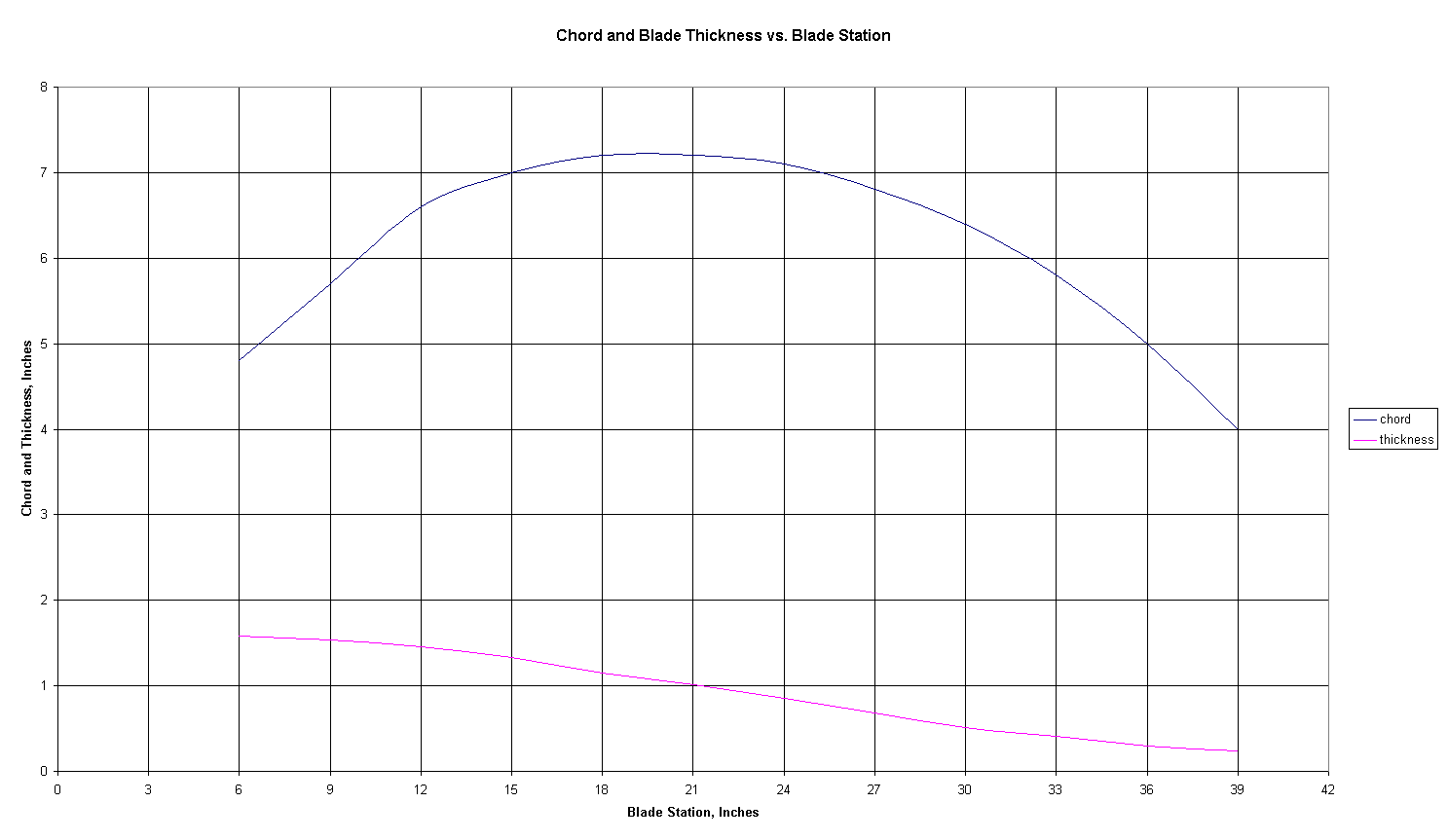
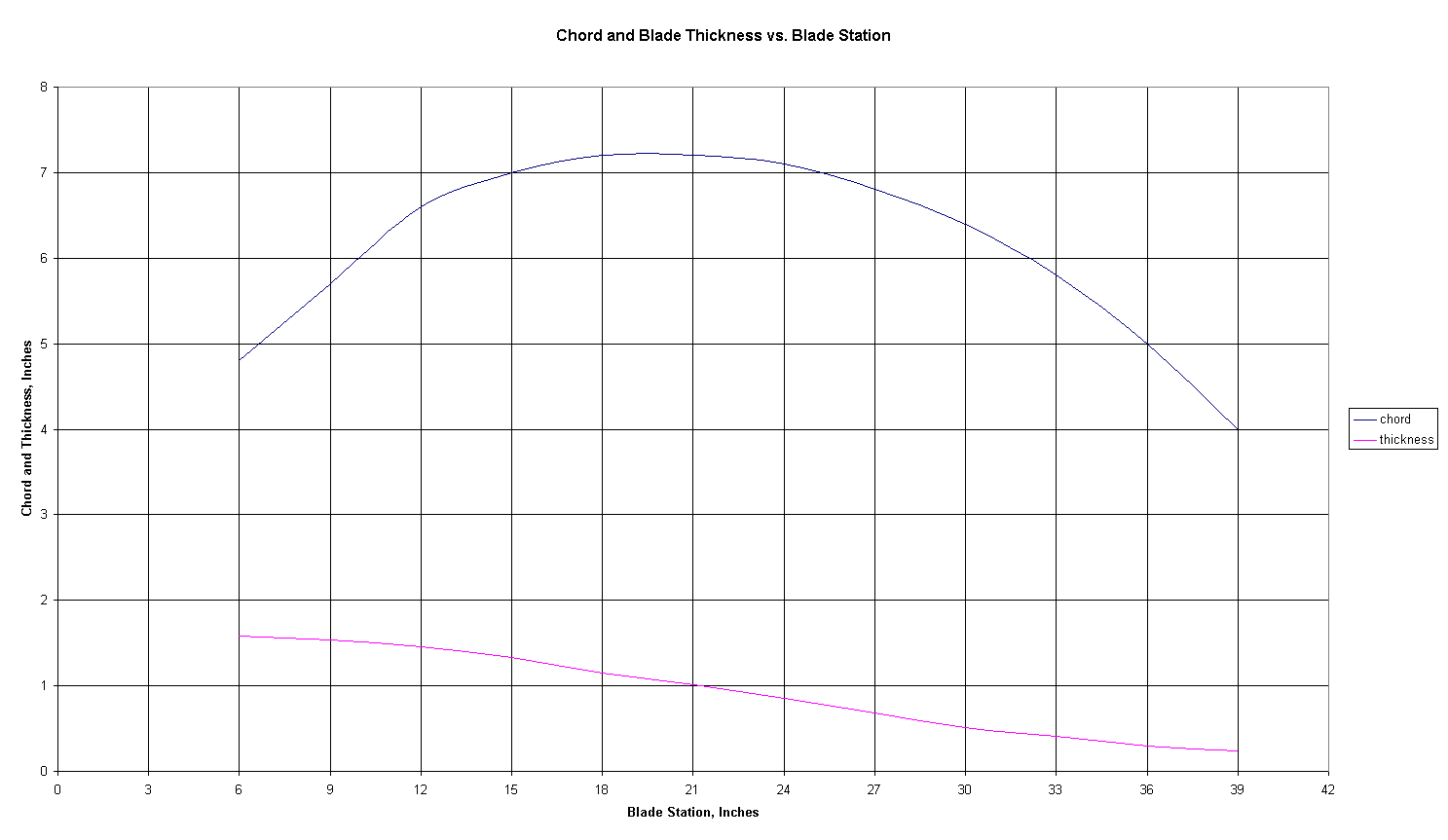
Here are the chord numbers for the Hartzel copy.  I used Bill's
airfoils with only the following modifications:  at station
30 changed from 16-209 to 16-208, at station 33 changed from
16-208 to 16-207.  This made the plot of blade thickness vs.
blade station smoother (took out a little bump).

r       c       af      th %    th in.
6       4.8     16-333  33      1.584
9       5.7     16-327  27      1.539
12      6.6     16-322  22      1.452
15      7       16-319  19      1.33
18      7.2     16-316  16      1.152
21      7.2     16-314  14      1.008
24      7.1     16-312  12      0.852
27      6.8     16-310  10      0.68
30      6.4     16-208  8       0.512
33      5.8     16-207  7       0.406
36      5       16-206  6       0.3
39      4       16-206  6       0.24

This is the prop I am prepared to make, unless there are objections.
These are the original airfoils proposed by Bill.  Bill mentioned there
may be a problem near the hub with these airfoils, but I believe it
would be trivial.  Also propose to not depitch the blade near the hub,
since as Bill said, this area only provides about 10% of the thrust,
if that, so if the local angle of attack is too high, the end effect
would still probably not be that great.  Also don't know how to do this
unless we were designing for a particular plane, which we aren't.  Also,
this is supposed to just be a test prop to prove out the homebuilt CS
prop concept, will probably never fly.  So we may learn some things from
this prop that we can use to make changes to the next one.

This prop will be built for a tractor configuration, with rotation
opposite
engine rotation.

--
Perry Mick
perrym@teleport.com
Duckt N7XR
http://www.ductedfan.com
Looks good to me Perry. I vote go for it.
Bill and I agree. There is very little to be gained anyway if the
prop design is half way decent to begin with.

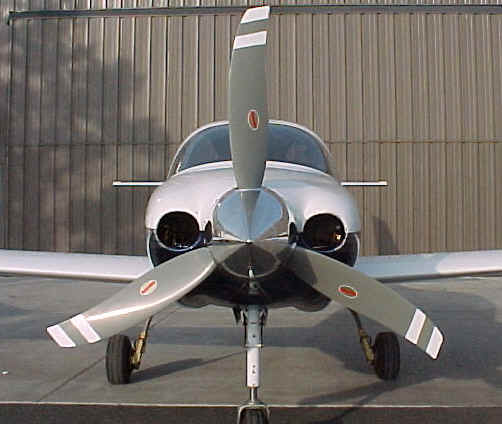
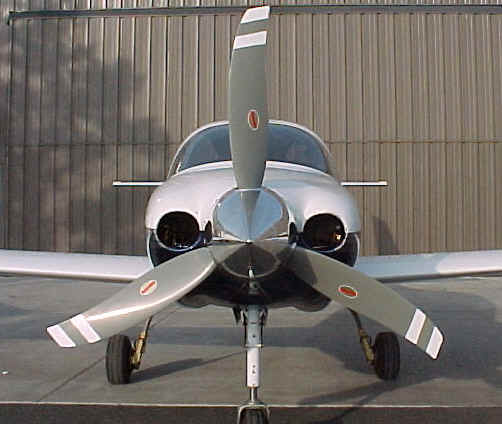
BTW Bill and I saw an experimental Beech  Baron at S&F
with the Lancair reno racer Hartzels on it.
Looks like Hartzel is doing some durability
testing in preparation for coming out
with a production version. The blades are REAL thin!

Paul Lamar

The Aircraft Rotary Engine Newsletter.              Powered by Linux.

http://home.earthlink.net/~rotaryeng/            http://www.linux.org