Hi Paul:

I agree with Jeff on this one. The heat flux is higher in a rotary near the
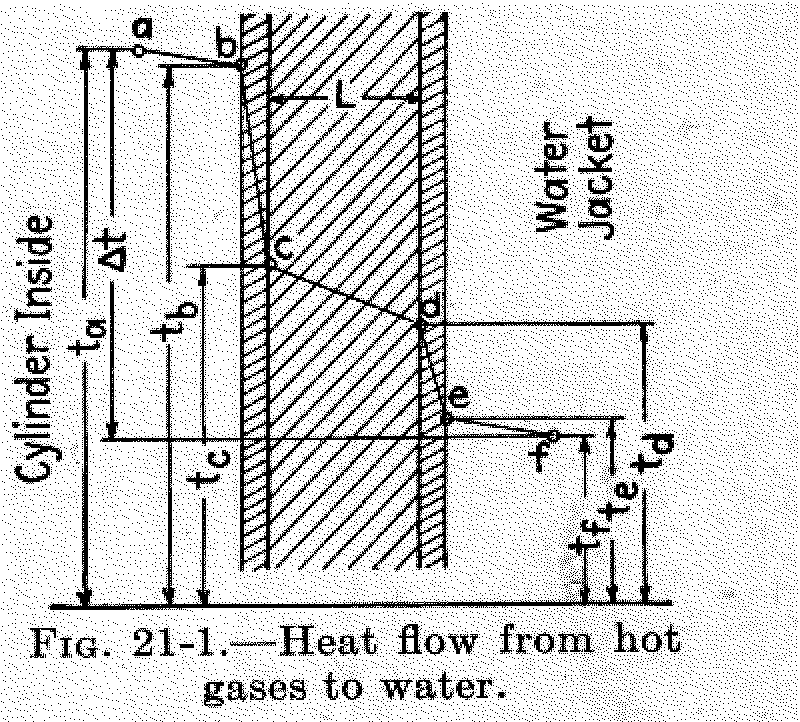
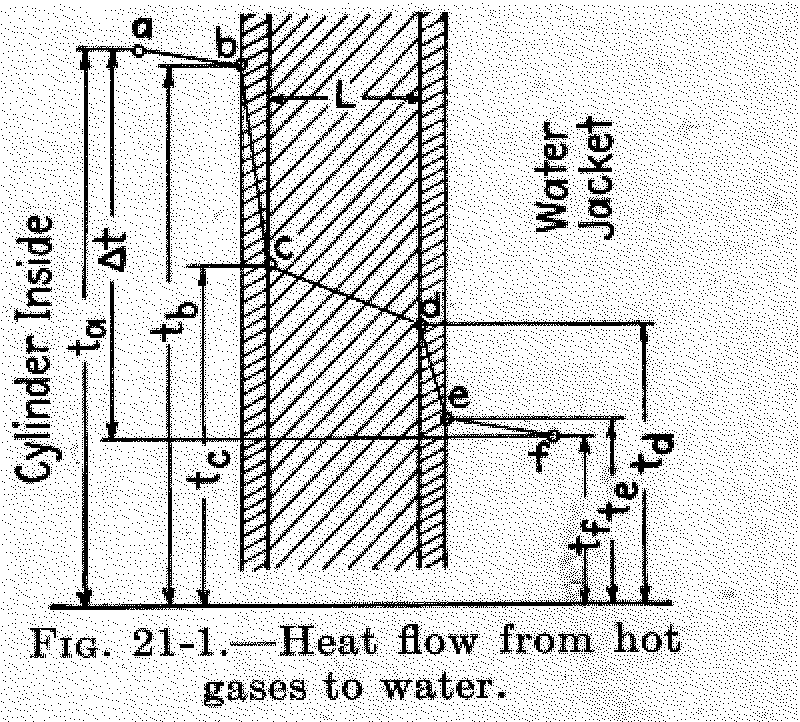
spark plug than in most any other engine. The heat flux through the cylinder
wall as shown is rather low (it would be higher in the cylinder head, I
think).

Jon Lauter
Rotary Power Marine Corporation
www.rotarymarine.com
I am sticking to my guns on this one gentlemen. Aluminum conductivity
is aluminum conductivity. 1200 (BTU/hr X sq-ft X inch X degree F)
more or less slight function of temperature.

If the gradient were on the order of 1000 degrees per inch as Jeff
suggest I think you would see more local crazing or heat checking in
aluminum cylinder heads caused by thermal cycling and you don't. As it
is they just crack in different places or the cylinder head comes completely
off the cylinder and blows out through the cowling:-)

Here is another chart from Internal Combustion Engines by Maleev.

In any event we could mimic Continental and place the thermocouples
within 0.050 inch of the inner wall and get comparable numbers
except for the fact we have a steel liner. That is still ten thou
short of Tracy's 0.040 steel liner.

We could also measure it by having two holes with a difference
of .1 inch to estimate the gradient. Color me curious.

BTW I still don't know at what temp the rotor housing takes a permanent
set when expanding against the necked down steel tension bolts.
I am sure it is a function of how fast you warm it up. Warm it up
slowly folks. No jumping in and taking off for a fast getaway.
Fortunately my 88 engine has the necked down bolts.

Paul Lamar

The Aircraft Rotary Engine Newsletter.              Powered by Linux.

http://home.earthlink.net/~rotaryeng/            http://www.linux.org