charles.harbert@fmglobal.com wrote:
Paul, I know you know, but Mazda thermostats are double acting in that when it
opens, it closes off the bypass that short circuits the radiator. Thus, if you
just remove the thermostat, the engine will severely overheat because the bypass
is open all the time. Many rotaries have failed because of this.

Because I've been told to never highly load a rotary unless the engine temp is
under 140 degF, I have a 160 degF thermostat. In a long descent from high
altitude in cold weather, you can easily get below 140. I know this is possible
from talking to people who fly rotaries and piston engines. If you were at a low
temp and had to do an emergency "go around", I wouldn't want the engine to fail
due to temperature distortion.

We've been discussing at length the rotary cooling system, and if there should
be a higher flow rate by using a larger water pump or eliminating the
thermostat.  The idea that this will significantly improve cooling, I think is
not proven, nor logical given all that we know from racing experience. If
anything, they slow down the pump at higher rpms (>7,000) (which reduces the
flow) in order to prevent pump cavitation. I think that if you want to ensure
adequate cooling-get a big enough radiator.
I think Jeff & Al just addressed the trade off with a bigger rad verses more
flow. A bigger rad implies more drag. If the pump is cavitating anything else
is preferable. The recent history of Mazda pumps as I have seen so far is
they are improving the pumps all the time. I don't think they would be doing
that unless it was necessary.

I assume people are going to use cowl flaps. I am not sure exactly how one
would go about that with a pusher. Perhaps a variable area intake duct.
As I recall we discussed this about a year ago. A NACA duct with a
movable floor comes to mind. I think that is what Klause uses.
What you wind up with is less drag and better MPG.
Of course all this must be planed before you install the engine.

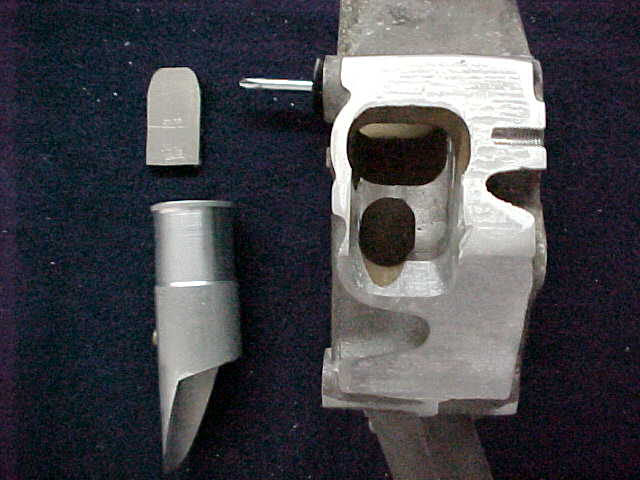
Here are the parts needed to improve the pump.

Paul Lamar

The Aircraft Rotary Engine Newsletter.              Powered by Linux.

http://home.earthlink.net/~rotaryeng/            http://www.linux.org