Lynn
Try the restrictor......you will like it.

The first and most important reason for using the restrictor was to eliminate
the need to machine a series of grooves in the rotor housing water jackets
behind the spark plug locations. This modification is still available at
Racing Beat. We use very cold NGK plugs ($25.00) each. To the extent possible
all of the heat absorbed by the plug is transferred into the water jacket
around the plug. Less heat is left inside the chamber to be absorbed by the
incoming charge and thus reduce the power output.
A hot plug lets the tip give up extra heat to the incoming charge.
snips....

In the overall scheme of things the temp of the plug tip will have little
to do with the heat transfer to the incoming charge. The surface area to volume
ratio of a rotary is such that most of the heat transfer is from the
400 degree rotor and rotor housing surface areas.

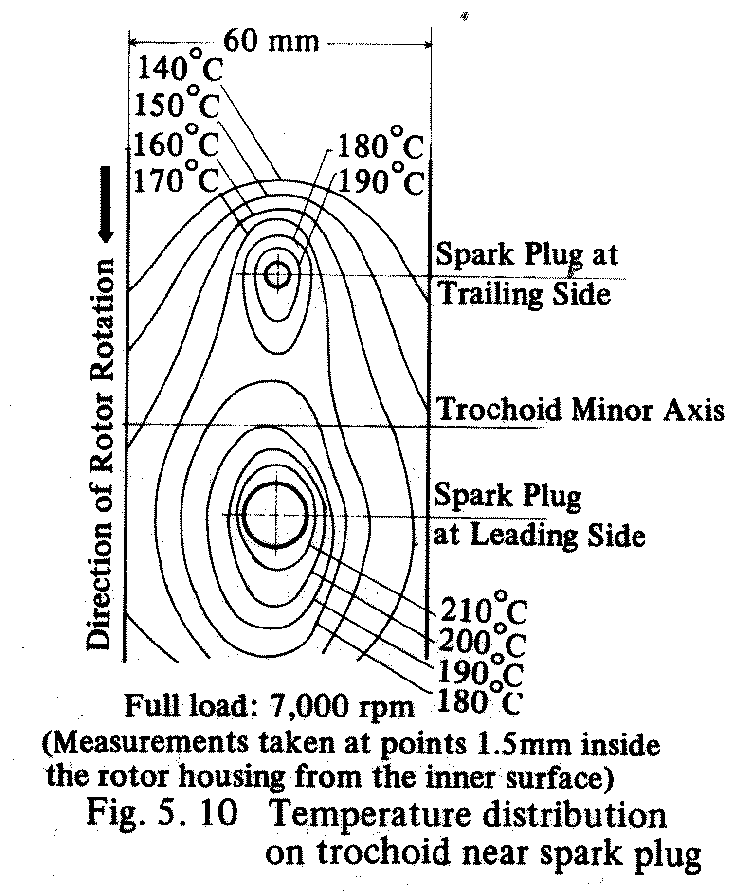
The chart is for sustained 7000 RPM wide open throttle. Racing is rarely a
sustained 7000 RPM wide open throttle. I have a similar chart for the surface
temperature of the rotor face. These charts are from Kenichi Yamamoto's
book "Rotary Engine" published by Mazda.

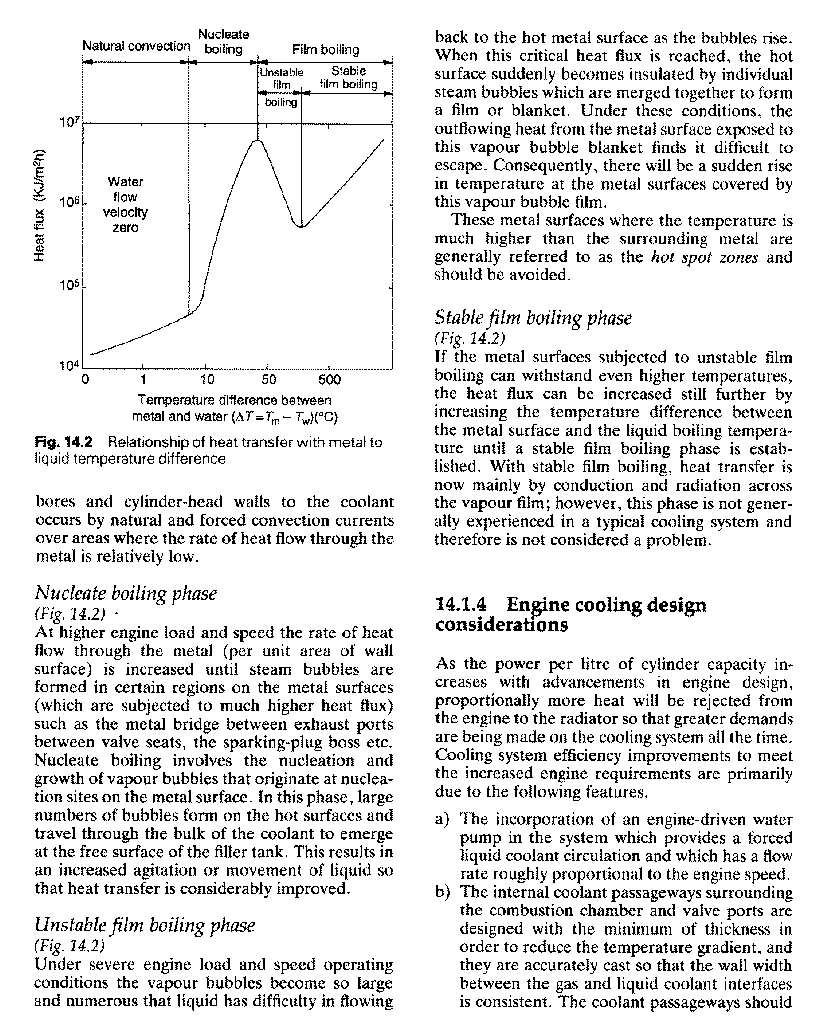
Local boiling must take place to transfer enough heat to the coolant and is
normally carried away by high coolant velocity in the rotor housing in the
vicinity of the spark plugs. The second chart is from Heinz Heisler's book
"Advanced Engine Technology" and illustrates this situation.

In an aircraft we are not concerned with the last 5% of max power
but rather with a long reliable engine life at sustained powers of 150 HP to
200 HP at 4500 RPM to 6500 RPM.

Paul Lamar

The Aircraft Rotary Engine Newsletter.              Powered by Linux.

http://home.earthlink.net/~rotaryeng/            http://www.linux.org