Lehanover wrote:
The disadvantage of having the pressure cap between the coolant loop and the recovery tank, is that coolant forced out of the loop because of expansion during warmup cannot be recovered during operation. The coolant in the recovery bottle of an automotive style system is unpressurized. Coolant cannot be recovered until the pressure inside the radiator drops below atmospheric (1 bar). Only then does coolant in the bottle return to the loop. This is why the stock Mazda recovery bottle is so effective. Should a leak develope, the Mazda bottle will return all available coolant to the coolant loop. This could be a very important feature some day.

The function of the separator is not dependant on its location in the coolant loop. It matters only that all of the coolant pass through it during operation. The diameter of the separator is larger than the lines into and out of it. This allows the coolant to slow while in the separator. This helps the air escape.The port into the separator is on a tangent, and causes the coolant to spin around the outside of the bottle. This causes the coolant to spend more time in the separator. This helps the air escape. There is a large space above the inflow port that can accomodate a large amount of air that might try to get passed the separator. This helps the air escape. Lola likes it. Cosworth likes it. Carol Smith likes it. Lynn E Hanover.
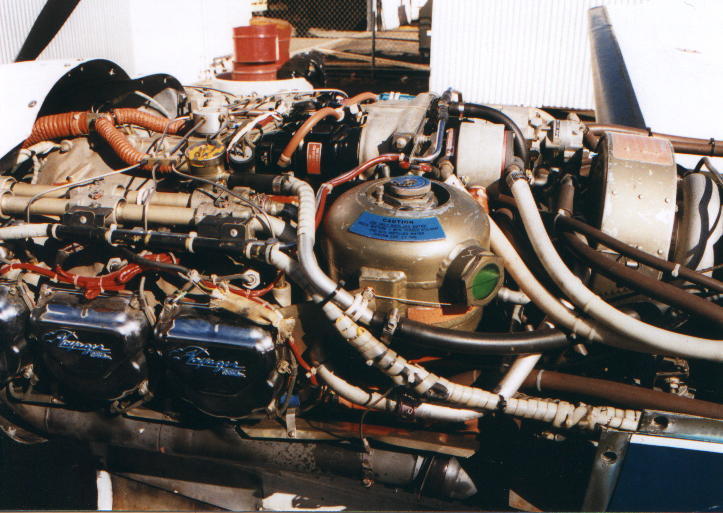
And I think Continental likes it. In the Continental version it looks to be
about five gallons and made to resist 50 psi or so. It has neat sight glasses
on its side and looks very heavy indeed. If you have the room for one of these
go for it. The beauty of the stock Mazda system is it is light weight, simple
and cheap.

Paul Lamar

The Aircraft Rotary Engine Newsletter.              Powered by Linux.

http://home.earthlink.net/~rotaryeng/            http://www.linux.org