The rotary has an amazing potential for generating continuous
HP in a very small package. The drag racers prove that
every day with up to 800 HP out of a 200 pound turbo two rotor.
Our challenge is developing a compact cooling system to
go along with the rotary and allow it to achieve its potential
in continuous high HP aircraft use.

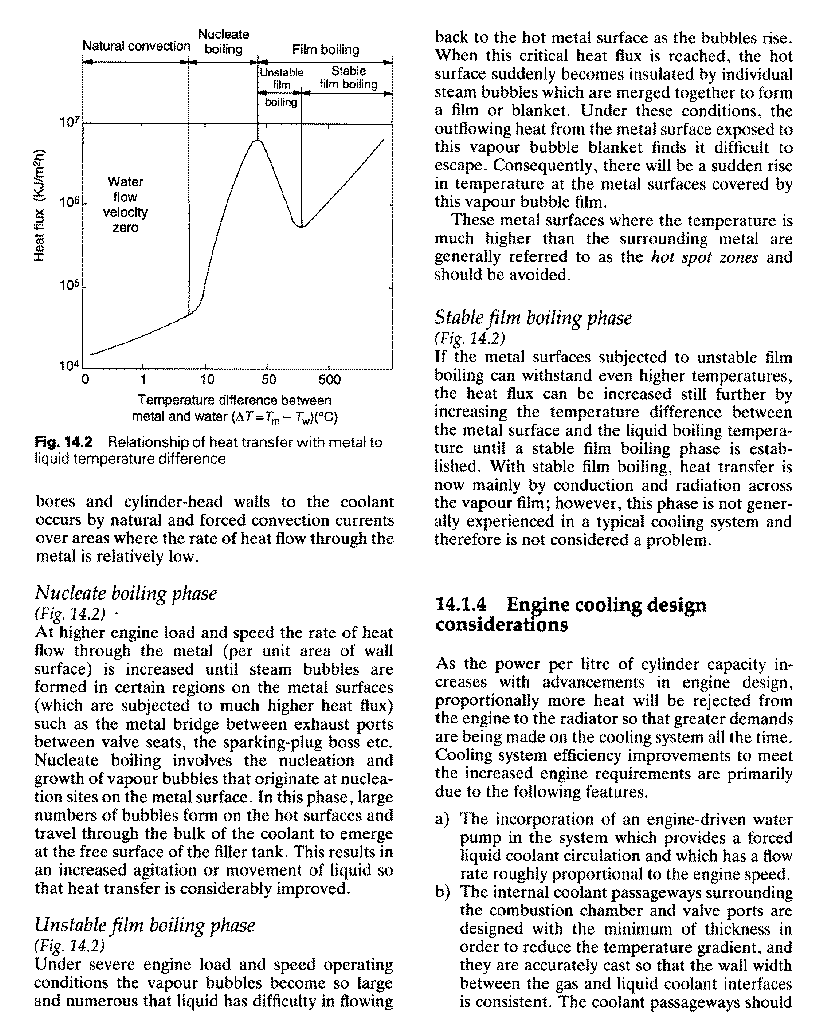
At the latest IMechE London cooling symposium in 1995 in a paper
(C543/002/99, Nucleate Boiling Investigations Using Simulated
Engine Cooling Passages) they set up a short pipe, applied heat,
pumped coolant through it and installed thermocouples to monitor
temperatures. They measured the coolant temp into the pipe, the
flow rate and the coolant temp out of the pipe. They used a 50/50
mix of water and glycol.

This gave me an idea. Why not use an actual Mazda rotor housing
and set up a similar test rig to check the best rate of coolant
flow past the spark plug area. An acetylene torch could be placed
to maintain a 500 degree temperature in the metal near the
spark plug and a variable source of water flow provided by
one of those highly hyped electric water pumps driven by a DC
motor. All you need do is change the voltage across the
pump and the speed and volume flow of the pump will change.
The temp in the housing near the plug and combustion chamber can
be monitored by one thermocouple.

We will need to feed the coolant into a small rad with another
DC motor driven fan  controlling the amount of cooling air hence
the temperature coming out of the rad going into the Mazda
rotor housing. Measuring both the temp of coolant into the rotor
housing and out of the rotor housing will tell us the heat
transfer rate to the coolant.

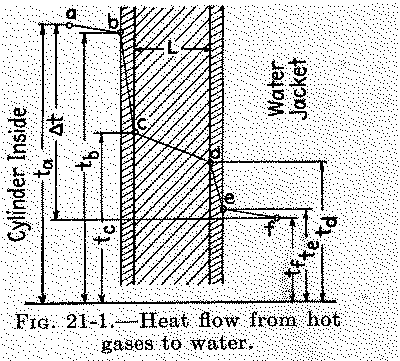
Now we could investigate changes to the water jacket to improve
heat transfer such as the Racing Beat rib modifications.

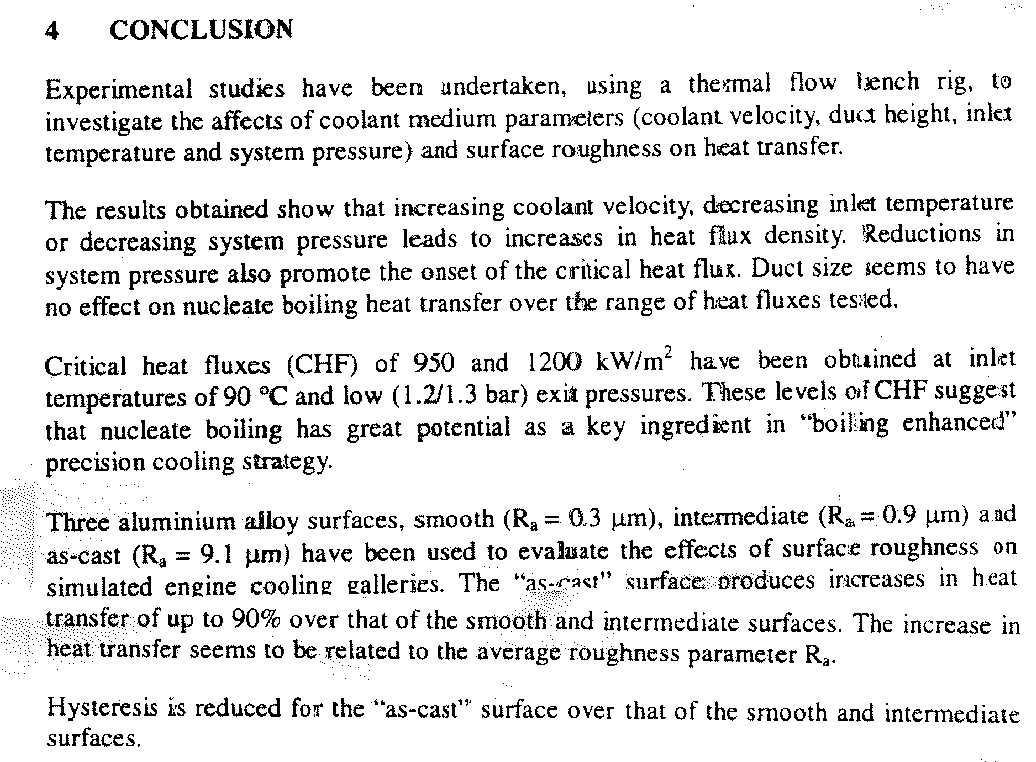
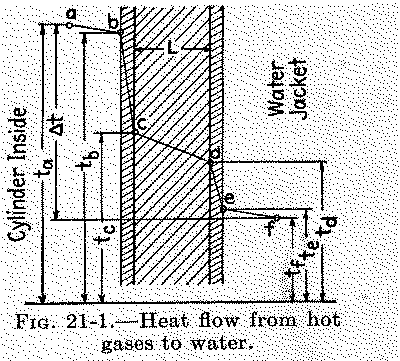
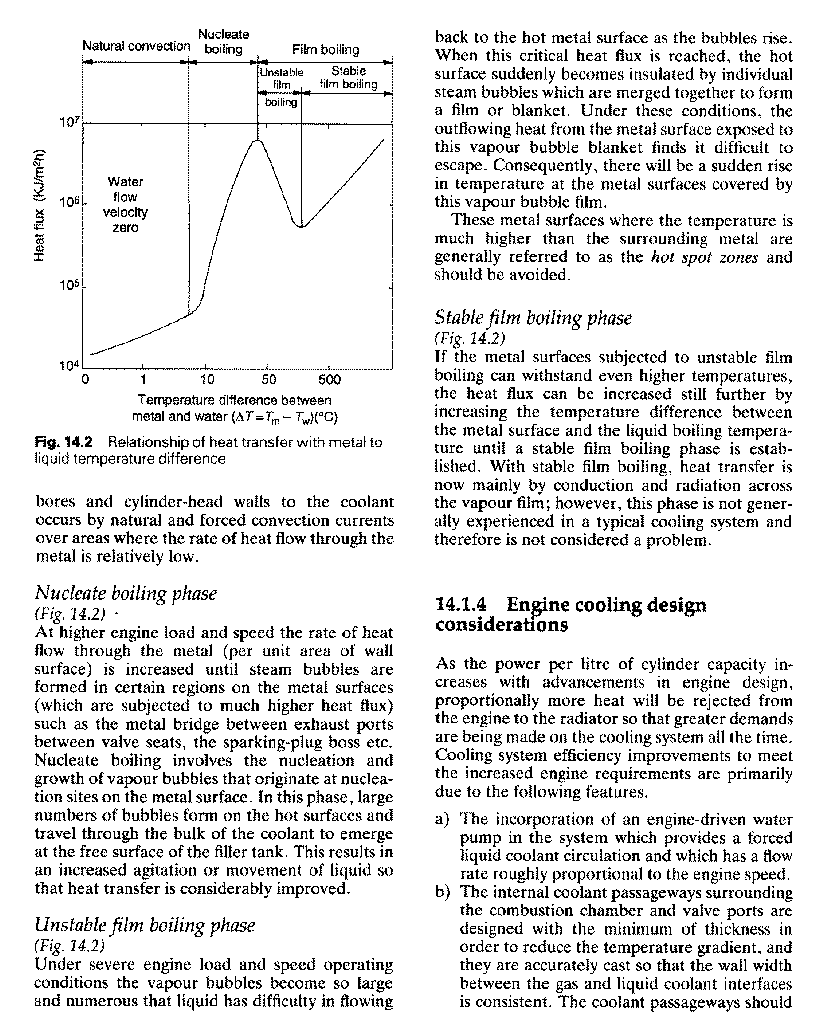
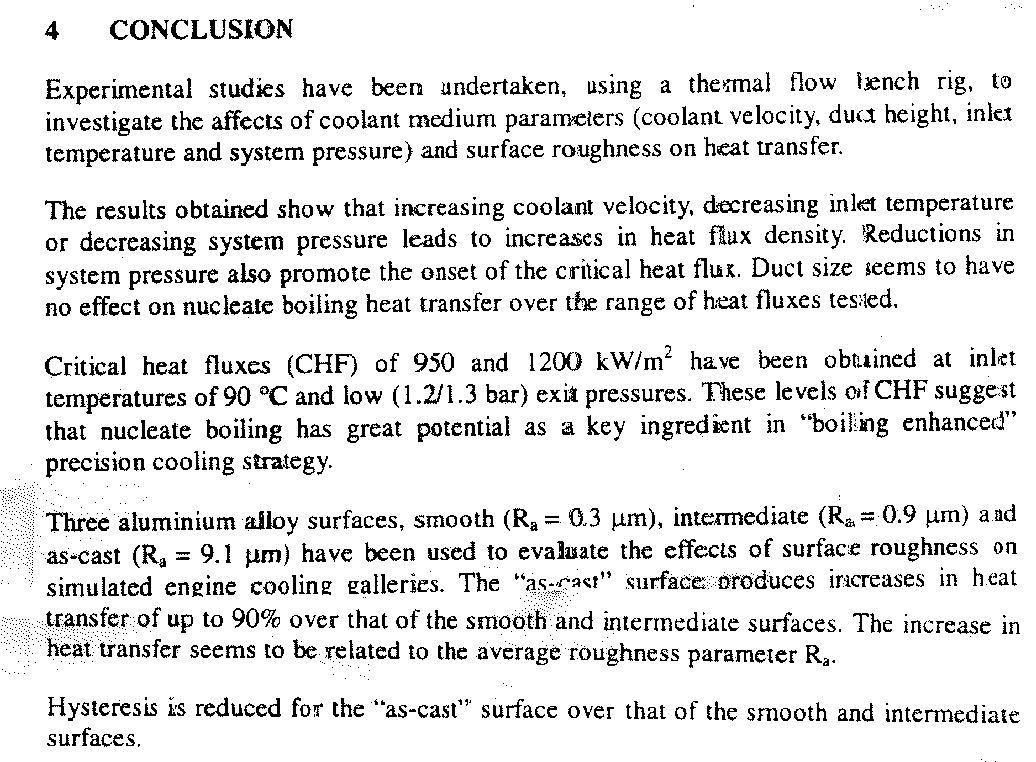
Here are the conclusions from the above paper and some other
background info.

BTW The kW per square meter is a good measurement of the
effectiveness of a heat transfer surface. One HP is
.746 kW. Since we know the heat balance for a rotary engine
we can almost estimate from this data just how many continuous
HP we can get out of a rotary before melt down.

Also BTW 90 C is 194 F and  1.2 bar to 1.3 bar are 17 to 19 psi.

Paul Lamar

The Aircraft Rotary Engine Newsletter.              Powered by Linux.

http://home.earthlink.net/~rotaryeng/            http://www.linux.org