Ken Powell wrote:
Leon,
I know that I do not have the experience with rotary engines that you
have; however, I have disassembled 4 13b's.  All came from cars with
less than 125,000 miles and NO body damage.  These cars were in the
junk yard because the engines were DEAD.  Upon disassembly, 3 of
these engines had apex seals that were obviously stuck - I can not
say for certain that rust was not involved but if so, I could not see
it.  Carbon appeared to be the cause.  The forth engine had broken an
apex seal but was in pretty good shape otherwise.  I might add that
what little oil left in the pan (the yard drains all liquids) was
filthy.  Without a doubt, filty mineral oil will ruin an oil injected
rotary engine.  I maitain that for aircraft use a good grade of
marine 2 stroke oil should be mixed with the gas.  It can't hurt and
will almost certainly help.  Besides, there is less to go wrong - no
oil pump or oil lines.
Ken Powell
Mark Steitle wrote:
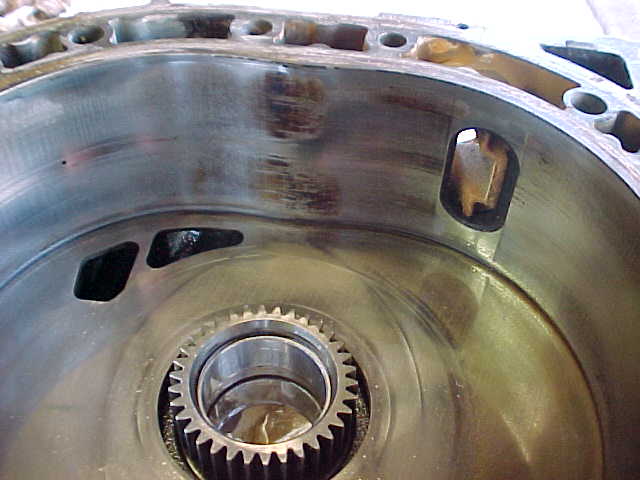
Reply to: RE: Injecting Sump Oil What made my mind up for me was the wear pattern resulting from the oil injectors injecting oil at the center of the rotor housing. If my memory serves me correctly (sometimes doubtful), someone stated earlier that higher wear can be seen along the outer edges of the housings as a result of less-than-optimal lubrication. By pre-mixing, you ensure an even distribution of the oil across the full width of the apex seals. That's enough reason for me to go through the small extra trouble of mixing 2-stroke with the fuel.
This is not the best picture for this but I have another one around someplace
showing more of the trochoid surface down stream from the oil injector
hole.

Paul Lamar


The AirCraft Rotary Engine NewsLetter.              Powered by Linux.

http://home.earthlink.net/~rotaryeng/            http://www.linux.org