Mark Steitle wrote:
Paul,
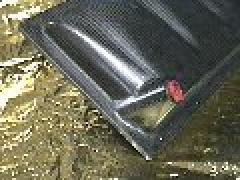
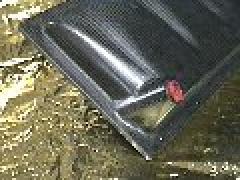
I am considering fabricating a carbon-fiber oil pan for my 20b in order to save a few pounds, but I'm concerned about the temperature range of carbon-fiber.  Is there enough temp. safety margin, or would aluminum be a better choice?  I've read about carbon gearboxes on race cars, but the temps may be much lower than in rotaries. (Attached jpg is for a LS1).
Here you go folks 330 degree F epoxy.


Hunter GA (Gary) at MSXSCC wrote:
Paul wrote:
Do you have any recommendations for a high temp epoxy
that would work on an intake manifold. Hand lay up
over carved blue styrofoam.... possible low temp oven cure
after initial room temp cure.
Dear Paul Lamar

Yes,  I suggest EPON Resin 862 cured with a chemical compound called
diaminocyclohexane, a.k.a.  DCH or DCH-99.    Both are available in quart
and possibly pint quantities from Miller Stephenson Chemical Co. in Danbury,
CT.  1-800-992-2424. '

The mix ratio is 17 / 100 by weight, i.e.,  17 parts DCH  per 100 parts EPON
862.   Be accurate, use a digital scale if you have one.   If not, check out
http://www.balances.com/index.html  and shop for something with at least 1
gram accuracy.   I have this model here  -
http://www.balances.com/gs2001.html   or look at the Ohaus LS2000
http://www.balances.com/ls.html.

Word of caution, when you receive the resin. It most probably will be
crystallized - do not use it in that condition.   You know the drill.
Submerge the sealed can of resin in a bucket of hot tap water.  Replenish
the hot water from time to time to reheat it.  After about 2 hrs. or so, the
resin should be fully reconstituted to a liquid state.  Allow to cool to RT
before using.

DCH is a pretty powerful corrosive with a rather strong ammonia smell.
Keep it off of you, don't sniff the container and wear gloves.  It will have
a gel time in a 100 gram mass of about  50-60 minutes.   In a laminate it
will take longer.   Do not use it below 70F.  Preferably 75F.     After the
lay-up has cured a day or so, you can begin to post cure it.    Start out at
about 120F gradually increasing to 170F-180F over period of a couple hrs.
Finally, hold the temperature at 180F for 16 hrs.    Allow to cool slowly in
the oven.

The cured product will have a glass transition temperature between 300 and
330F.

Any questions, call me 1-800-832-3766

Gary
The AirCraft Rotary Engine NewsLetter.              Powered by Linux.

http://home.earthlink.net/~rotaryeng/            http://www.linux.org