This airplane is a BIG project an airframe built from plans and two power plants. The airframe is unmodified from plans, however The power plants are anything but stock. I consider lycoming and Continental engines to be antiquated and too expensive. IF only regs were different development of a good power plant could occur. The auto industry was an example of lack of development. A number of years ago the major American auto manufactures almost died in face of foreign competition. They changed their designs and look at them now. The only small airframe development is coming out of the
experimental aircraft field. Some of the work I did was to use good ideas in other fields to improve aircraft. The two engines make the endeavor safer. Below are some of the lessons I learned in the development process. The process is still on going because the aircraft has not flown as of present.

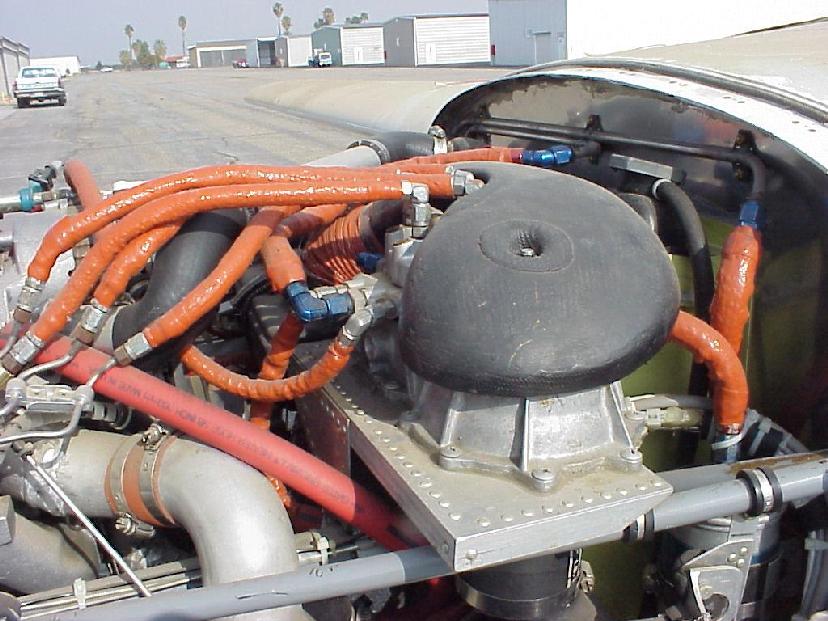
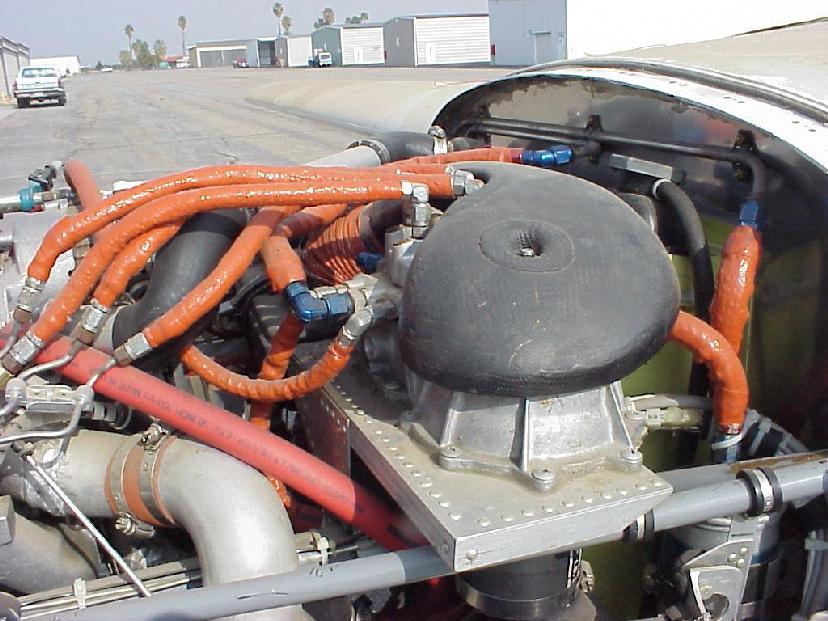
Heat around the exhaust and turbo system is a real problem. Rubber or plastic within a foot or two will detoriate or melt if not protected by a heat shield. The amount of infrared radiation is unbelievable. The amount of heat produced by the same system in addition to IR can do damage to components near by if not removed by cooling air. The expansion of exhaust system components is significant and must be compensated for in design.

Good ideas are occasionally not. Thorough testing in a safe manner before flight exposure is mandatory. I had many good ideas, which were changed during test stand operation. Do not change the configuration when moving from test stand to airframe. It has a better chance of working when it is not changed. I have a engine test stand which I am not currently using. It is mounted on a trailer. I would be willing to loan it out -with a deposit so that I get it back- to further safe engine development. I would like to use it in the future to develop one more powerplant.

Wiring is mission critical. Any wire which keeps the engines running should be made rigid to prevent vibration from fracturing the wire or wire connector interface. Standard aircraft practice may not be adequate. The more rigid the safer. I would suggest that critical wires be duplicated and perhaps changed at regular intervals if breakage would shut down the engine. If high current wires can be eliminated from the cabin they should, it will cut down the risk of electrical smoke. If switches can ground a device to make it operate then shorts will not disrupt the operation during flight. Fuses are probably adequate in protecting wiring circuits. If the Wiring is done correctly a short from abrasion will not occur and the only failure will be in the device the fuse is protecting. If it is gone a circuit breaker will not bring it back on line. Use adequate size wire to prevent heating of the wire bundle. Insulation gets brittle faster with heat. Use only aircraft wire . It
is more durable.

In my case using a torque impulse dampener(absorber) cut down on gear tooth loading and noise in the reduction unit. I believe one should be used in any power plant of the piston type needing rpm reduction.

The prop flange prop interface for wooden propellers is marginal at high horsepower levels. One 0-360 longeze at our airport has lost a couple of props because the prop bolts were slightly loose. The prop works and the bolts fatigue and break. If a person is lucky they may recognize a loose prop before the bolts break. If this happens the prop face just chars. Using more surface area at the interface makes the bolt tension less critical. I use an 8 inch diameter prop extension interface and have had no problems on the test stand with 40 LB/FT torque on the bolts. At this level the wood of the prop hub is not crushed.

Heat exchangers of the liquid to air type should be mounted with the core in slight compression. In addition the frame which compresses the core should have rubber vibration insulation from the air frame. Aircraft oil coolers have two flanges with compression tubes between for mounting. A failure from vibration is more likely to occur at the flange than in the core.

The fuel injection unit has been faultless in testing. Initially I had to adjust if for correct mixture since the unit was made for a different engine than the Mazda. I have a similar unit installed on my rear engine a Lycoming and it works very well. At correct mixture and ignition there is no flame exiting the exhaust pipe at night time. Most aircraft engines with short exhaust pipes have a orange color to the flame exiting the exhaust. Looking up the pipe while
the engine is running( this is possible to do on the test stand) a slight bluish color is seen in the pipe. The exhaust is invisible after exiting the pipe. This fact tells me that combustion inside the engine is near complete. The high pressure at the injectors and the chattering valve must atomize the fuel well. I would use the same system again if there were space to install it in another aircraft .

I want to emphasize again that testing of the power plant in a safe manner before flight is vitally important. MANY ideas were changed as a result of testing. Looking a running power plant is a good way to see vibration of the many parts and wires.

Good books on aircraft engine installation are available through the EAA. I highly recommend use of them. Another source of info is Classic Motor Books Ocala Wisconson. They have a aircraft division with many technical books. Do not do a engine installation in a vacuum. Most aspects of engine
installation have been done already, such as making motor mounts, wiring and plumbing. No reason to reinvent the wheel. Some of the discussions on the rotary site have presented data from mazda derived from their racing program. This data is useful for the development of the engine in aircraft. Perhaps the presenters can give the source for the data so that the rest of us can use it. An example of the information is the discussion about internal oiling of the rotary. Lets use what our forebears have found.

C.L. SMALE

smale@ncinternet.net


The AirCraft Rotary Engine NewsLetter.              Powered by Linux.

http://home.earthlink.net/~rotaryeng/            http://www.linux.org