This is the reason I originally wanted a much larger radiator.  I
simply added the ideal core areas of the radiator and the Mazda oil
cooler together, added 100 cu in for good measure and came up with
1000 cu in to handle all the cooling.  Maybe my thinking is wrong in
this.  Seems too simple.  Anyway, the single rad does not weigh as
much as separate rads and an oil cooler and I still am hopeful of a
clean installation in the fuselage.   Thanks for your imput.   Jerry
Ken Powell wrote:
Jerry,
I republished this attachment from Fred Morino last week in response
to your cooling questions.  I thought that I would send it to you
again in case you missed it.  I expected questions to the group from
the new guys but none were asked.

Ken Powell
Ken,
I puzzled over that one for a while.  I'd love a clear explaination of why
the HUGE improvement in drag from a moderate size increase in the
radiator - esp since they were the same core thickness.   Is it due to
a dramatic reduction in the delta P across the rad at some key velocity?

I don't doubt it, but don't really understand it either.   I know that dropping
the flow velocity is very benficial, but I wouldn't have guessed it to
help that much.  Thanks for sharing.

Bill
Long EZ builder & pilot
mechanical engineer
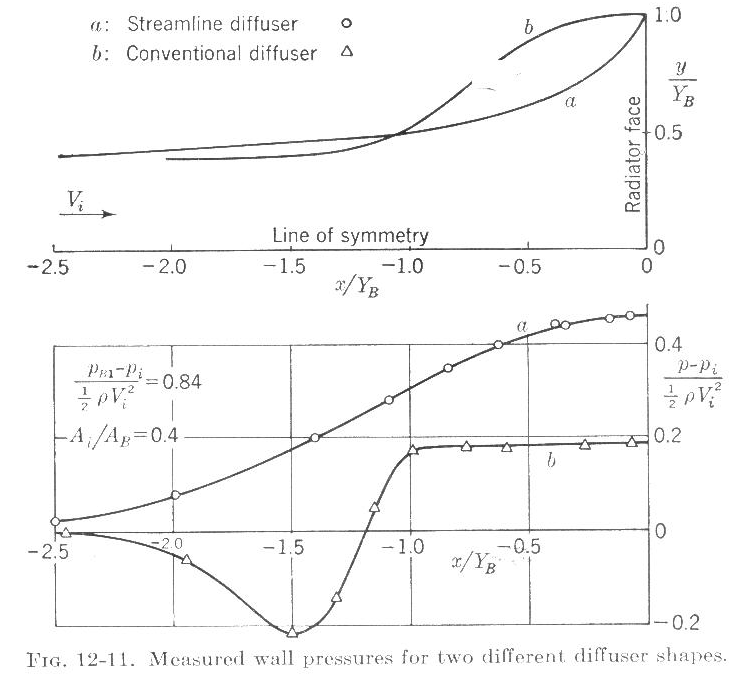
The key is to look at the inlet area of the intake duct required to
cool the engine. This assumes a perfect diffuser so the air velocity
through the core will be lower and drag through the core like
any aero drag is proportional to velocity squared. Make them diffusers
bell shaped guys or you will never notice this advantage.

Paul Lamar

The AirCraft Rotary Engine NewsLetter.              Powered by Linux.

http://home.earthlink.net/~rotaryeng/            http://www.linux.org