Leon Promet wrote:
Hi Paul,

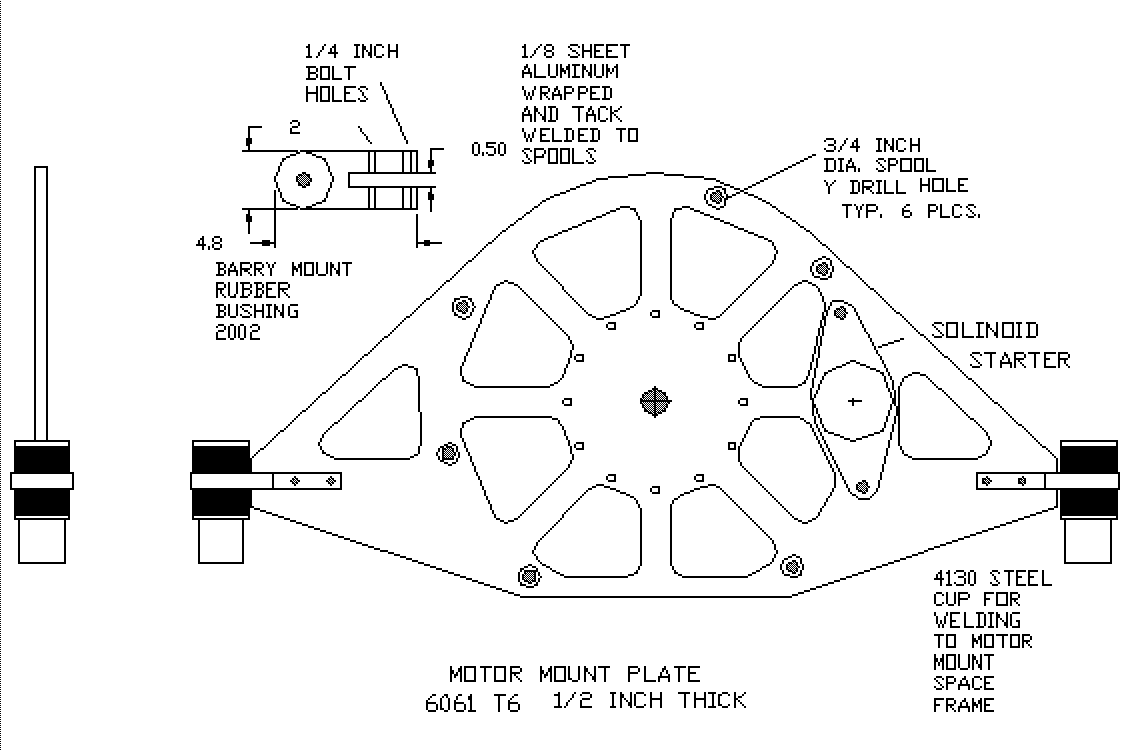
Any reason the starter is on the same side as the turbo?  sort of makes the
assembly a bit lop-sided,  and places a considerable twisting moment on the
engine mounts,  which are already subjected to torque reaction in that
direction.  Starter on the other side will counteract that moment,  and
will also keep the sucker away from the heat.

The bell housing patterns available has it on the plug side or the engine.

What I really need to know is if you are still going to use the plate,  (I
assume yes),  and the actual distance between the plate and the back of the
motor. (How thick are your ally blocks??).

Cheers,

Leon Promet
If a casting is made it might be possible to move the starter over to the other
side. With the current long ten mm bolts and spacers it is not practical
as the starter bolts interfere with the long 10 mm bolts.
The spacers are 3.050" long, quite a bit shorter than the bellhousing.

Tracy Crook
tcrook@rotaryaviation.com
www.rotaryaviation.com
It would be better if the rubber mounts were moved back about 2 inches or so.
More inline with the joint between engine and bell housing if you are considering
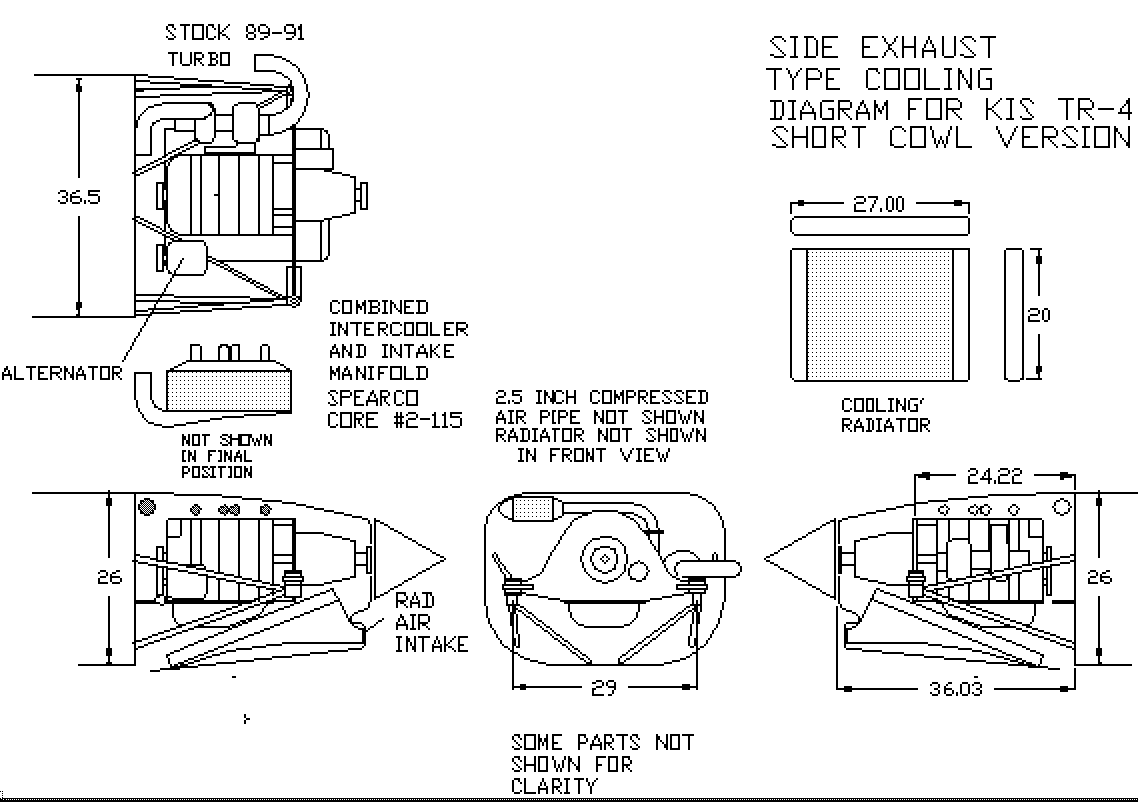
making a casting Leon. The basic idea is to keep the bottom of the engine
flat all the way across to the motor mounts to accommodate angled rads under
the engine while still trying to keep the rubber bushings away from the stock
turbo.

Paul Lamar

The AirCraft Rotary Engine NewsLetter.              Powered by Linux.

http://home.earthlink.net/~rotaryeng/            http://www.linux.org