Paul Lamar Wrote:
The rotary is not the same as an air-cooled aircraft engine (in case you have
not noticed :-)). A/C engines have a red line for a very good reason.
Durability!
Anything over that red line and you will cut the life of the engine. This
red line is around 2700 RPM and that is why most props are designed
for that RPM. The rotary, on the other hand, will happily rev to 8500 RPM
and even higher when the side port comes out with lighter weight rotors.
We need to take this into consideration when choosing a prop and PSRU ratio.
By limiting our take off RPM with a 76 inch prop and a 2.17:1 PSRU
we are giving away a bunch of HP.
---------------------------------------------------------------------------
paul-im new on the block so please bear with me. am i to understand by your
hp -rpm table that the hp of the rotary increases  right along with rpm to
9000 ?.
Depending on the type of intake porting yes. It starts to drop off anywhere from
5000 RPM to about 8500 RPM. The HP peak can be as high as 9000 RPM.
Peripheral ports, such as used by Power Sport, which are straight shots
into the rotor housings, are preferred for anything over 6000 RPM
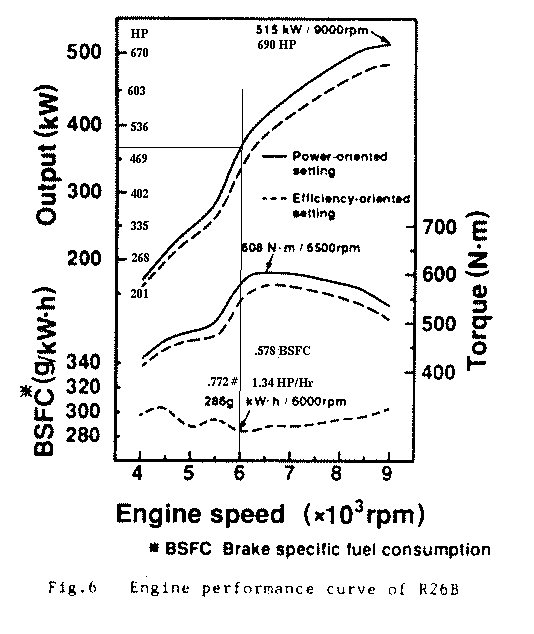
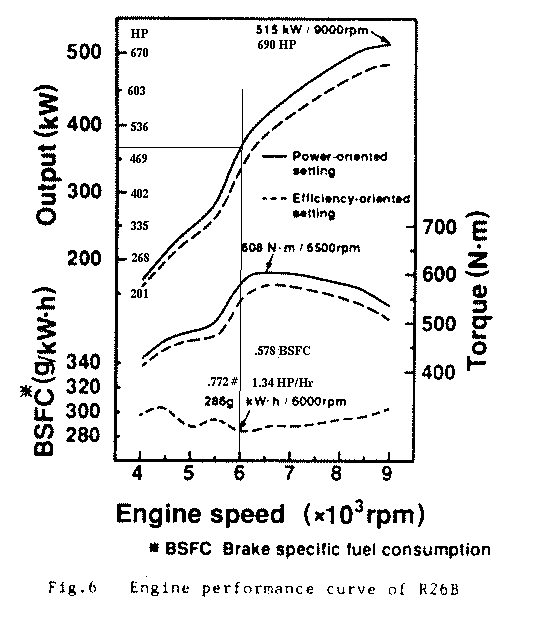
i realize that this engine is unique, but is there no hp, torque and
specific fuel rate curve ?
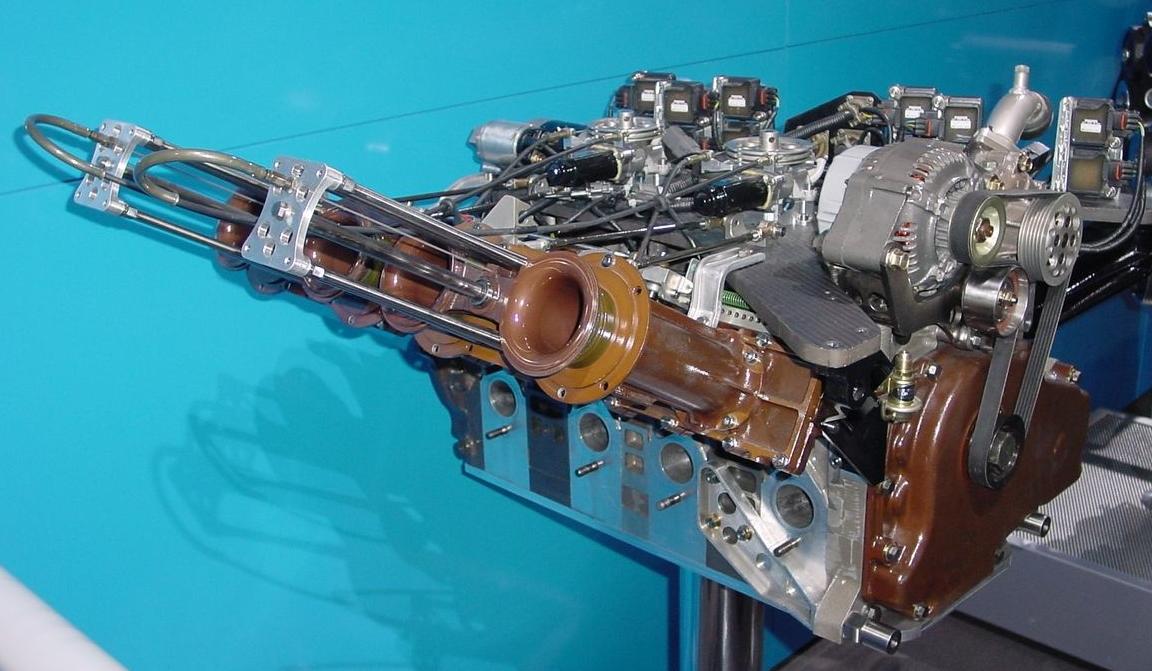
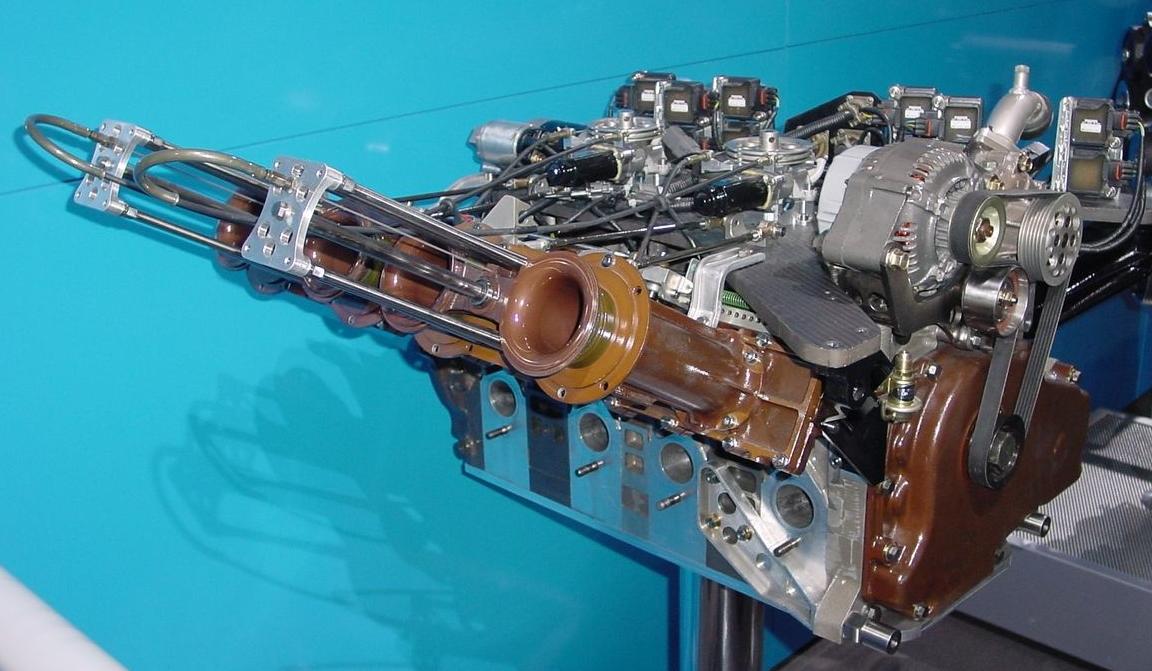
Here is a chart of HP verses RPM and BSFC for a Mazda four rotor PP port Leman
winning engine and a picture.
also my understanding of the design of aircraft
engines for max hp-torque at 2700 rpm is prop speed--durability being
achieved by large displacement ,low compression ,and general low component
loads .correct me if im wrong--thanx                tom k
Absolutely true tom but loads are different with a rotary engine.
Unlike a piston engine, things are not stopping and starting up
in the opposite direction once or twice per revolution. Each and
every part moves in a circle except the apex seal and that only
moves back and fourth several thousandths of an inch.

Paul Lamar

The AirCraft Rotary Engine NewsLetter.              Powered by Linux.

http://home.earthlink.net/~rotaryeng/            http://www.linux.org