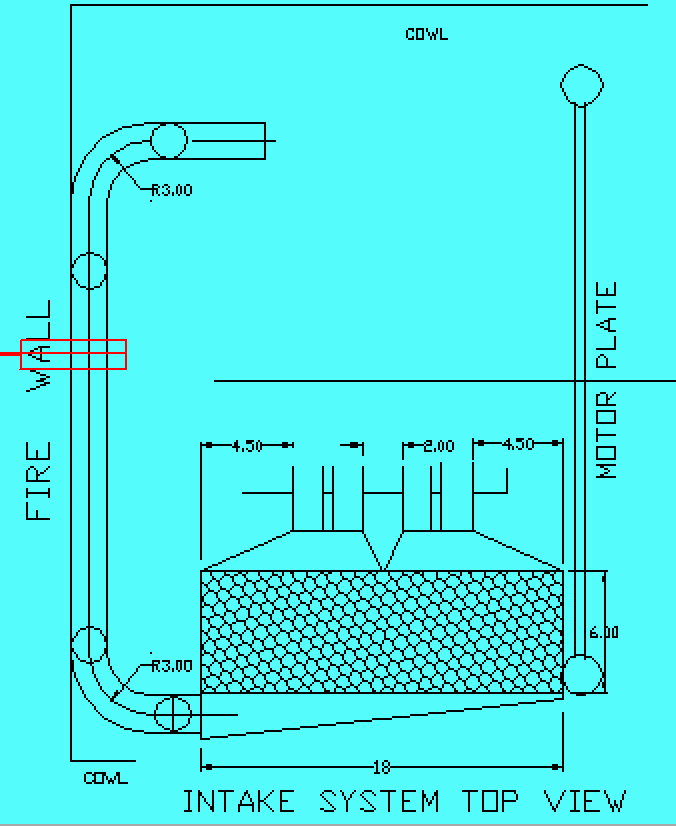
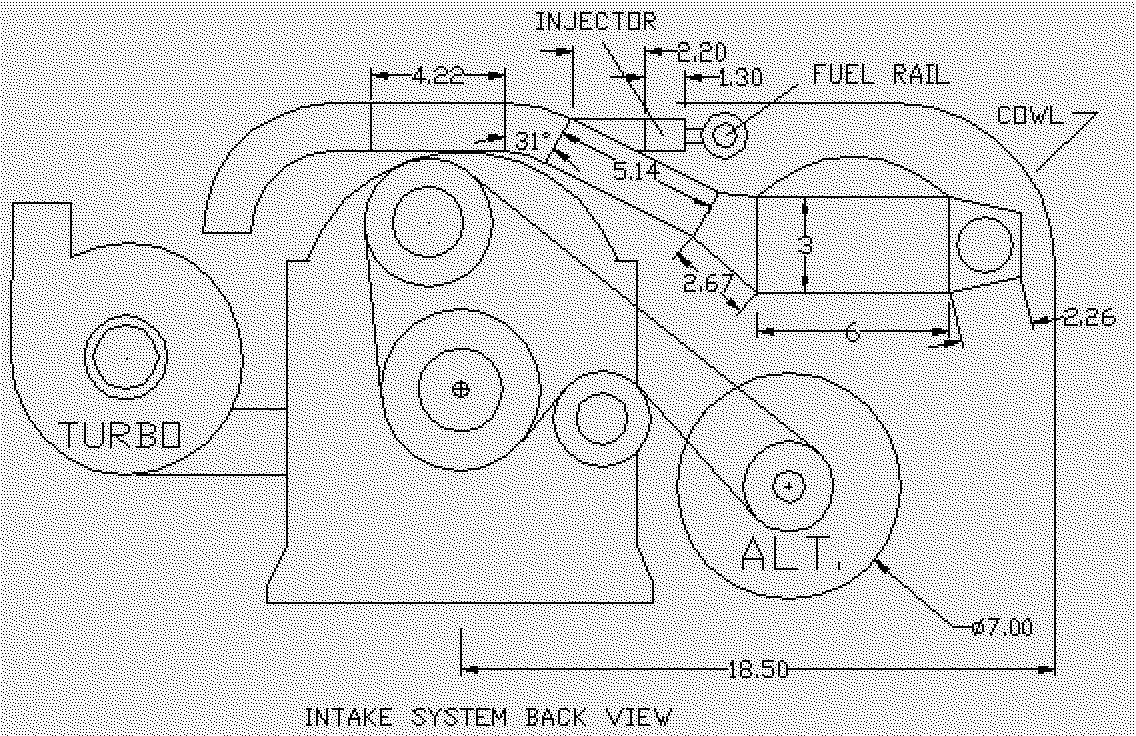
Been agonizing over this for quite some time now.
I considered using the lower portion of the 4 port
turbo manifold and milling it off low enough so I could get
a standard 2.5 inch radius 1-1/2 inch diameter tubing bend
in there. The Kis Cruiser is quite a problem as there is a
minimum amount of distance between the thrust line and the top
of the cowl. The intake runners must be right down on
top of the rotor housing. 2.5 inch radius bends will just
barely fit.

Well I tried that and the holes
I got in the shortened stock intake manifold were not even close
to round. :-(. There would be a big problem getting a good match
between the 90 degree bends in round tubing and the those weird holes.
See the picture below.

Besides that the bends alone would cost $25 apiece for a total
of $100 for all four. That would off set the cost of a cast manifold
with all the bends cast in.

The next idea was to get a real big chunk of
3" by 4" by 12" long aluminum, bore eight big holes in it and carve
out runners that transition from the ovals in the end housings
to round pipe 90 degrees away with a die grinder. Real heavy
and a tremendous amount of work. :-(

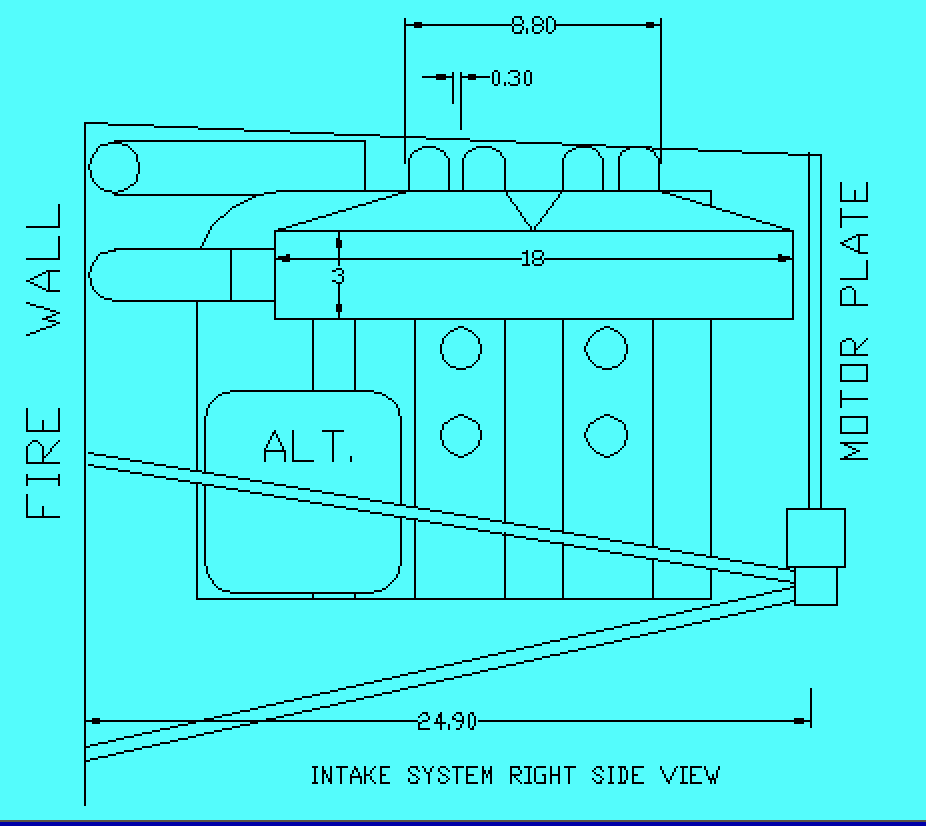
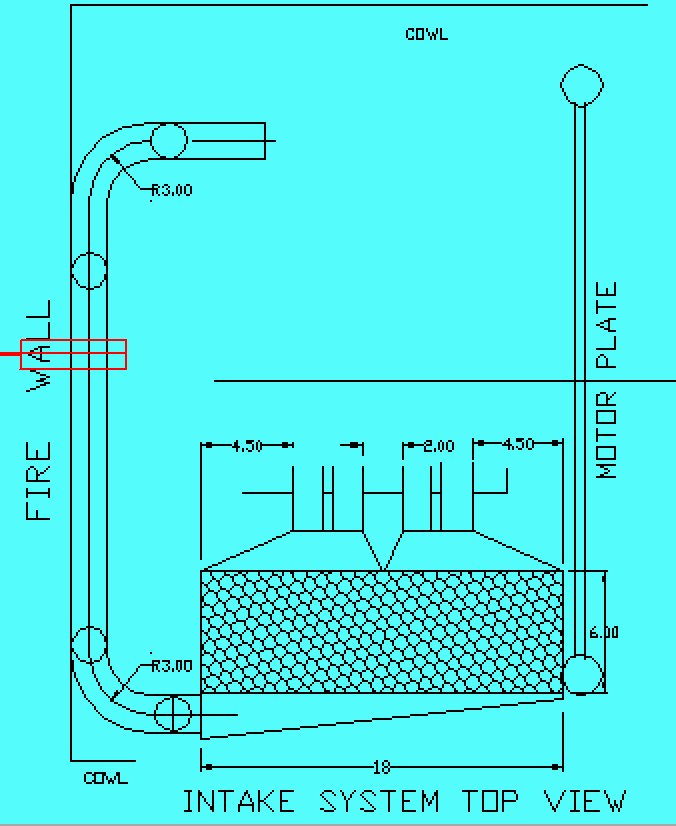
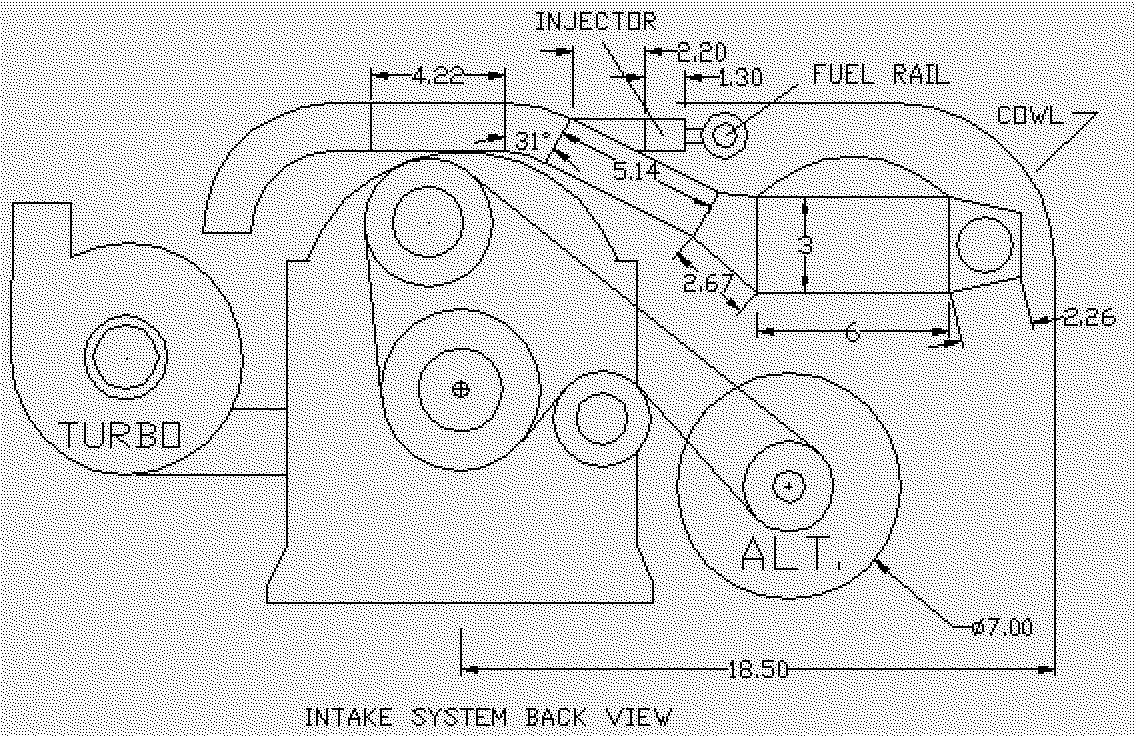
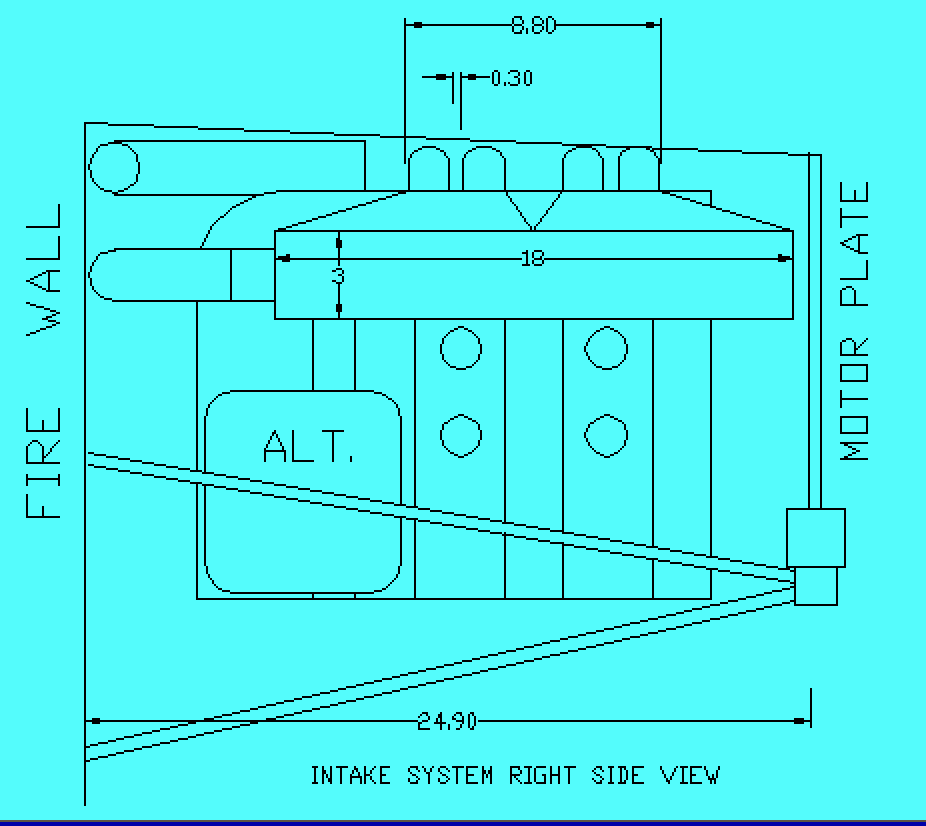
I finally said the heck with it and I have decided to have this casting
made regardless of the cost. I will only buy ten so if anybody
wants one of these let me know soon. I will require a deposit
just before I have them cast. I have a meeting with the pattern maker
tomorrow so the design might change. This will work stock
turbo or no turbo. It will accept a simple rectangular flange
with four tubes welded in for intake runners.

Paul Lamar
Bulent Aliev wrote:
I have been trying to figure it out myself and I already spent the money on
the 180 degree alum bends. So something crossed my mind:
For the turbo installation, since the whole system is pressurized, can we
make one big runner in the middle to cover both ports? The injectors are
already inside the center plate.
 When either port opens, the air is pushed inside, so it wouldn't matter if
it goes left or right?
Bulent
That is the approach Greg Richter took. I am sure it works. What I wonder is if
there is a fuel consumption penalty for doing it that way. I don't know
so I took the Mazda way with a tuned turbo intake manifold. Not however
a dynamic chamber but a dynamic chamber could be used with this new cast
four port manifold. I will also simplify the intercooler plumbing by
putting it and the fuel injectors on the other side of the engine.
I like the idea of the injectors being away from the heat of the turbo.

Perhaps by Oshkosh Greg will have some turbo fuel consumption numbers for us.

Paul Lamar

The AirCraft Rotary Engine NewsLetter.              Powered by Linux.
ACRE NL web site.
http://home.earthlink.net/~rotaryeng/            http://www.linux.org