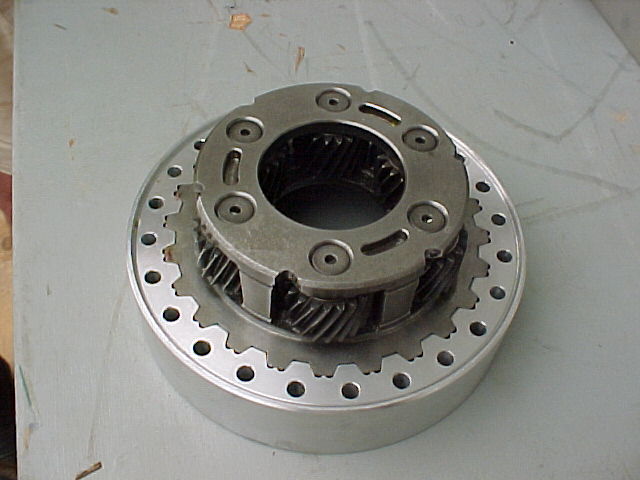
Both Finn's and Chuck's Ross drives did exactly the same thing as mine
in
it's final failure. Mine just took a bit longer at 650 hours. I
checked
for machining errors on everything except concentricity of the
inputshaft /
sungear. Didn't check that because that should have been the easiest
thing
to get right (I know, bad logic).  I don't know for certain what factor
causes the galling failure but my money would be on improper
lubrication.
Ross attempts to get oil to squirt into the ring gear through holes in
the
bulkhead but this is an iffy method at best.

To repair the Ross input shaft it is nessesary to grind the sun gear off
the
shaft until it is a paper thin shell then peal it off. Drill hole in
new
sun gear (carbide bit required) for pinning to input shaft, install
gear,
pin, then grind the oil seal area to correct diameter. World's
messiest
operation but it can be done.  Easier to make it from scratch!

Tracy Crook
tcrook@rotaryaviation.com
www.rotaryaviation.com
I think it failed after you epoxied the planet carrier in place :-)
You are probably right about the oiling however.

Paul Lamar
Planet carrier was epoxied in place at around 180 hours.    Sun gear galled
at 650.  Correlation?  Up for argument I suppose.  In any case, Ron Gowan
demonstrated what happens if you let the planet carrier float.  The tabs of
the planet carrier were almost ready to shear off due to the abrasion.
Aluminum jittering around on aluminum is a guaranteed failure.

Tracy Crook
tcrook@rotaryaviation.com
www.rotaryaviation.com
The new planet carrier is cast iron so it is cast iron on aluminum :-)
Perhaps a steel insert if called for on the old Ross boxes.
Ed if you get a chance please inspect your box for this kind of wear.

Paul Lamar


The AirCraft Rotary Engine NewsLetter.              Powered by Linux.
ACRE NL web site.
http://home.earthlink.net/~rotaryeng/            http://www.linux.org