Dick Gregory wrote:
Actually, I wasn't thinking of running the engine any hotter than with
water. I was thinking of putting an oil-"water" heat exchanger before the
radiator to boost the coolant temp after it exits the engine. This would
hopefully increase the efficiency of the radiator. I would still use the
main oil cooler of course.
I come up a little short on understanding    here.  Assuming in both cases,
you have to cool the coolant to, say 180 degrees,  how can it be "better" to
start with a hotter coolant?  I can see raising the outlet temperature
requirement  20 degrees would help, but I fail to see how increasing the
input temperature would help, unless you can give up some of the oil cooler.

Reading and learning.

Bob Darrah
The rate of heat transfer is proportional to the difference in temperature
between the two mediums. So more heat in unit time will be transferred
it the temp difference  is 250-100 rather than 230-100. 100 being the
outside air temp.

This has been known at least since the early 1930's and attempts have been
made to use this fact to reduce the size of liquid cooled air craft engine
cooling systems. The US Army asked Allison to try 300 degree coolant temperature
back in the early 30's however that attempt failed. Continentals recent attempts
to run 250 degree coolant temperature on their Voyager series is the latest try.

Now whether it gets all the way down to 180 out of the rad and into the block
is another matter and I suspect you are right about that. I also suspect, but don't
know for sure, if we really need 180 degree coolant to cool the metal at the base of
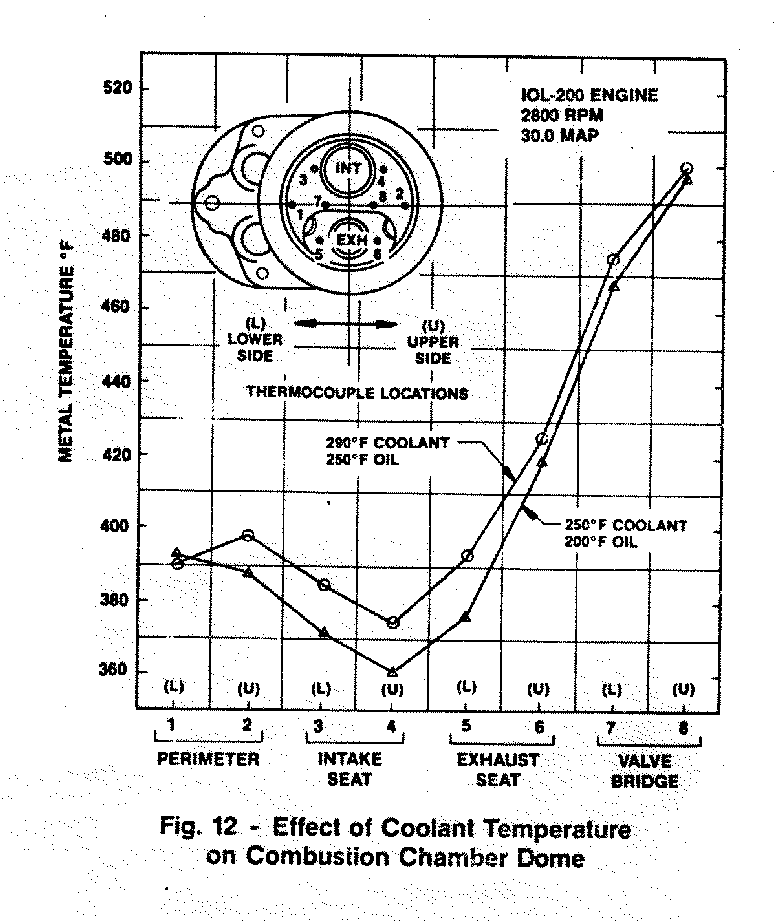
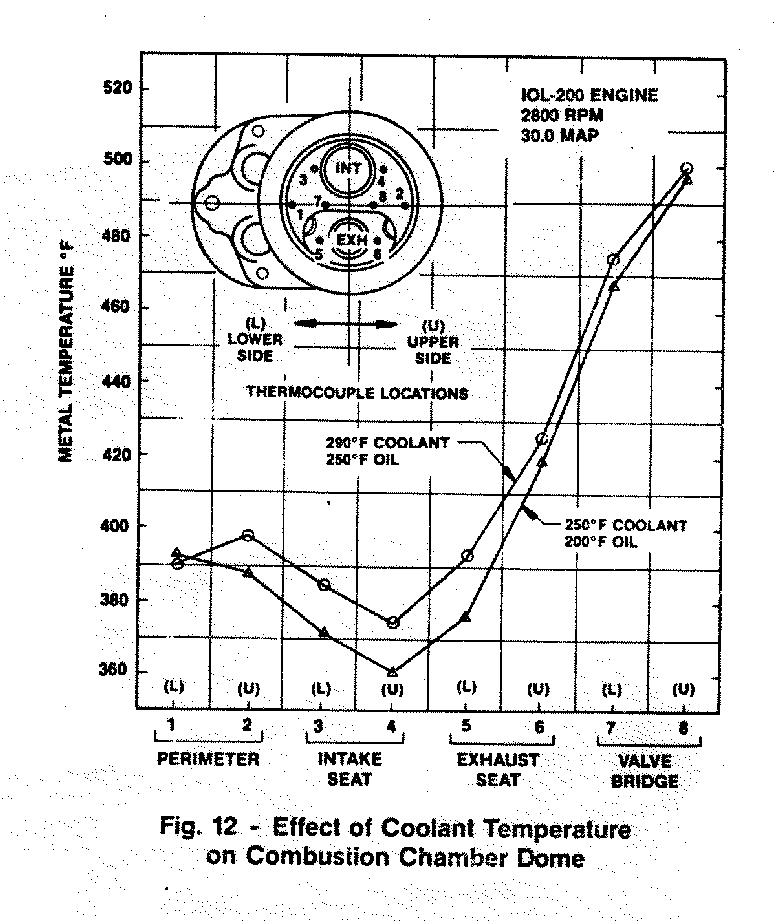
the spark plug to an acceptable 450 to 500 degrees. Perhaps it don't matter
as in this Continental gif. Perhaps we should be adding fins or other modifications
to the water jacket near the base of the spark plug rather than busting our
buns trying to get the coolant temperature going into the block
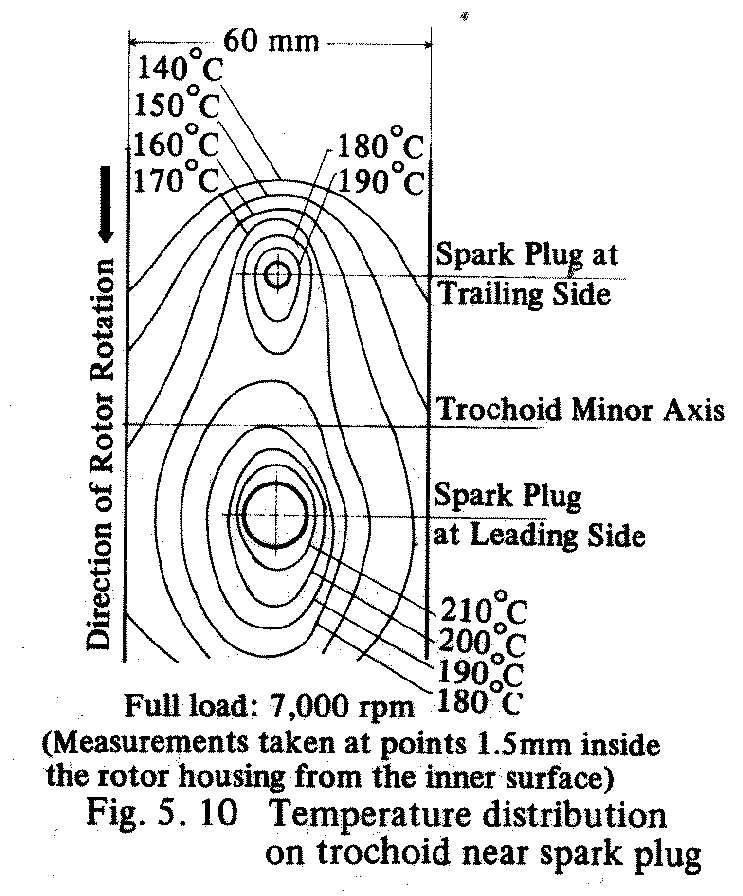
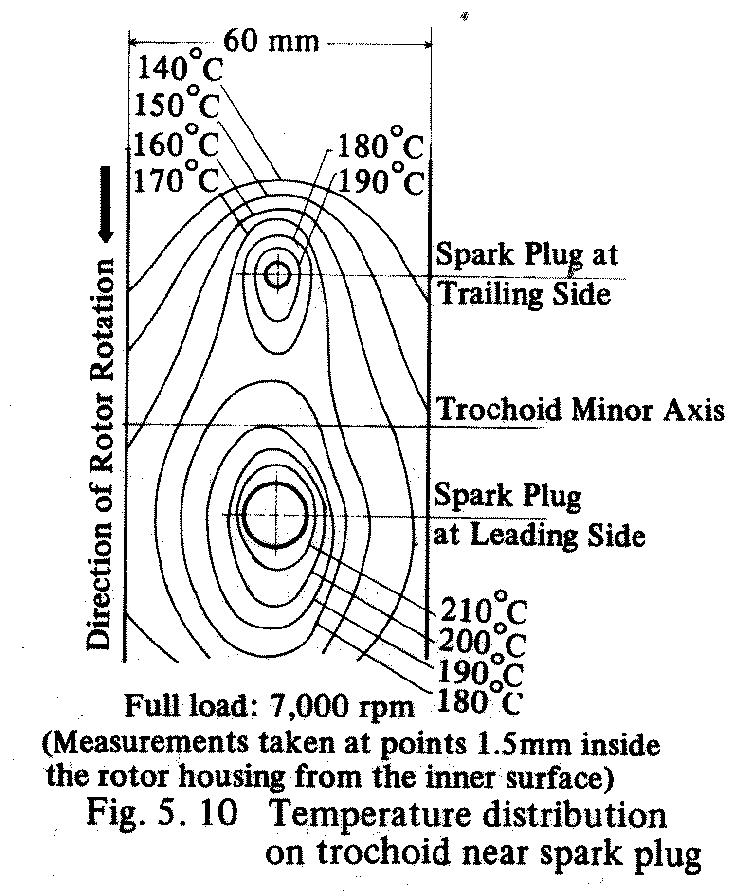
lower than 200 degrees. BTW 210 C is 410 degrees F.

I hope this is clear but I don't seem to be getting through on this point.
Perhaps someone else could re word this for me.

Now Lynn Hannover claims and Paul Yaw confirms that the engine will generate
slightly more power if the coolant temp is maintained at 180 or lower. In theory
this waste fuel energy to the coolant system and results in higher fuel
burn for the same HP.

Paul Lamar

The AirCraft Rotary Engine NewsLetter.              Powered by Linux.
ACRE NL web site.
http://home.earthlink.net/~rotaryeng/            http://www.linux.org