Paul wrote:

I am glad you appreciate that 30% Tracy.
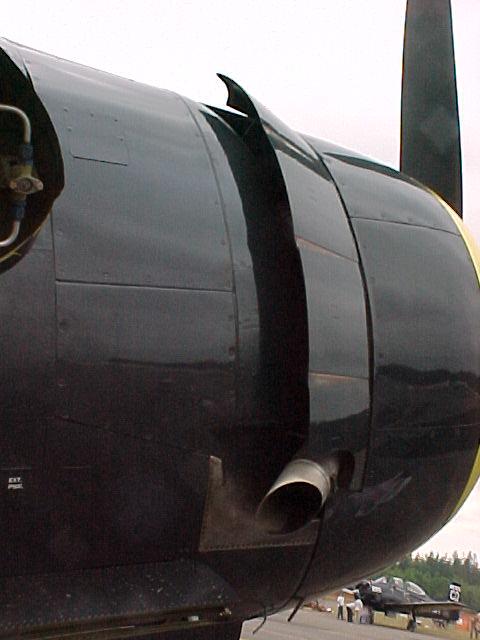
And you are not using cowl flaps? The dynamic pressure
is four times higher at 200 mph than it is a 100. You need a lot of air
at
100 MPH to cool during climb but you don't need it at 200 MPH. Cowl
flaps
are a cheap way of cutting the drag. I have no sympathy for you guys
:-)
Tom Kendall wrote:
Paul,

I've been noodling over this one for a few days.  Where is the 30% being
lost?  Are
we talking thermal inefficiency of the engine (i.e. the waste heat that must
be rejected
to the environment just to make an engine work)?  Or are you saying that 30%
of
the rated engine output power is being expended in driving cooling pumps and
overcoming aerodynamic drag due to cooling system components?  Either way,
it doesn't seem right to me.  Please save me from my ignorance!
It is not power that is being wasted per se. HP available out of the prop
in theory is more or less constant. This of course is modified by fixed
pitch prop efficiency being variable over the speed range.
A constant speed prop would give closer to constant HP.
More about the water pump in a moment.

What Tracy was referring to was aerodynamic drag on the top end.
This comes from skin friction inside the cooling ducts, the external shape
of the necessary scoop or opening  and friction of the air passing
through heat exchangers or fins on AC aircraft engines.

If you divert this air around the outside of the duct or scoop
by closing the cowl flaps a large drop in aero drag is measured. This
has been known for years and one of the main reasons why all
fast airplanes have cowl flaps.

Paul Lamar

The AirCraft Rotary Engine NewsLetter.              Powered by Linux.
ACRE NL web site.
http://home.earthlink.net/~rotaryeng/            http://www.linux.org