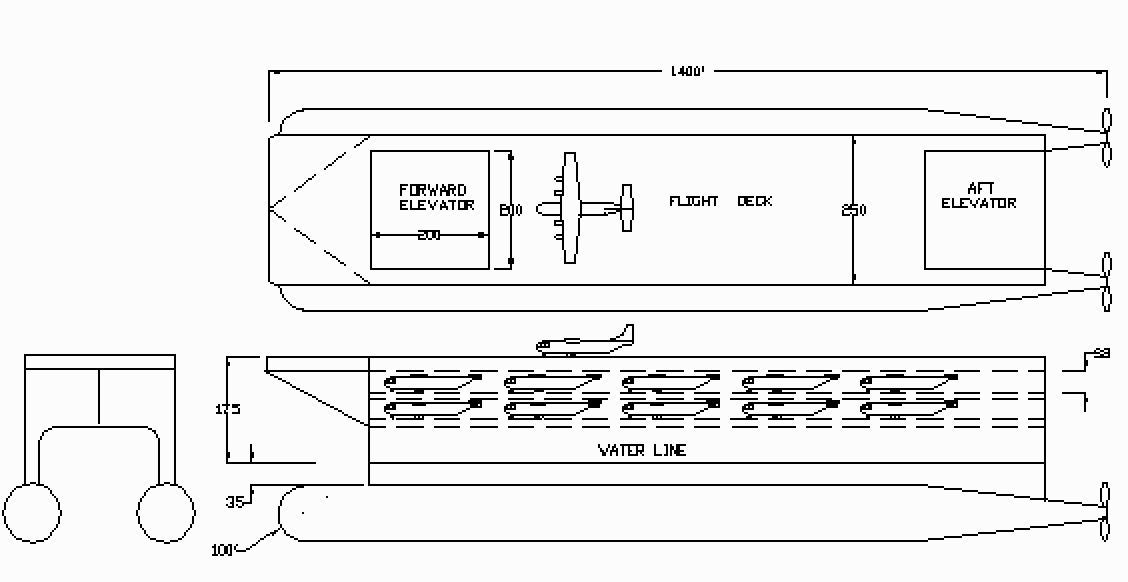
What we need is a very high speed nuclear powered aircraft carrier that
can launch and recover Lockheed C132 cargo transport aircraft. It is about
350 miles from the Arabian Sea just to the Afghanistan border across
southern Pakistan. Too far for a massive airborne helicopter assault.

What I have in mind is a C130 rapid response shuttle assault where
you could launch ten C130's. One every five minutes. That would
give a much more effective ground force of up to 1000 troops and
light vehicles as well as light artillery.

If the mission were 350 miles away they could all be
recovered in about 3 hours  and reloaded for another equally effective
assault launch. In 24 hours with proper logistical support 5000
troops could be put in place. Hard to do from half a world away
as on board fuel requirements would eat heavily into C130 payload.

Further more this ship could be equipped or resupplied over time from
the USA anywhere in the world with  C130 air to air refueling technique.

It would not be finished in time for this action of course but it should
come in handy for future actions like this. It would also serve as a
deterrent to terrorist hiding out in remote countries.

A 1000 foot or longer high powered catamaran with no above deck island ought
to do the job. Powered by "Boomer", AKA Polaris missile submarine, nuclear
power plants. No new engineering required. Perhaps no construction of
new power plants at all. Just pull them out of now useless
boomers.

High fuel capacity, weapons storage and onboard defense
would not be needed as that can be provided by the fleet
in general and specifically other conventional aircraft carriers.

Elevators at front and rear to at least two full length lower hangar
decks should be provided. The upper hangar deck will provide for rapid
recycling of empty 130's with an assembly line technique. Either
JATO and or a very powerful catapult could be used to enhance heavy gross
weight take offs.

Here is my scale sketch of the C130 aircraft carrier. It is not a sub marine
but it does float on submerged pontoons. Reduces the pitch in a sea way
so it is easier to land and takeoff.

While this carrier is being built a folding vertical tail version
of the C130 should be designed and developed so that lower hanger
deck ceilings can be used.

This would be way cheaper than replacing the World Trade center, loss to the
economy and fixing the Pentagon not to mention four airliners.

A simple ship like this could be put in moth balls when it
was no longer needed.

Paul Lamar

Feel free to forward this to your friends. Perhaps it will
make it to the Whitehouse or Pentagon.


http://users.erols.com/tdg/hercules.html

>From Herk :
Hero of the Skies : The Story of the Lockheed C-130 and Its Adventures
Around the World ... , by Joseph Earl Dabney, .
Hardcover - 448 pages Rev. Ed. edition (December 1984)
Larlin Corp; ISBN: 0897830393 -

When one reviews the encyclopedic range of accomplishments by the Hercules and its
valiant aircrews over the years, surely one of the most astounding
took place in October of 1963 when the U.S.Navy decided to try to land a Hercules on an
aircraft carrier: Was it possible? Who would believe that the big,
four-engine C-130 with its bulky fuselage and 132-foot wing span - could land on the
deck of a carrier?

Not only was it possible, it was done, in moderately rough seas 500 miles out in the
North Atlantic off the Boston Coast. In so doing, the airplane became the largest and
heaviest airplane to land on a U.S. Navy aircraft carrier, a record that holds to this
day.

When Lt.James H. Flatley III was told about his new assignment, he thought somebody was
pulling his leg: "Operate a C-130 off an aircraft carrier? Somebody's got to be
kidding, " he said.

 But they weren't kidding. In fact, the Chief of Naval Operations himself had ordered a
feasibility study
on operating the big propjet aboard the Norfolk-based Forrestal. The Navy was trying to
find out whether they could use the big Hercules as a sort of "super-COD" - a "Carrier
Onboard Delivery aircraft". The airplane then used was the Grumman C-1 Trader, a twin
engine bird with a limited payload and only a 300-mile range. If a carrier is operating
in mid-ocean it has no "on board delivery" system to fall back on and must come nearer
land before taking aboard even urgently needed items. The Hercules was stable and
reliable with a long cruising range and a high payload.

The aircraft, a KC-130F refueler transport (BuNo 149798),
on loan from the Marines, was delivered October 8. Lockheed's only modification to the
original plane was to install an improved anti-skid braking system, remove
refueling pods form the wings and install a smaller  nose-landing gear orifice.  "The
big worry was whether we could meet the maximum sink rate of nine feet per second,"
Flatley said. As it turned out, the Navy was amazed to find they were able to better
this mark by a substantial margin.

In addition to Flatley, crewmen consisted of Lt.Cmdr. W.W. Stovall, co-pilot; ADR-1
E.F. Brennan, flight engineer and Lockheed engineering flight
test pilot Ted H. Limmer, Jr., safety pilot. The initial seaborn landings, on
October30, 1963, were made into a 40-knot wind. Altogether, the crew
successfully negotiated 29 touch-and-go landings, 21 unarrested full stop landings and
21 unassisted take-offs at gross weights of 85,000 pounds up to
121,000 pounds. At 85,000 pounds, the KC-130Fcame to a complete stop within 267 feet,
about twice the aircraft's wing span! The Navy was delighted to
discover that even with the maximum load, the plane used only 745 feet for take-off and
460 feet for landing roll. The short landing roll resulted from
close coordination between Flatley and Jerry Daugherty, the carrier's landing signal
officer. Daugherty, later to become a captain and assigned to the
Naval Air Systems Command, gave Flatley an engine "chop" while still three or four feet
off the deck.

Lockheed's Ted Limmer, who checked out fighter pilot Flatley in the C-130, stayed on
for some of the initial touch and go and full-stop landings. "The last landing I
participated in, we touched down about 150 feet from the end, stopped in 270 feet more
and launched from that position, using what was left of the deck. Still had a couple
hundred feet left when we lifted off. Admiral Brown was flabbergasted...."

The plane's wingspan cleared the Forrestal's flight deck "island" control tower by just
under 15 feet as the plane roared down the deck on a specially painted line.
Lockheed-Georgia's chief engineer, Art E. Flock was aboard to observe the testing.

"The sea was pretty big that day. I was up on the captain's bridge. I watched a man on
the ship's bow and that bow must have gone up and down 30 feet." The speed of the shop
was increased 10 knots to reduce yaw motion and to reduce wind direction. Thus, when
the plane landed, it had a 40 to 50 knot wind on the nose.

"That airplane stopped right opposite the captain's bridge," recalled Flock. "There was
cheering and laughing. Thereon the side of the fuselage, a big sign had been painted on
that said, "LOOK MA, NO HOOK."

>From the accumulated test data, the Navy concluded that with the Hercules, it would be
possible to lift 25,000 pounds of cargo 2,500 miles and land it on a carrier. Even so,
the idea was considered a bit too risky for the C-130 and the Navy elected to use a
smaller CoD aircraft. For his effort the Navy awarded Flatley the
Distinguished Flying Cross.


The AirCraft Rotary Engine NewsLetter.              Powered by Linux.
ACRE NL web site.
http://home.earthlink.net/~rotaryeng/            http://www.linux.org