Robert Darrah wrote:
Help!

As I understand it, on a turbo car, manifold pressure (vacuum) is piped
to
the fuel regulator to increase fuel pressure the further the throttle
is
opened (higher manifold pressure).

In an airplane, we could hook it up the same way, or, leave it open to
static.  If connected to static, the higher you fly, the lower the fuel
(and
static) pressure.

Using Tracy's ECU, which way is correct?  Also, Tracy, if your up coming
fuel flow indicator is based on injector duty time, how is this variable
fuel pressure compensated for?  Or, how do I avoid the variable fuel
pressure?  It looks to me like the ECU could be programmed to do either
better using a constant fuel pressure.

Confused minds want to know.

Bob Darrah
turbo 20B
Hook the manifold pressure to the port on the regulator.  The regulator is
designed to keep a (more or less) constant pressure between the fuel rail
and the manifold.  It can't do this unless it knows what manifold pressure
is.  The fuel flow instrument will compensate for system nonlinearities the
same way the EC2 does - a lookup table.  Actually, in aircraft applications,
there is very little compensation required since we operate the engine over
a relatively small range of power settings.  Most of the nonlinearities
occure at idle and very low throttle settings.  This is why the non
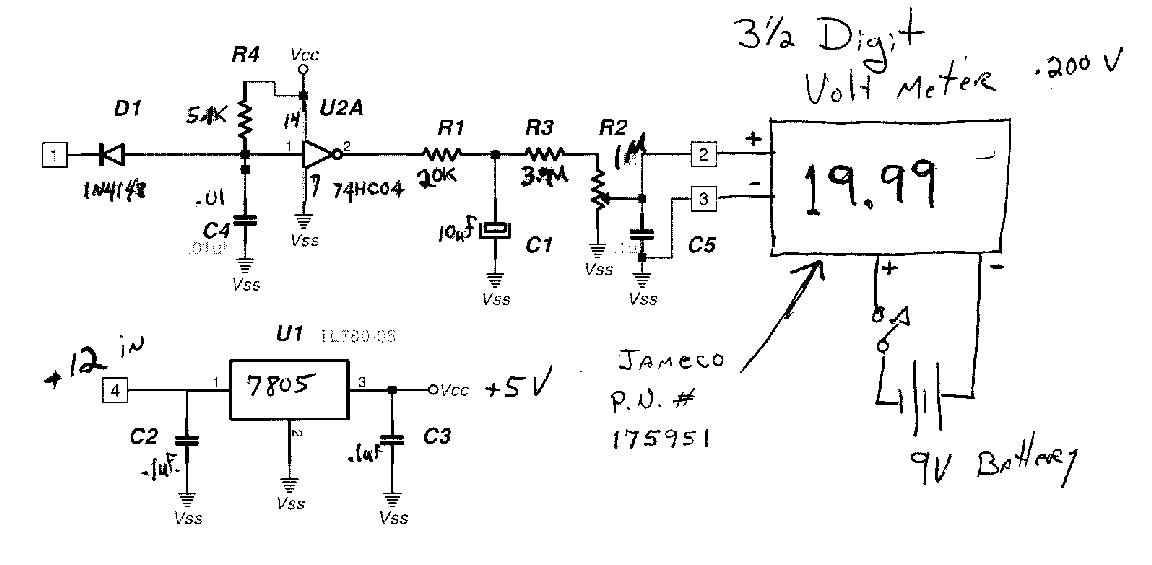
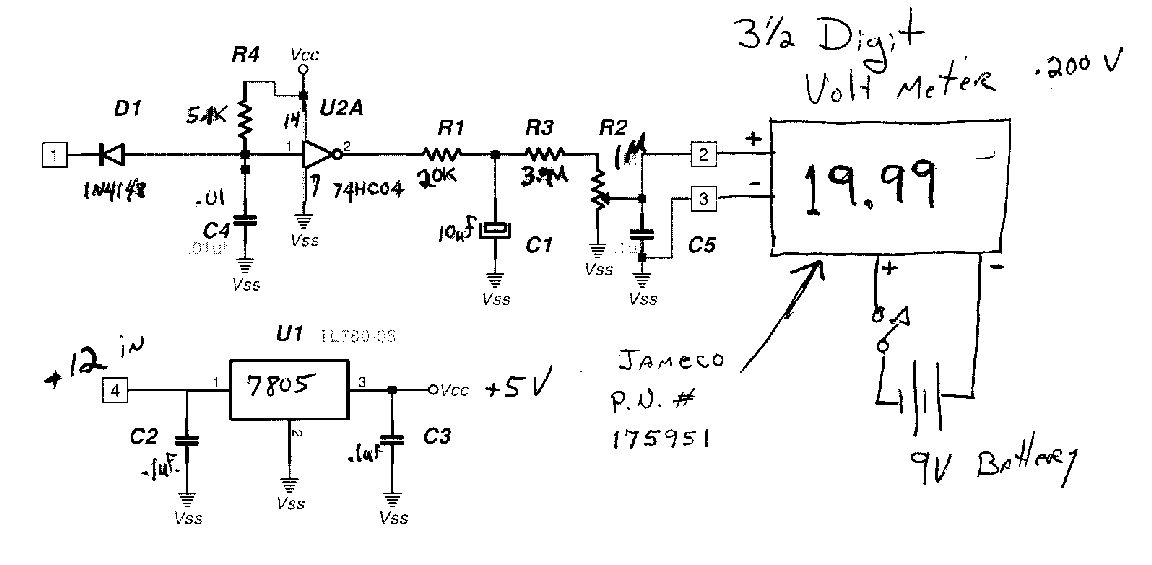
compensated cheap & dirty fuel flow instrument (schematic) that I uploaded
here awhile back works so well.

Tracy Crook
tcrook@rotaryaviation.com
www.rotaryaviation.com
The AirCraft Rotary Engine NewsLetter.              Powered by Linux.
ACRE NL web site.
http://home.earthlink.net/~rotaryeng/            http://www.linux.org