<< Gary Buster wrote:
 >
 > I continue to think outside the box regarding the next rotary I build for
my next gyro... I had a thought about the exhaust bark (also known as the
screaming banshee)...
 >
 > I will be grinding the intakes to make a peripheral port... why not also
modify the exhaust while there???
 >
 > Why not cut a "V" shape on the current rectangle to allow some of the
exhaust to slip out before the apex seal reaches the normal (almost flat)
opening of the exhaust port's "leading edge"???
 >
 > What are the "wheels" that have already been invented regarding this
exhaust configuration??
 >
 > Sorry if it is a moot question... doesn't seem so while I just mull it
over though.
 >
 > Gary Buster
 > Tyler, Texas
 Very good idea might work. You may lose a bit of power. If you are not doing
it
 right away you might want to wait a couple of months and get a side exhaust
 port engine.

 Paul Lamar
   >>

Unless there is going to be operation above 7000 to 8000 RPM there are few
reasons for moving the opening side of the exhaust port. The stock opening
event is good up to 9,500 RPM. Also the heat load near the center of the apex
seal would not help the sealing and shorten life I would think. On the other
hand, at much lower RPMs it probably wouldn't hurt anything but torque. A
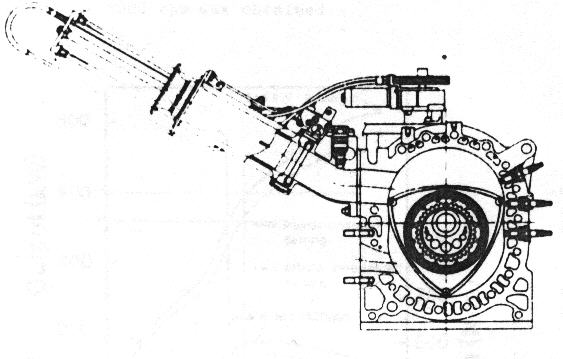
copy of the device from the exhaust ports for nonturbo engines built into the
exhaust header right outside the port, or even extending into the port would
be cheap and easy to change. Also periphery port engines are dogs at lower
RPMs. The short intake manifold length on the race car is most of that. They
are more demanding on exhaust length. They are off the cam below 7,000 and
will pull real well through 10,000. This with less inlet timing than a bridge
ported engine. A big street port would get you near stock tractability and
225 HP at 9,000 RPMs.
Lynn E. Hanover
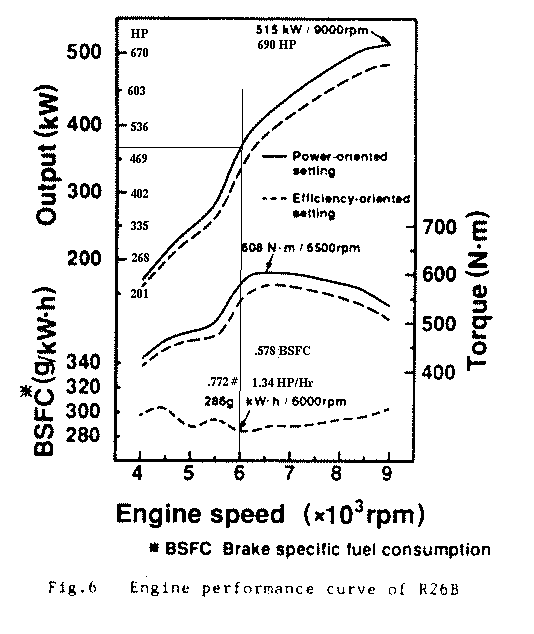
I don't know who built that engine Lynn but the facts don't bear that out.
If you copy exactly the peripheral port configuration of the Lemans engine
you will get 240 HP at 6000 RPM with long large diameter intakes.

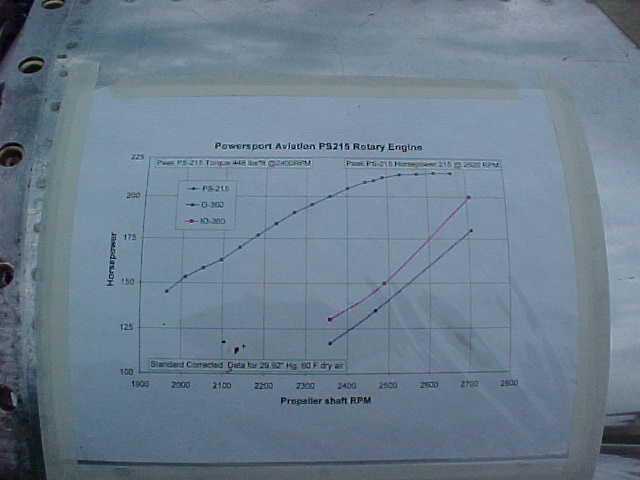
Power Sport is getting 210 HP at 6000 RPM with their peripheral
port configuration and long intake runners. Their dyno curve indicates
way more low RPM HP than anybody can use with a fixed pitch prop. The upper line
is the HP curve and the lower lines are the prop HP requirements
on the Power Sport dyno curve.

Paul Lamar

The AirCraft Rotary Engine NewsLetter.              Powered by Linux.
ACRE NL web site.
http://home.earthlink.net/~rotaryeng/            http://www.linux.org