Old Message


Subject:        Types of PSRU's.
   Date:        Sun, 25 Apr 1999 09:09:41 -0700
  From:        Paul <rotaryeng@earthlink.net>
    To:        zz <rotaryeng@earthlink.net>

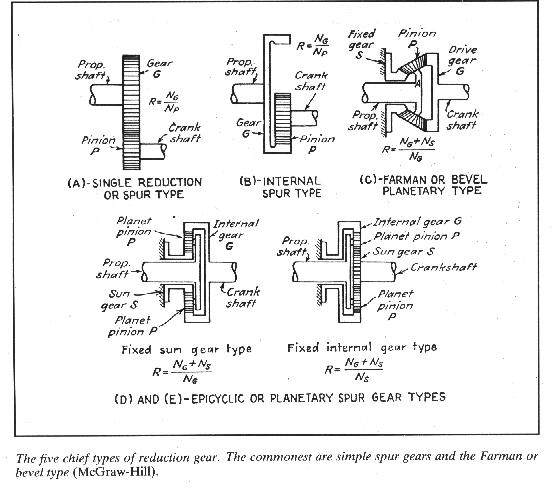
This diagram is from Bill Gunston's book The Development of Piston Aero
Engines. 1993 Patrick Stevens Limited.

N refers to the number of teeth on the gear.
R is the reduction ratio.

The Marcotte and Hatch are type B Internal Spur gear. The Mazda manual
transmission gear box is type A with two sets of single reduction spur
gears transmitting the power.

Also in type A housing expansion due to heating  is a problem as it
increases the distance between the gears which increases the clearance
and backlash. This appears to be a serious problem with the large
diameter type A gear box used on the S51. When the mesh of the gears is
reduced the cantalevered bending loads go up on the gear teeth.

Only the planetary type generates no separation loads in the shaft
bearings or gear box housing. These loads are balanced entirely within
the gear system itself. Consequently the bearings can be made smaller
and the housing lighter. It can also be made self compensating for
temperature as well.

This is one of the main reasons the planetary type PSRU dominated in
geared aircraft engines after the WW II. It is to this day being
considered for new geared Pratt & Whitney next generation turbo fans.

There are two other configuration of the planetary possible and that is;
planet carrier fixed with power in or out of the sun or internal gear.
In the case of the popular Ross 2.17:1 the planet carrier is fixed and
the power goes in the sun gear and out the internal gear to the
propeller.


Paul Lamar

The AirCraft Rotary Engine NewsLetter.              Powered by Linux.
ACRE NL web site.
http://home.earthlink.net/~rotaryeng/            http://www.linux.org