Tom Parkes wrote:
Five weeks ago I promised a report on my first turbo 20B
start. Could
it possibly have been that long? Yes, every frustrating
bit of it. But
along the way I've been encouraged by Don Moncrieff's
detailed reports
of his 13B start attempts, and benefited from various suggestions.
Specifically, Ed Anderson's mention of "noid lights" helped
me narrow
down the "no ignition" gremlins to the fuel injectors
themselves: I had
fuel to the rails (40 psi) and computer signals to the
injectors, but no
fuel in the combustion chambers (dry plugs).

Finally, success!  On November 14th I enjoyed the elation of a first
successful start, and although the engine ran a little
rough, at least
it was running.  The next day I benefited from a local RX-7 owners
experiences, adjusted the MicroTec computer's fuel mixture
(it had been
too lean), and enjoyed two smooth runs.

So, am I over the hill?  Hardly.  Judging from the white
smoke and oil
leaks around the turbo and wastegate, it appears that the
turbo's oil
seals have dried out and will have to be replaced.  But at least it
runs.

I've experienced several steep learning curves during the past four
years of home-building, and this latest one is just another
"learning
experience" on the way to first flight.  My Lancair ES airframe is
virtually complete, so I'll be focusing on radios, seats
and interior
appointments while refining engine operations.

And if that isn't enough, I was just elected President of
EAA Chapter
658.

Also, I'd like to add my welcome to Skip Gorman, who had an
early hand
in assembling my 20B back in Puyallup. Perhaps Skip, or
anyone else for
that matter, can help me understand why my fuel pressure
jumps from 40
psi (prestart) to 65 psi as soon as I engage the starter,
and drops back
to 40 after the engine is running.  Any ideas?

Tom Parkes
Lancair ES - Turbo 20B
tparkes@earthlink.net
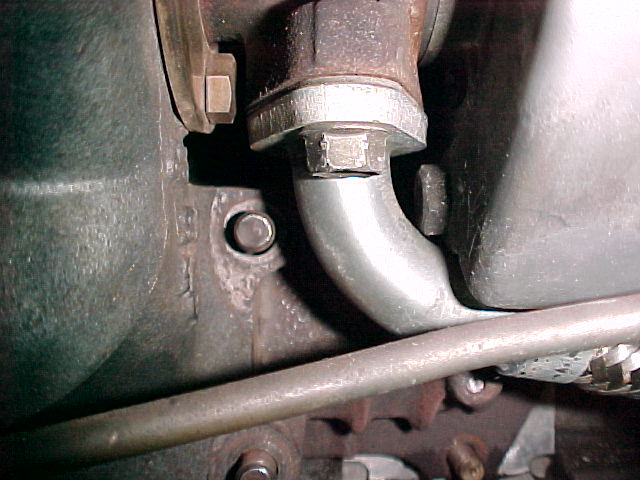
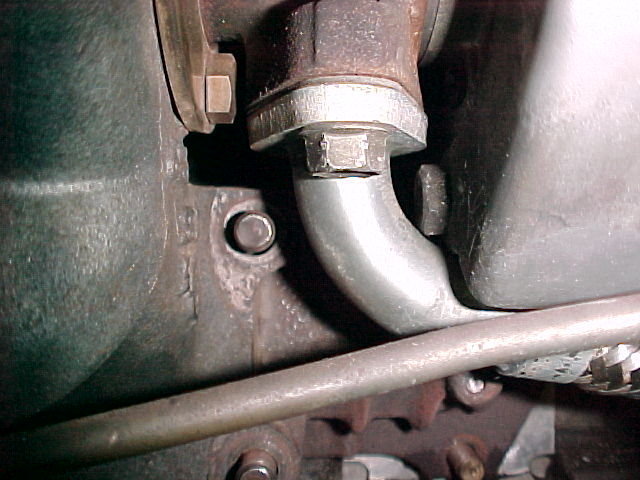
What size are your turbo oil drain back lines Tom? Very
important to have
large, well shielded from heat, drain back lines that go into
the pan above
the oil level. As I recall the oil seals in a turbo cannot dry out
as they are the metal labyrinth type or carbon seals.

The routing and shielding look good but the size looks a bit marginal.
Also how many ounces per gallon of two cycle oil are you mixing with
the gas? It is possible for two cycle oil to make it through
the engine
and come out the exhaust relatively unscathed. Especially at low power
rich settings.

Paul Lamar
Tom, it is good to hear you are making progress. Try running the oil drain
from the turbo straght down into a bucket and see if it still smokes. The
drain line needs to be 1/2" ID. Is your fuel pressure guage electric, by
chance? Any electric guages will lie during cranking because the voltage is
lower (~8Volts). I would like to come visit sometime, your project looks
very interesting.

Chuck Dunlap
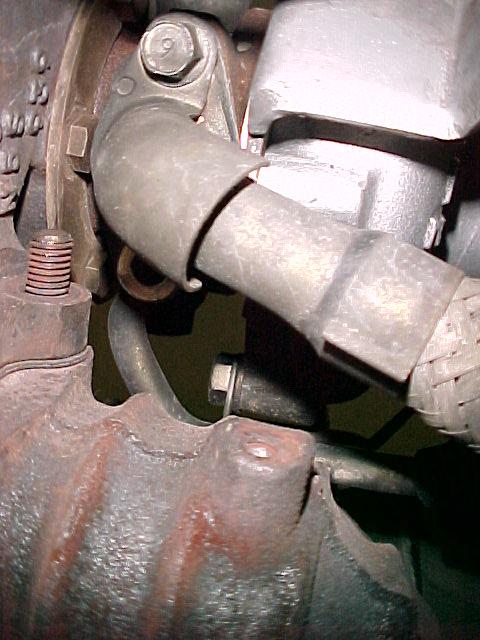
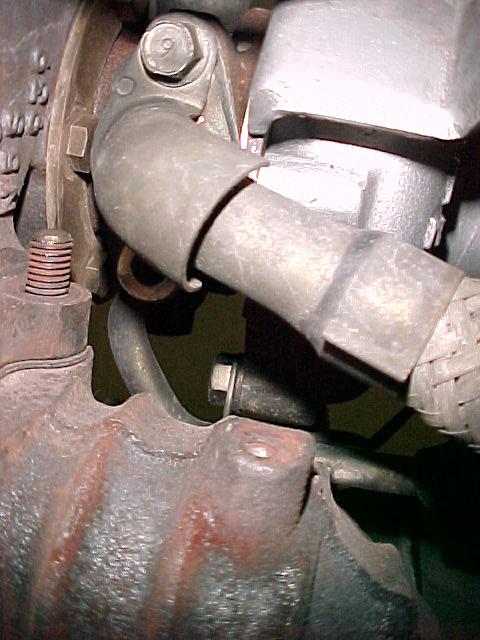
Here is another little trick Mazda themselves discovered. Note the little heat
shield. Mazda was able to go down slightly on the oil drain back line
diameter after they added the little heat shield. That turbine housing
runs bright red and radiates a TREMENDOUS amount of heat.

Paul Lamar

The AirCraft Rotary Engine NewsLetter.              Powered by Linux.
ACRE NL web site.
http://home.earthlink.net/~rotaryeng/            http://www.linux.org