Delbert Johnson wrote:
Does anyone know what the coolant and oil flow rates in the 13B.
I'm
still
pursuing the idea of cooling the oil with the coolant by passing
the oil
across the fins of a small radiator mounted in a modified oil
pan. The
radiator would have the hot side coolant (180 degrees) passing
through
it.
This could result in increasing the coolant radiator efficiency
25% plus
and
would eliminate high pressure oil hoses on the outside of the
engine as
well
as the external oil cooler. It would require a modest increase
in the
coolant radiator size.

Delbert Johnson
You must be kidding Delbert. I know you were on here when we
discussed
this ad nauseum last month. The consensus is we don't have enough
info
to make this work and those that have tried failed miserably
including
Mazda themselves in light duty automotive service. There is no
cooling
but air cooling to quote Lynn Hanover.

Paul Lamar
I think the way to look at this is that you need X area of heat
rejection
surface... whether that be an oil cooler + radiator, oil-water cooler
+
bigger radiator, or fuel tank loops... Thermodynamics requires you
have this
area to transfer X amount of heat in a given time. Therefore if you
decrease
the total cooling area, no matter what the substitute, it just will
not be
adequate.

Mike Harrington
Absolutely.  Well said.

Aircooled submarine.  ;-)

Bill Freeman
Gross oversimplification and inaccurate formulas.  Heat dissipation is not
strictly related to area.  Temperature differential is a big factor.  The
whole idea of Delbert's plan is to increase the delta T at the radiator thus
increasing its heat dissipation to the air.  The idea may have other
pitfalls but to oversimplify the heat dissipation equation proves nothing.

Tracy
I don't consider what anybody said above as a gross over simplification.

If you increase the temp of the coolant going into the radiator the temp
of the water coming out will also be increased all other things being
equal. That means the temp of the coolant going into the engine block
will also be higher which is not a good thing.

I think the idea of an oil water heat exchanger  should be pursued providing
you get your airplane flying first with a conventional oil to air heat exchanger
and you have all other problems completely solved. If you attempt it right out
of the gate the chances of overall failure are much higher not to mention
the excess time and money spent getting it to work if it is even possible.
I am tempted to say; "it just plain won't work"... but I won't :-)

In theory the advantages of a water to oil heat exchanger system are minimal
to non existent in aircraft applications as stated by those simplifications
above. In truck or car applications the story might be different as it could
get the oil up to operating temp faster.

Having said that it is a free country so if you want to risk not getting
your engine to cool have at it. Power Sport tried it and it brought
them to their knees IMHO. Much to my intense disappointment I might add.
They ran out of money, motivation and enthusiasm. I think Power Sport
would be selling a bunch of firewall forward RV xx rotary engine packages
today if they had a highly successful cooling system right out of the gate.
Instead they showed up at OSH with an obvious cooling system kludge.

I see more or less the same thing happening with Cool Jugs only in this
case it is just the entire liquid cooling system and not the fault of a
water to oil heat exchanger. Designing a completely effective liquid cooling
system under all possible ambient conditions for an aircraft engine is
not trivial or easy. Everything, and I mean everything, must be perfect.

What is really disgusting to me is we are failing to learn from history
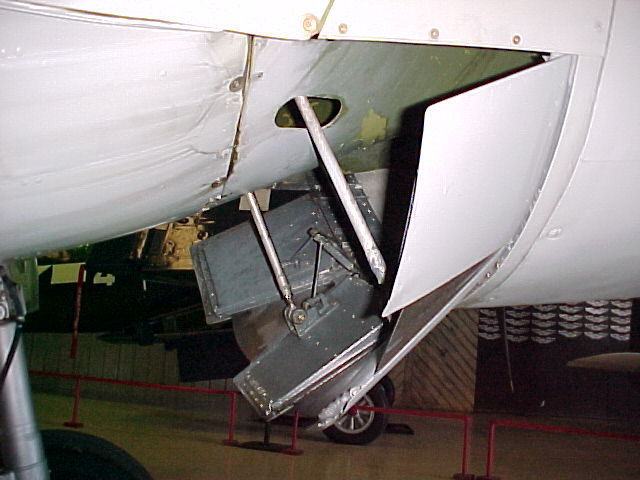
on this. Nobody is using cowl flaps for example. Here is
a picture of the cowl flaps on a 1935 P40 for c@#$%^ sakes!!!!
THAT WAS 66 YEARS A GO!!!!!!!!!!!!

Paul Lamar

The AirCraft Rotary Engine NewsLetter.              Powered by Linux.
ACRE NL web site.
http://home.earthlink.net/~rotaryeng/            http://www.linux.org