snips..
But I can go faster than 210 mph NOW! (at a lot less than 8100 rpm)
In the
first annual rotary air race (10-27-01) I averaged 202 mph including a
start
at around 130 mph, a 180 deg pylon turn, very turbulent air and less
than
WOT. On a standard day, my top speed was around 215 mph. I recently
lost
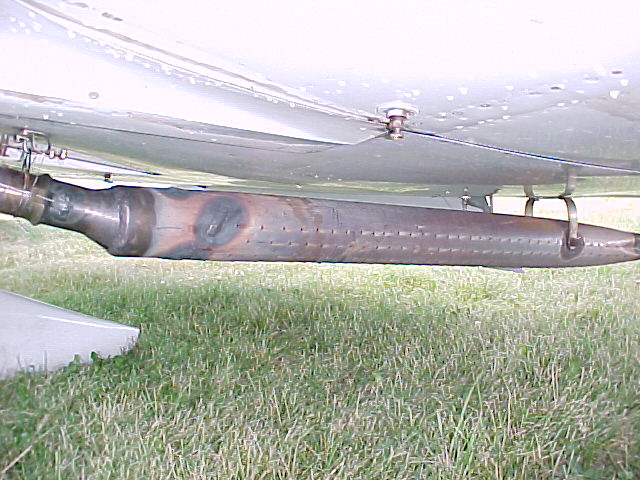
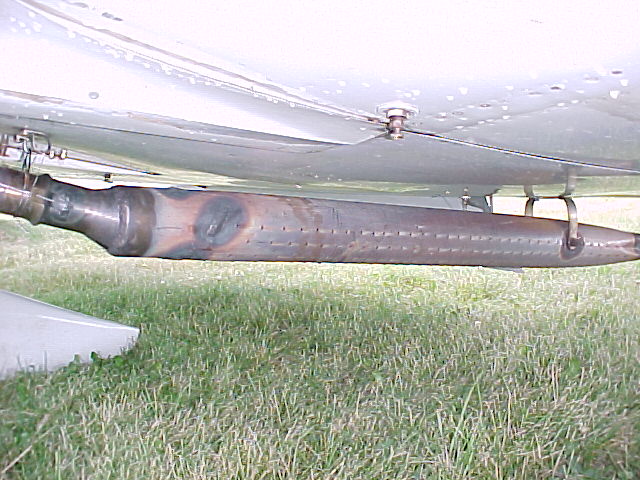
2 - 3 mph with the installation of a new muffler (custom Spintech,
see
http://www.spintechmufflers.com ). Speed loss was due to dirty
aerodynamics of
exposed muffler, not HP loss. I actually gained HP with the spintech
(and
lost some noise).   Engine rpm at 215 mph is 6450 rpm.

Tracy Crook
tcrook@rotaryaviation.com
http://www.rotaryaviation.com
Can you get them in thick wall stainless steel Tracy? What material is
yours
made from now?

Paul Lamar
Standard is 304 SS but they will make them from any alloy or gauge you want
(for a price).  I specified 321 stainless, .062" wall.  They will also
configure the inlet & outlet size & location to your spec.

Tracy Crook
tcrook@rotaryaviation.com
http://www.rotaryaviation.com
What did that jewel cost you Tracy?

This is very interesting.

Here is an excerpt from their web site.

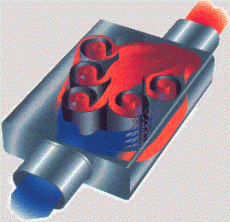
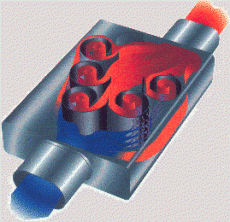
"Spin Tech's patented design provides maximum performance for today's modern engines. Its all done by means of a Spin sound trap, which captures sound vibration (noise) and turns it into heat within the muffler case. As exhaust gases enter they are routed to the spin traps which create a high velocity vortex trapping the sound waves. The extremely high flow rates are achieved by a unique internal scavenging system that creates a venturi effect."

What strikes me about this is the similarities with the tangential muffler and the
long muffler you made with the turning vanes. All three spin the gases around in a hollow
chamber thereby rubbing on the walls of the chamber and losing noise by friction
and heat to the chamber walls.  I think there is a lot more potential in your original
design. If you forget the holes and add more turning vanes first one way and then the
other you might come up with a cheap streamlined muffler that would live with a
rotary. We have length on our side while length is a drawback under a car.
Muffler frontal area is of no consequence under a car while in an aircraft it creates
a lot of aero drag of course.

Paul Lamar

The AirCraft Rotary Engine NewsLetter.              Powered by Linux.
ACRE NL web site.
http://home.earthlink.net/~rotaryeng/            http://www.linux.org