"Byrd, Ray" wrote:
Yes, as before, large-section, well-shaped bodies (max thickness
well aft),
can have less drag than smaller "knobby" shapes. But other factors
are also
important, e.g., I recently read a very good article on airfoil
selection by
Bill Husa. The "blimpiness" of the Questair is not a singular key to its
speed.

http://www.oriontechnologies.net/Documents/Airfoil.htm

He writes that Glasair spent some serious effort to understand why the
Questaire Venture could "easily outdistance the Glasair on
substantialy less
horsepower". He concludes that selection of a low-pitching-moment
airfoil
(and wing aspect ratio, no doubt) led the Questair to a lift/drag of
33.55,
whereas the Glasair L/D was only 16.56.

The very low-pitching-moment airfoil leads to reduced trim lift (and
drag),
enabling the short fuselage and an apparent "blimpiness".

Both planes have fuselages subject to the very turbulent and
rotational air
flow behind a propeller.

Think "reduced fuselage wetted area". This, and overall small size/light
weight, is key to the usual relative high speed of extreme designs
such as
Rutan's EZs, Lancairs etc.

Ray Byrd
Right facts, wrong conclusion.  The wing mostly controls the
drag of light aircraft, other factors are significant, but secondary.
Fast wing, fast airplane, slow wing, slow airplane.  Not absolute, but the
general principal.

Bill Freeman
I don't know where you are getting your numbers Bill but:

What do you mean by "mostly". We need some "real" numbers here. The numbers
I have for these old airplanes is fuselage 25%, wings 35% tail 10%
landing gear 15% and the rest is engine and engine cooling.
That does not exactly make the wings "mostly".

This is from Your wings Assen Jordanoff.

Paul Lamar
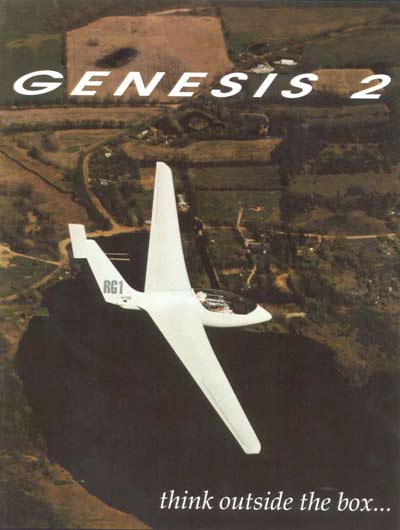
  For the ultimate in low drag look at competition sailplanes. Over the
years there have been numerous examples of tailless designs produced as the
ultimate example of attempting to eliminate the drag contribution of
fuselage wetted area. Latest edition of this is the Genesis (which does
have a horizontal stab, but no fuse to speak of). See:

http://www.groupgenesis.com/

  But so far none of those designs have proven to be superior to a
conventionally configured sailplane.

Mike Wills
This configuration is probably more skin friction drag than a tail boom as the
vertical stabilizer must have more area because the distance to the
CG is shorter.

Paul Lamar

The AirCraft Rotary Engine NewsLetter.              Powered by Linux.
ACRE NL web site.
http://home.earthlink.net/~rotaryeng/            http://www.linux.org