This guy betrays his own lack of 'mathmatical facts'.  Since engine HP is
almost directly related to available manifold pressure, the HP increase
using HIS numbers would be 7.727 HP.  (.710 / 14.7 =  4.829%   * 160 HP =
7.727)

Ever seen a formula 1 racer NOT use a ram air inlet?

Tracy Crook
I think part of the issue with canards is that the carb air box resides in the inside of the lower cowl. The "ram air" is from a scoop on the underside that is either a NACA or P-51 scoop. The scoop is also the sole source of cooling air. So although the inlet of the carb box may face forwards towards the inlet aperture it is still inside the cowl so it is in a common high pressure area but not necessarily getting direct "ram" effect. Cooling problems are so rampant with sorting out new canards that even though somany have been built to plans, they each seem to have their idiosyncracies. I am still wondering if the outlet area of the typical canard is not choking off the airflow.
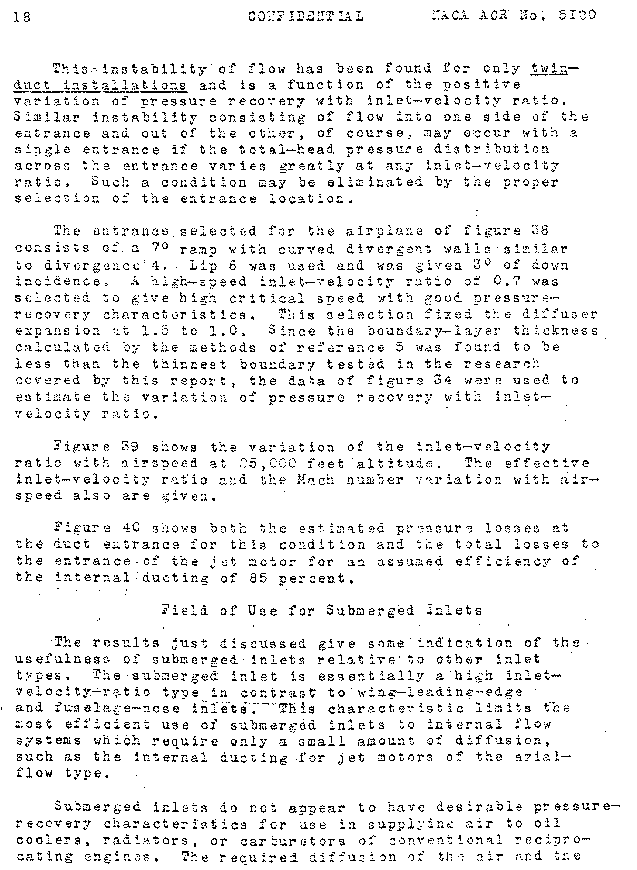
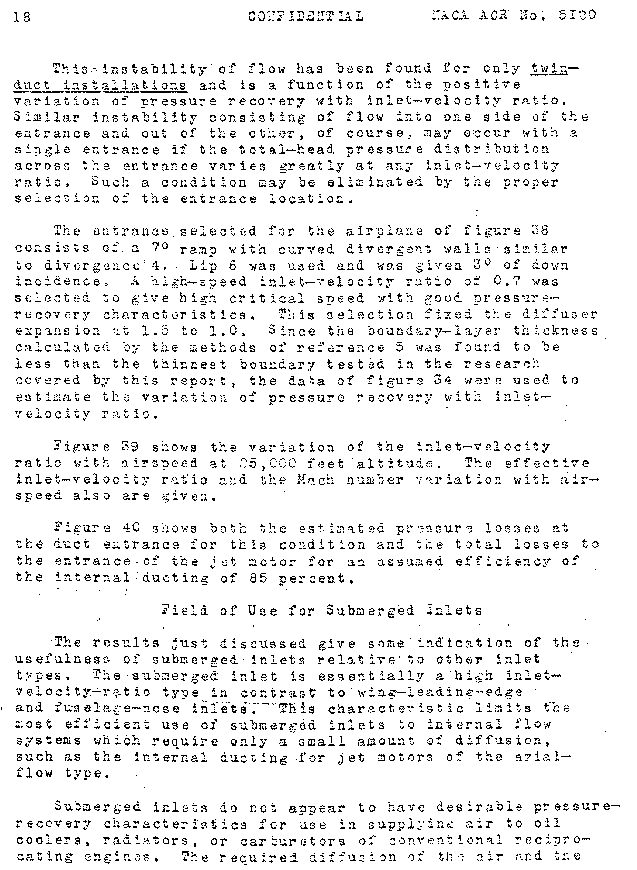
I listen intently to these discussions since cooling issues in a canard are a given, I wonder how well the NACA scoop with its 45 sqr inches is going to provide cooling for water, oil and intercooler.
My current thoughts are to make the lower edge of the NACA rotate down to double the opening size to 90 sqr inches when needed with a corresponding exit increase through movable cowl flaps in the rear. Although this may work well to cram air and release it, this may be counter productive to climbing thrust due to blanking and dirty air. But at least in cruise the whole thing will clean up once it cools down again.
...Chrissi
It is not Chrissi. NACA scoops are not recommended for radiators.

Paul Lamar

The AirCraft Rotary Engine NewsLetter.              Powered by Linux.
ACRE NL web site.
http://home.earthlink.net/~rotaryeng/            http://www.linux.org