Andy,

Check out NACA report 818. Also do a search for ejector on the NACA online
library. Lots of work on ejectors in the late 30's and early 40's. I am in
the process of analyzing the same installation. Preliminary numbers are
not
exactly favorable. Looks like you can expect to get about 1" of water
delta
P from the augmentor. This is because the cooling air flow to exhaust flow
ratio is about 13. About the minimum to even get any effect from the
augmentor. To do better you need a ratio closer to 7-8. At these flow
ratios
a delta P of 4-5 in water is not impossible, totally eliminating the need
for cowl flaps. This works much better on air cooled engines because the
metal is hotter, so you need less cooling airflow and can have a more
effective ejector. This being said, if the radiator is optimized and has a
min pressure drop, plus a good inlet and exit, it is possible to generate
some thrust, or at least minimize cooling drag. Plus you get ground
cooling
as a plus. To be honest, I'm not sure that it is worth the hassle of the
hot
plumbing in the cowl, and the extra weight etc. But I remain hopeful that
when I dig a little deeper I will find out otherwise.

Monty
Monty, I'll revisit the NACA archive and look for 818. Thank you!
  I recognize the overall benefit of the scoop, and the P-51 implementation
seems like the best way to go if you've got the room for the ducting and
radiator.  I'm not worried about extra thrust, and not really looking at
bleeding-edge efficiency, but want it to cool.  I originally looked at the
possibility of a 'P-51/RV-6' but thought it would need a cowl stretch to
balance the cooling system.  The E-Racer tho, with no back seats to 'worry
about' seems like a much better fit - the weight of the cooling system is on
the CG, there's lots of room for plumbing and duct work.  The downside seems
to be pulling air thru the system on the ground.  I first thought about an
electric fan on a hinge that could be down on the rad for extra cooling on
the ground, then pivoted out of the way for unrestricted cooling in the air.
(OK, not a great idea, but hey - I'm a computer network/comms guy!) The
CONTACT! articles (issues 39 and 47)about Charlie Airesman Jr.'s augmenter
are pretty exciting - absolutely no ground overheating.

  (I'm surprised that I haven't seen any comment here about Daniel Nicoson's
article in CONTACT! 66 about augmented cooling.  Any thoughts?)

  (Here's an Air and Space mag article on the Meredith Effect:
http://www.airspacemag.com/asm/mag/supp/jj99/Mustang.html)

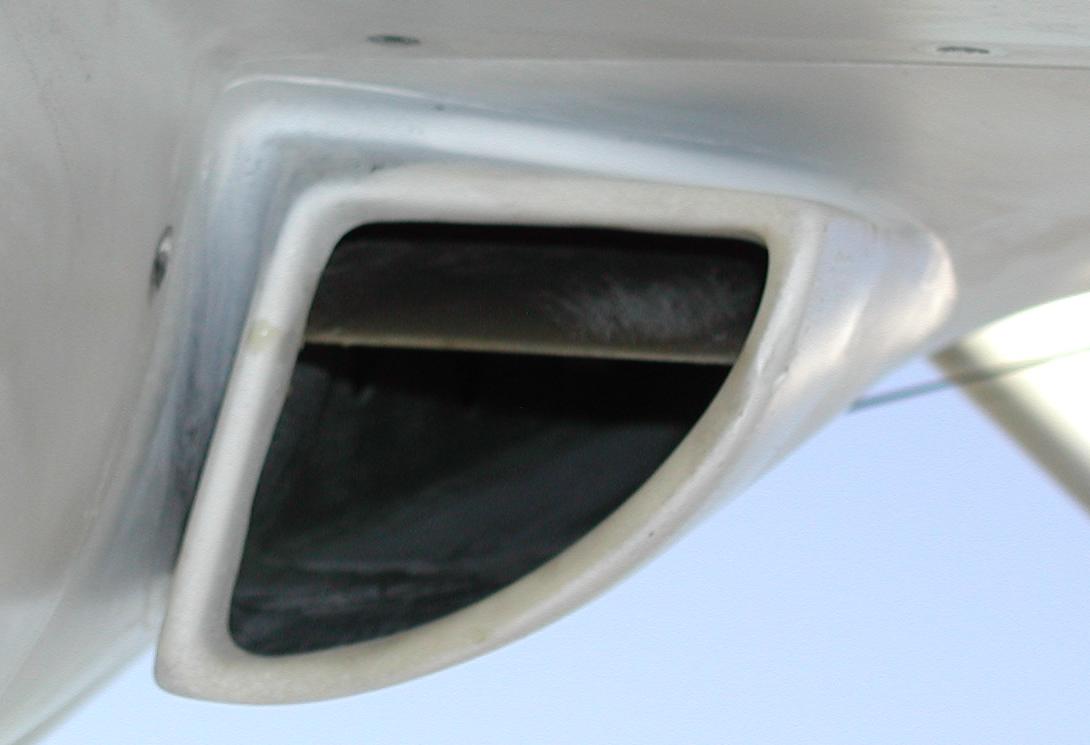
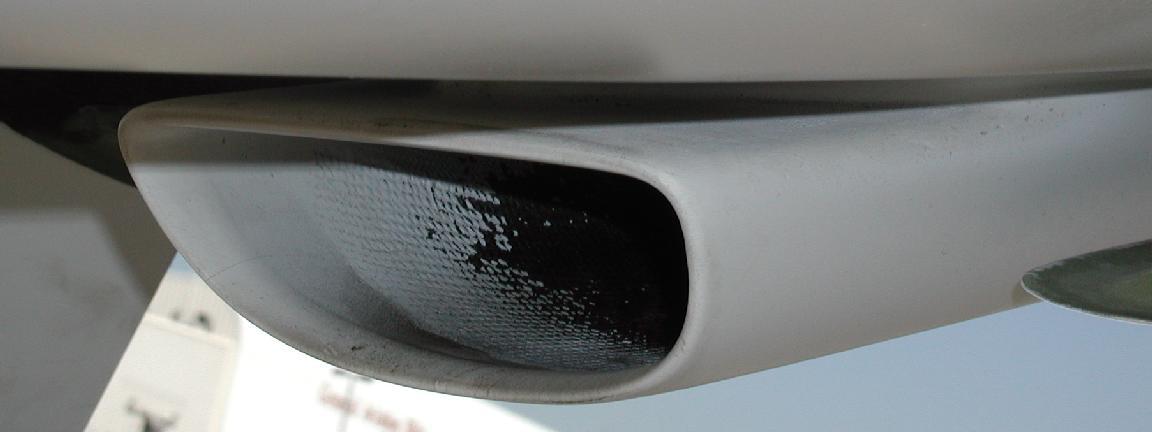
  As for scoop shapes...  Attached are a couple of photos from an E-Racer
and a Berkut, and a scan from the early VariEze plans.  Paul has sold me on
the shape of the duct to and from the radiator, but is the shape of the
opening of the scoop important?

  Thank you everyone, for sharing thoughts, time, experience and brain power
to continue rotary progress.   Andy Hecker
I'll take these two at a time. The first is an arm pit scoop. An attempt
was made to bypass the boundary layer but I think it failed.
The corner probably restricts the boundary layer air bleed.
The scoop would probably work better if it was moved slightly outboard or
slightly down lower on the fuselage.

The second looks good but perhaps being a bit too close to the fuselage.

Paul Lamar

The AirCraft Rotary Engine NewsLetter.              Powered by Linux.
ACRE NL web site.
http://home.earthlink.net/~rotaryeng/            http://www.linux.org