Monty Roberts wrote:

Well......

It was raining and cold today, so rather than work on the house (don't
tell my wife ;-) I decided to finally dig into the thermo of the cooling
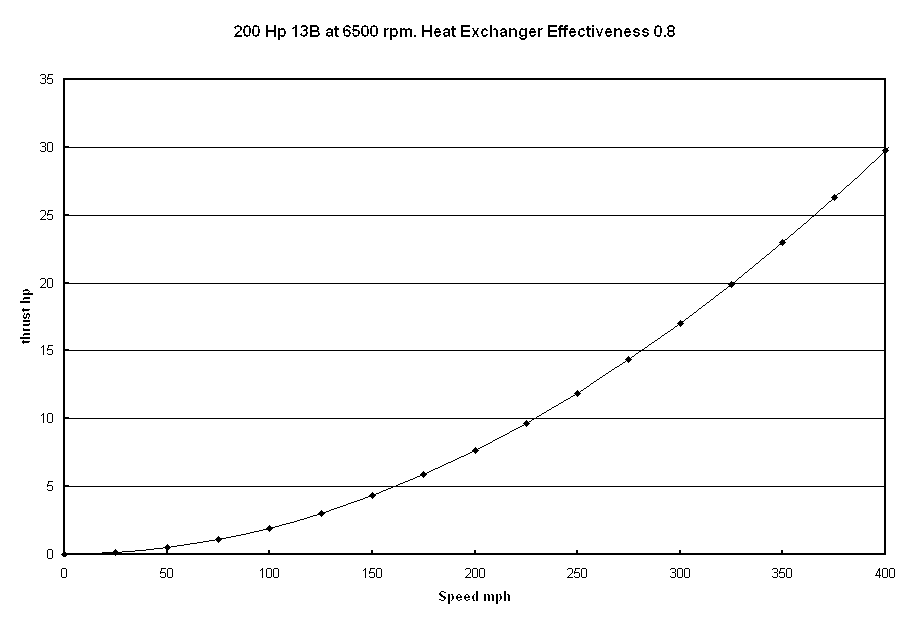
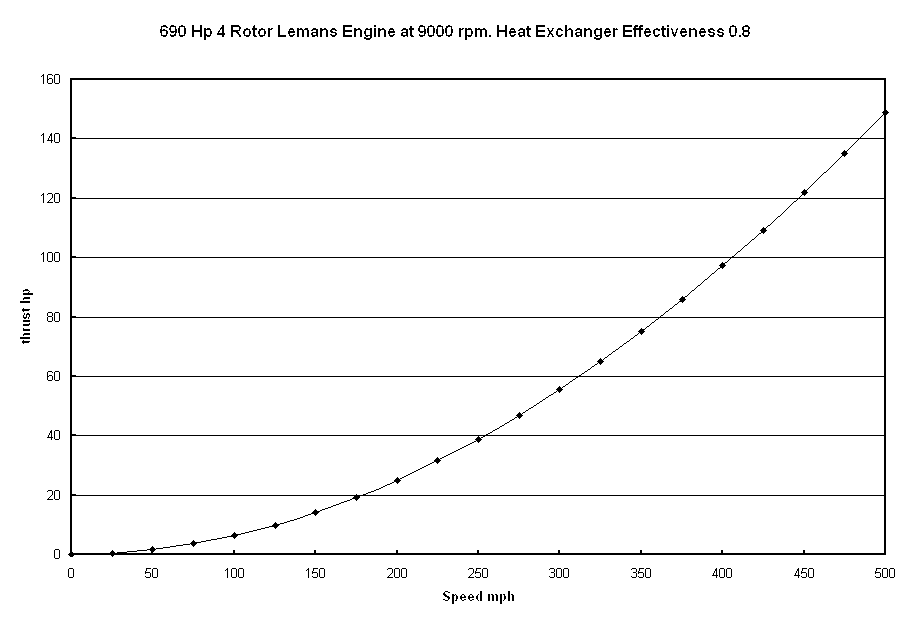
system. I assumed a 200 hp 13 B at 6500 rpm and a heat exchanger
effectiveness of .8. I spent the whole day crawling through heat exchanger
and propulsion theory. I assumed a best case everything (except heat
exchanger effectiveness) and got the following chart. This is the absolute
BEST that you could possibly do if everything were ideal, which it will not
be. More accurate numbers require heat exchanger data (which for water/air
you have to really try to make it bad). The chart shows what would happen if
you could recover all of the energy in the coolant, oil, and exhaust and
convert it to cooling air exit velocity at ambient pressure. Below 200 mph
it is useless, don't waste your time. If you are going 250+ you might see
some gain. If you are Dave Garber, it could buy you an edge. It MIGHT be
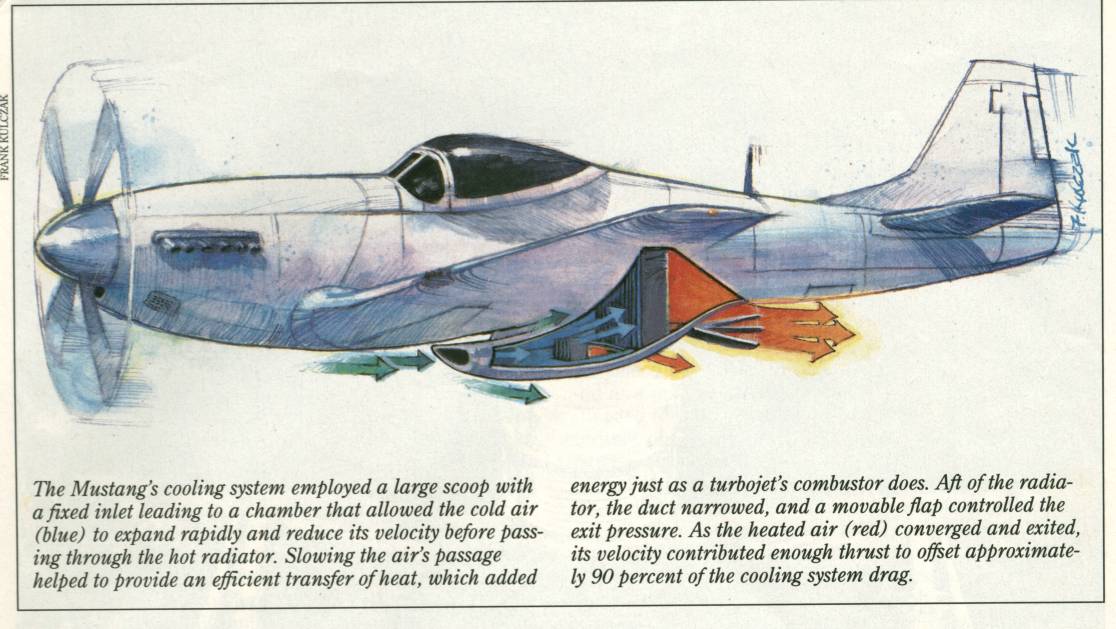
worth it on a fast EZ or E-racer. For the P51 it could help (400 mph) but
the P51 did not use the exhaust heat this effectively. This chart is for sea
level standard air. At altitude the effect would increase because the speed
of sound decreases (How much? don't know yet, ask me next week). This data
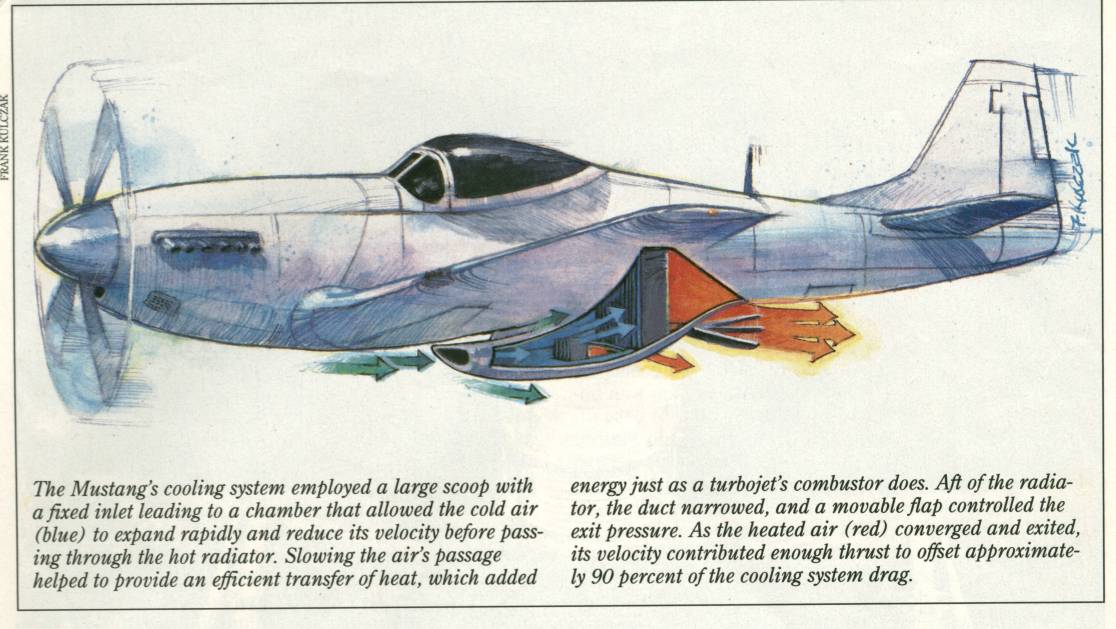
includes compressibility effects. You are looking at the Meredith Effect for
our power levels and speeds. Not exactly awe inspiring.
Monty
Monty could you print that chart as a gif with a screen capture program?
Here is something out of Hoerner that you might also find interesting.

Paul Lamar
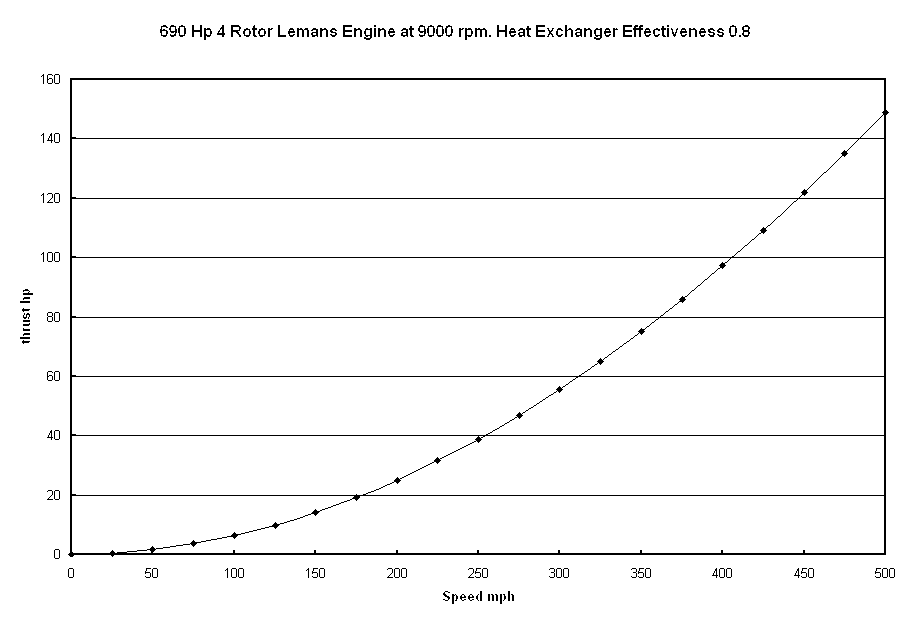
I don't have a screen capture program. I saved them as jpeg files and
attached them. Meredith1 is the original that I sent. Meredith2 is a new
chart. Turns out things start to get interesting at Reno speeds and powers.
You could actually generate a significant amount of thrust above 400 mph.
this is due to the greater dynamic pressure available, and the higher
required HP, and thus higher rejected heat. Do you have any specs on the
Lemans engine, for weight and dimensions? Join 2 13B's with a 20B middle
housing, and a new E-shaft, Bell planetary reduction...............

The chart from Horner only takes into account the drag reduction from
viscosity and density changes due to heating. Part of the problem is all of
the early stuff only uses non compressible analysis of the cooling system.
After that everything went to Jet engines. If you use the Jet engine methods
on the older systems, you get the charts that I attached. Everybody is
missing the boat on this because the Pro's could give a crap about ancient
piston engines, and the amateurs are all still using NACA stuff that is 60
years out of date. Kucheman and Weber contains all the necessary stuff, I
just don't think that they combined it, because there was no need. All the
publications are divided into two camps, Low subsonic, High subsonic and
above. Very little in between. Only Reno racers and a few of the crazier
homebuilders would have an interest in such things.

Monty
This looks like a fruitful avenue for experimentation.
Amazing what could be done with a simple set of cowl flaps.

Paul Lamar

The AirCraft Rotary Engine NewsLetter.              Powered by Linux.
ACRE NL web site.
http://home.earthlink.net/~rotaryeng/            http://www.linux.org