[Todd TC. Carrico]
 > I wonder if you could use the side ports at idle, and open up the PP at
 > full tilt boogie (this is a technical list is it not <g>).
The peripheral ported engine is more docile than the bridge ported engine.
They will both idle below 1,000 RPM but do not sound good doing it. It will
be shaking the daylights out of the stationary gears and the gears in the
PSRU. The race cars idle at 1,800 to 2,000 RPM. You can lean out the idle mix
and slow them way down, but
we run every system full rich and then some to get enough fuel flow above
9,000 RPM. Our Booster venturies are cut off at the bridge and we get very
little secondary signal. I suspect that adjustable (Tracy's) fuel injection
would allow any idle speed you would want no matter what ports you run.
Lynn E. Hanover
Idling an aircraft rotary engine at 2000 RPM is no problem. Don't forget the
prop is turning only 922 RPM with a 2.17:1 gear box and only 682 RPM
with Ken Welters 2.93:1 belt reduction drive. Heck I idle my
O-470 at 1000 prop RPM to keep the plugs from fouling.

I have seen Tracy idle his engine at 1000 RPM with no gear box chatter.
That is because he uses rubber bushings to damp torque fluctuations unlike the
Ross spring clutch center.

Paul Lamar
Paul,

It sounds like you've become accustomed to flying a constant
speed prop. High-pitched props=significant thrust at high
idle speeds. In an RV-x with a Lyc & fixed pitch prop, there
is a very noticable difference between 600 rpm & 800 rpm in
landing configuration. At 1000 prop rpm you've got a very
very flat glide slope.

Charlie England
It is true I fly a constant speed prop but I have also flown my share of fixed
pitch props.

What you do is pitch up a bit until you get on the back side of the power
curve (only done on final) and the sink rate goes back to where it was. Practice
this a lot at altitude as it is quite dangerous if done incorrectly. It helps
if you have a rate of climb instrument. Push the stick slightly to decrease
the sink or give it a bit more power momentarily just before touch down.
Then kill the engine by pulling the mixture. This operation is just above
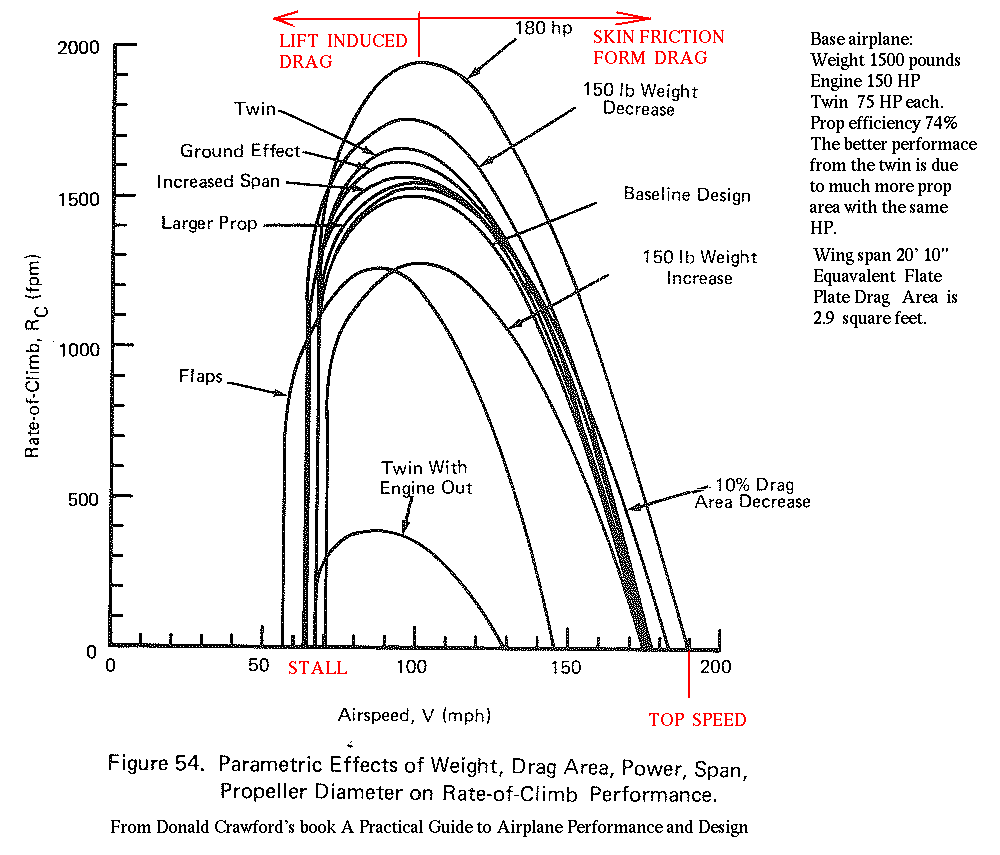
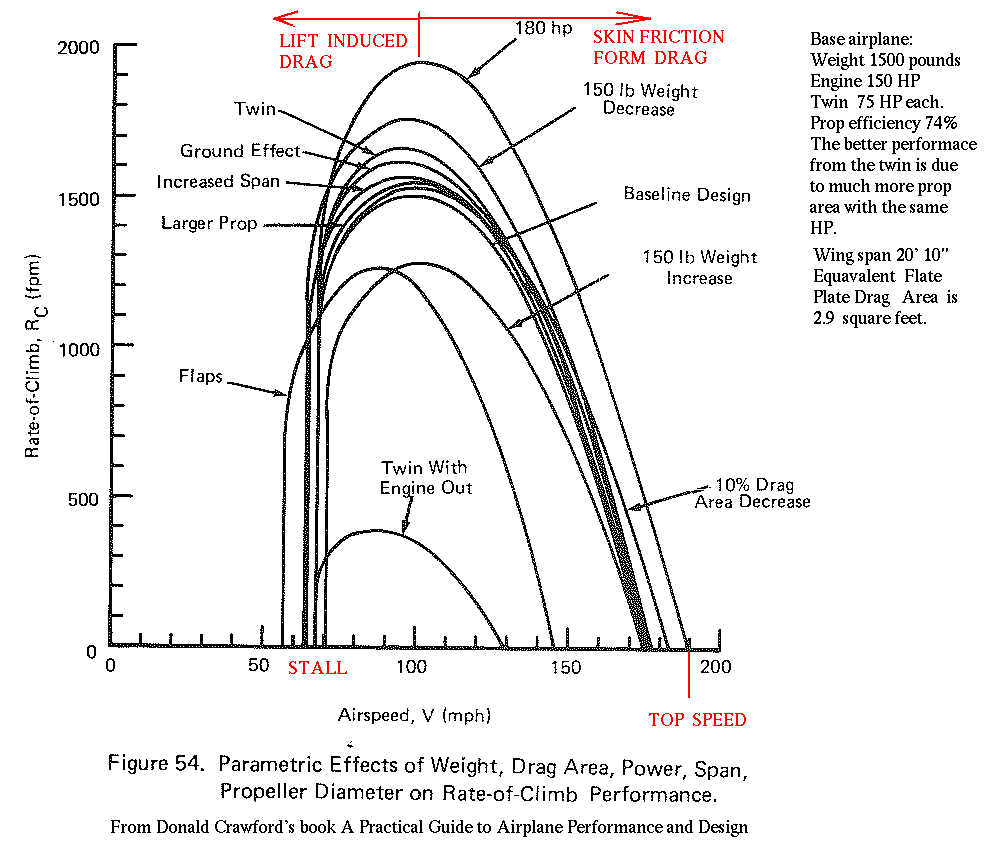
stall speed and in the category of mushing. It is below the x axis on this
chart. A negative rate of climb.

Also slips will slow the plane on approach with a bit too much RPM and a
fixed pitch prop. It is the best way as it take less skill.

BTW Tracy scares me a bit because he drags it in over the tress at Shady Bend.
I would much prefer if he came in high and slipped it during the last minutes.
Much safer in case of the engine quitting on short final. We had a highly experienced
airline and air show pilot forced to land on the freeway at Santa Paula because
he was using a conventional approach and the engine died on final. Hit a car with
injures to the people in the car.

Do you have the Ross gear box Charlie? I think the Ross box could be fixed
with a Tracy Crook style torsional isolator.

Paul Lamar

The AirCraft Rotary Engine NewsLetter.              Powered by Linux.
ACRE NL web site.
http://home.earthlink.net/~rotaryeng/            http://www.linux.org