Paul,
Pity about the rotor housing not being possible, having them made
with
PP
would be a winner. How much would it cost for the DG coating on a
rotor
housing at a guesstimate?
We use 356 T6 do you know the composition?
The Intermediate and end housings with the plate was what I was
referring to
perhaps someone will bite the bullet and run a test engine - I've
always
liked
the idea, taking into consideration comments on different rates of
expansion
etc.

Can you draw a line on your cut down plate and give an idea of where
you
would run the seals and bolt attachment points.
I don't follow you here.
Sorry -where the O-ring sits (in the cut down Intermediate and end
housing)
between the aluminium section and the steel plate and the attachment
points
holding the two together (as seen in a front on view)
You have your barry mount running horizontally, in this drawing,
rather
than
vertically (as in the plate design) - any reason for that ?

George (down under)
Paul,
Aluminum alloy composition designations,in the US, are made under the
guidance
of the Aluminium Assn. The major alluminium producers have agreed upon a 4
digit
numerical system  for designing specifically the composition of wrought
aluminum
and aluminum alloys, while a three digit system is used for casting alloys.

The first of the 4 digits in the alloy number indicates the alloy group
which identifies
the primary alloying elements within the alloy i.e..
1xxx - 99% pure alloy
2xxx - alloyed primarily with copper, higher strength and reduced corrosion.
3xxx -                                  Manganese, for moderate strength.
4xxx -                                  Silicone to lower melting point and
increase
                                            fluidity for casting.
5xxx -                                  Magnesium to make a moderate
strength alloy
6xxx -                                  Magnesium and silicone for a
moderate strength alloy
7xxx-                                   Zinc to make a high strength alloy
8xxx - other than those mentioned above
9xxx - NEW
The last two digits represent unique alloys in a series

Temper Designations
H1 to H3
F - as Fabricated
O- Annealed
W - Solution heat treated
T1 to T10
T6 - means that it has been solution heat treated and then artificially
aged, without
cold working.
However once you melt any aluminum the temper process must start again, so
unless this is done after casting - well I will leave it up you your own
assessment.

BTW have you seen the site :-
http://www.inel.gov/featurestories/08-01r-dbranagan.shtml

Is this the process you were speaking about when discussing the rotor
housing surface hardening.
George (down under)
I could not get that site to work. For steel you just harden it and
have it ground flat. The nitriding process will harden the the surface
even more for even lower wear. Standard practice on air cooled
aircraft engine cylinders.

http://www.harcourt.com/dictionary/def/6/9/3/5/6935700.html
http://www.nitrex.com/indexr.htm
http://www.nitriding.co.uk/

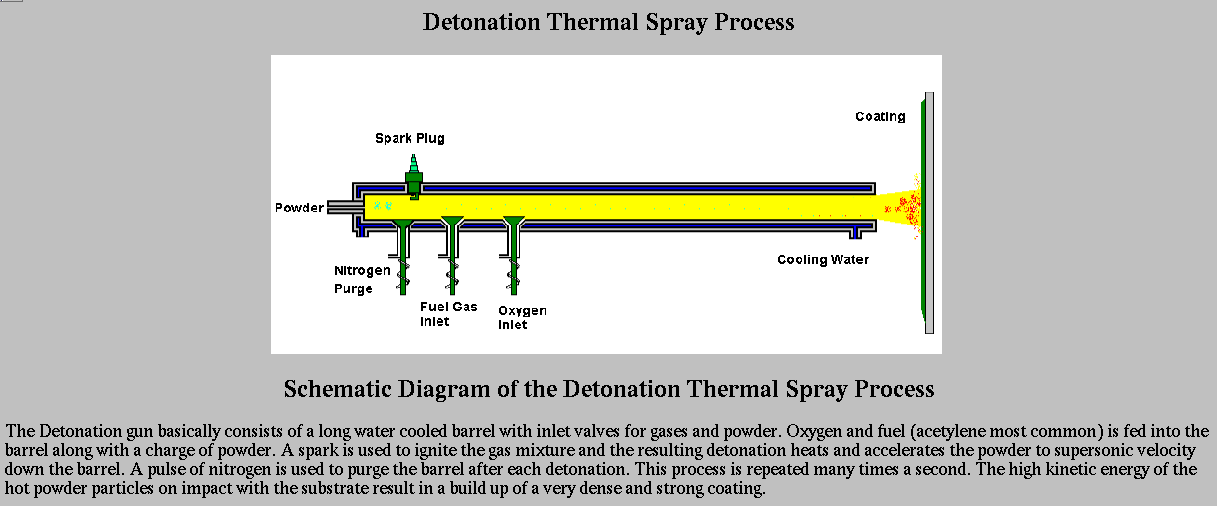
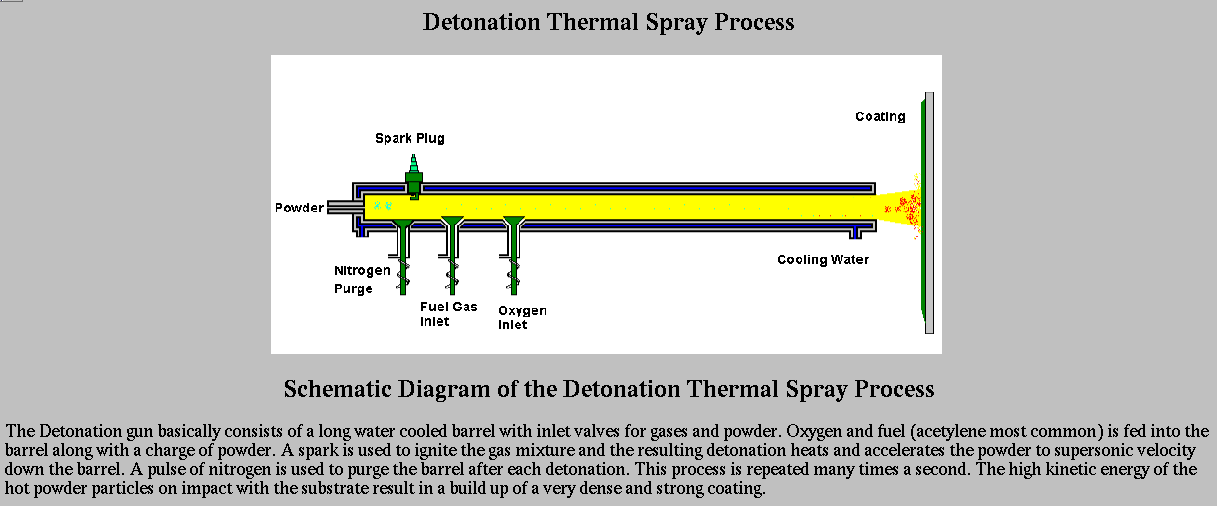
For aluminum the best process is detonation gun coating.
http://www.arcihyd.com/html/tf/dsg.htm
http://www.gordonengland.co.uk/ds.htm

Paul Lamar

The AirCraft Rotary Engine NewsLetter.              Powered by Linux.
ACRE NL web site. Copyright 1998-2002 All world wide rights reserved.
http://home.earthlink.net/~rotaryeng/            http://www.linux.org