Paul,

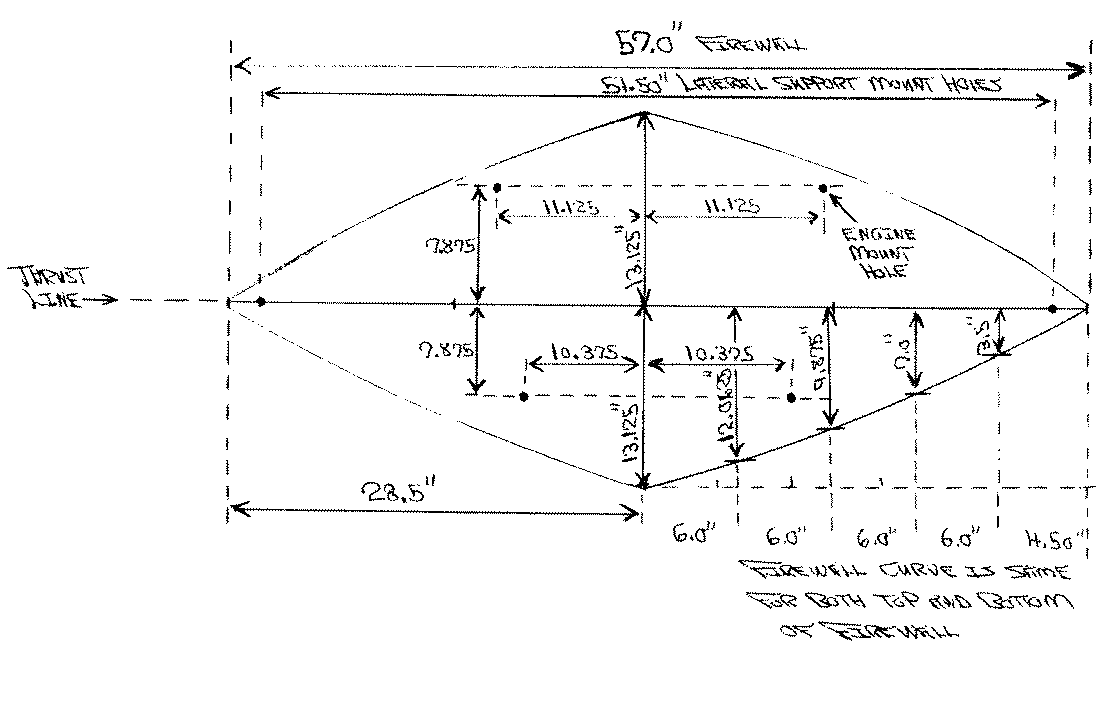
        I need to clarify your comments. You say the firewall hard points
 are too close together to make a wide mount practical. Is that horiz. or
 vert. or both?
horiz.
I had envisioned all three members of the left and right
 mount coming together on the thrust line (which is also the left and right
 cowl line). The lateral tripod member directly follows the thrust line.
 Not too good on thrust line. More room for the turbo and manifold a bit lower
centered on the exhaust ports.
       Is the problem you see with a wide plate structural or a space
 problem? Also why would diagonal supports to the nose of the Ross PSRU be
 necessary?
If the plate is too wide it might flex fore and aft too much so you
might need to stiffen it up with diags to the nose of the PSRU.
My Turbo manifold is a HKS like Ernesto and Chrissi have.
The HKS makes it even more difficult to use a wide plate mount because
you lose a bit of positioning flexibility for the turbo.

Can you make a sketch of that HKS manifold for me?
I will
 probably fly intially without a Turbo. I will mock up a mount to make sure
 it will clear turbo and manifold before cutting any metal.

       Could you move the inlet for oil cooler and intercooler to below the
 spinner and fair into cowl for effect?

       Thanks
       Kelly
What size and shape of an opening do you want?

Paul Lamar
       Paul,
        It was my understanding that your "Kis" mount was about 29" wide
 total width which would be about the same as the "Delta". Is this accurate
 and does it require diag. bracing?

        I would prefer a shark mouth shaped inlet with boundry layer spacing
 if you think it is necessary.

        I will try and come up with some ball park dimensions for the "HKS"
 TO4 Turbo manifold.

       Kelly
Yes it is but what does that have to do with the 21 inch  horizontal distance
between the Dyke Delta lower firewall motor mount hard points? With most side by side
airplanes this dimension is 36 inches or more.  In that case the 29 inch
motor plate works out well. In the Dyke Delta case it does not.
Sorry to be the bearer of bad tidings.

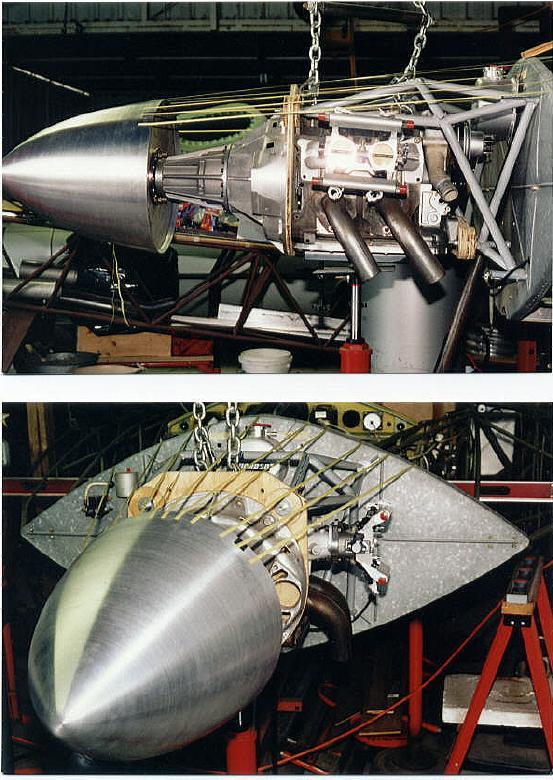
The great advantage of 3 D programs like Rhino is you can check the clearance
on all the complicated parts making up an engine installation.

Make a full scale plywood and pvc pipe mock up.

I also think you will lose one of the
great advantages of the rotary-engine-planetary-PSRU and that is the low height
of the engine compared to a Lycoming with the carb under the oil pan. The
Dyke Delta, in effect, is a flying wing with the engine imbedded in the
leading edge. If you use a low air intake you then lose that
aerodynamic advantage.

IMHO There is plenty of room on the right side of the engine for oil coolers and
intercoolers. I think that is the best place for the air intake(s).

Paul Lamar

The AirCraft Rotary Engine NewsLetter.              Powered by Linux.
ACRE NL web site. Copyright 1998-2002 All world wide rights reserved.
http://home.earthlink.net/~rotaryeng/            http://www.linux.org