Not the same thing Lynn.
 > Ian is doing away with the low pressure catch can. Some late
model
 > cars and trucks are doing this. The pressure tank is
 > only about 2/3 rd of the way full. There is no back flow valve
 > in the pressure relief cap. If the coolant expands beyond the
 > volume limits of the pressure tank it is lost over board for
good.
It is the same idea. The catch tank after the Mazda pressure bottle
is a
required 32 oz catch tank vented to atmospheric per the rules. I have
never
managed to get anything into the catch tank since 1980. I ran the
overflow
hose into the bottom just in case, but I only need the second bottle
to be
legal. On my plane I will just run the overflow hose out of the cowl
in front
of me so I can see a problem early.
My wife had a Renault years ago.
The
pressure bottle was quite large. The cap I believe was not vented at
all. The
bottle was to be kept about 1/4 full. One day a service station kid
filled it
all the way up. My wife got on the freeway and the system went into
hydraulic
lock and the whole plastic end tank blew off of the radiator. So the
larger
pressurized bottle works fine if you leave enough head space for
compressed
air. I don't think it has to be bigger than the stock RX-2 bottle.
The GM
style zero pressure bottle won't give back any fluid until the engine
drops
below atmospheric. If you are having a big overheating problem that
is not
going to happen for two hours after the landing. One time we took a
wrench
through the radiator, and the driver was so busy he didn't notice the
temp
gage peg and return to below normal. He finished the race with the
power down
a bit and just a hint of smoke. When he got back into the pit area
he
couldn't shut down the engine. I turned off the marine master switch
and it
kept on running. I assumed that the master switch had vibrated apart
as had
happened to a Lucas master switch before. The pieces inside the
switch had
maintained continuity. That was all I could think of at the time. I
yanked
the coil wires off. Still the engine would not quit. I had the driver
put it
in 5th gear, hold the brakes and let the clutch out. That did it. It
snapped
and cracked at us for an hour after that. The cast iron was OK. The
rotor
housings were toast. It ran again after rebuilding. No problems.

Lynn E. Hanover
Let me get this straight,  Your driver ran the engine with no coolant
for an extended period of time.  Obtaining the only cooling through the
oil cooler.  The engine was still running with no ill effects.  short of
loosing the rotor housings.   Sounds like this engine is ment to be an
aircraft engine.  Takes a licking and keeps on ticking. (oh wait that
was used by timex).  :-)

Tom Webber
The rotor housings expand when they get hot and the cast iron
rotor expands less. A piston engine works the other way around.
The aluminum piston expands and could seize in the steel cylinder.

This is not to say you can run the engine without coolant but
it will probably get you to an airport if it does overheat.

When Lynn says toast on the rotor housings it usually means
they are about .014 narrower in certain areas after they
cool down then when they were new. This is called rotor housing
shrinkage. With TES O-rings you could probably start up
the engine and it would stop leaking internally once
the rotor housing came up to temp, expanded and sealed the .007 gap.
Non TES O-rings are susceptible to deterioration as the
hot gases impinge on them after the rotor housing has
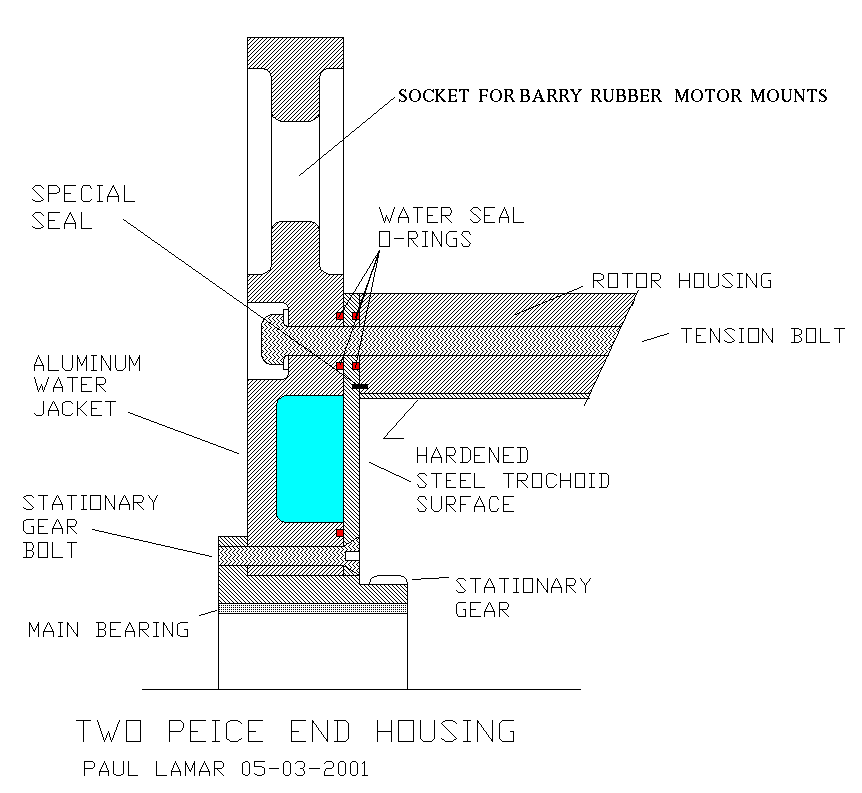
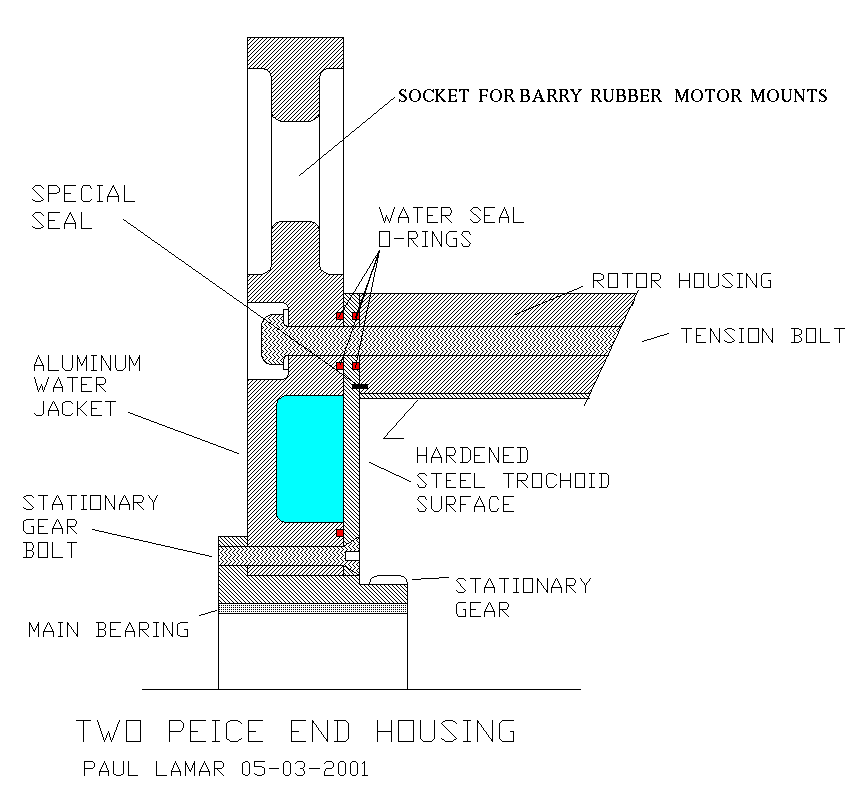
been shrunk. In the drawing below the special SS seal
is designed to prevent this. This special SS seal would further
improve the rotary engines ability to survive overheating.

The newer engines with the O-ring slots in
the cast iron end housings instead of in the rotor housings
are less susceptible to this failure mode. I have a set of rotor
housings that Perry overheated several times and these are
not shrunk.

We discussed an idea a few years ago where you had a gallon or
so of emergency coolant in an aux tank that you could pump into the engine
with a small electric pressure pump exceeding the 15 or 20 psi
pressure cap. You could still use the coolant that was puked overboard if you
capture it, pass it through an aux heat exchanger and pump it back
into the engine with the electric pressure pump. This all assumes
you have a relatively minor leak or bad water pump drive.

If I were making long trips over water I would consider such a
system as that.

If you blow a rad hose forget it.

This emphasizes the extreme importance of using the highest quality
plumbing money can buy.

The beauty of a separate oil cooling system is there is no real
temp limit. With antifreeze the temp limit is the boiling temp.
Oil boils at a much higher temp so it is never puked overboard.

Paul Lamar

The AirCraft Rotary Engine NewsLetter.  Powered by Linux.
ACRE NL web site. http://home.earthlink.net/~rotaryeng/
Copyright 1998-2002 All world wide rights reserved.