Lynn Hanover wrote:
So, high flow rates through the engine is good for total heat transfer. High flow
rates through the radiator(s) is good for total heat transfer. High pump output
requires high pump inlet flow that is at the end of the restriction trail. The
pump will begin cavitating if inlet flow is insufficient. Cavitation can eat away
the impeller blades and cause pressure spikes in the coolant. This can dance
clamped connections apart, and overcome pressure relief caps and dump coolant.

So what to do? All of this has been covered here before but let me put it
together in one lump. You could slow the pump down. Bigger pump pulley or smaller
crank pulley. You could make the pump less efficient by reducing the impeller
diameter or reducing vane height. You could run a higher pressure cap on a remote
pressure recovery bottle to keep total system pressure higher. The pressure you
could run is only limited by radiator design. Around 22 pounds would be good. you
could do all of these, or some of them. But there is one thing you must do.
Paul,
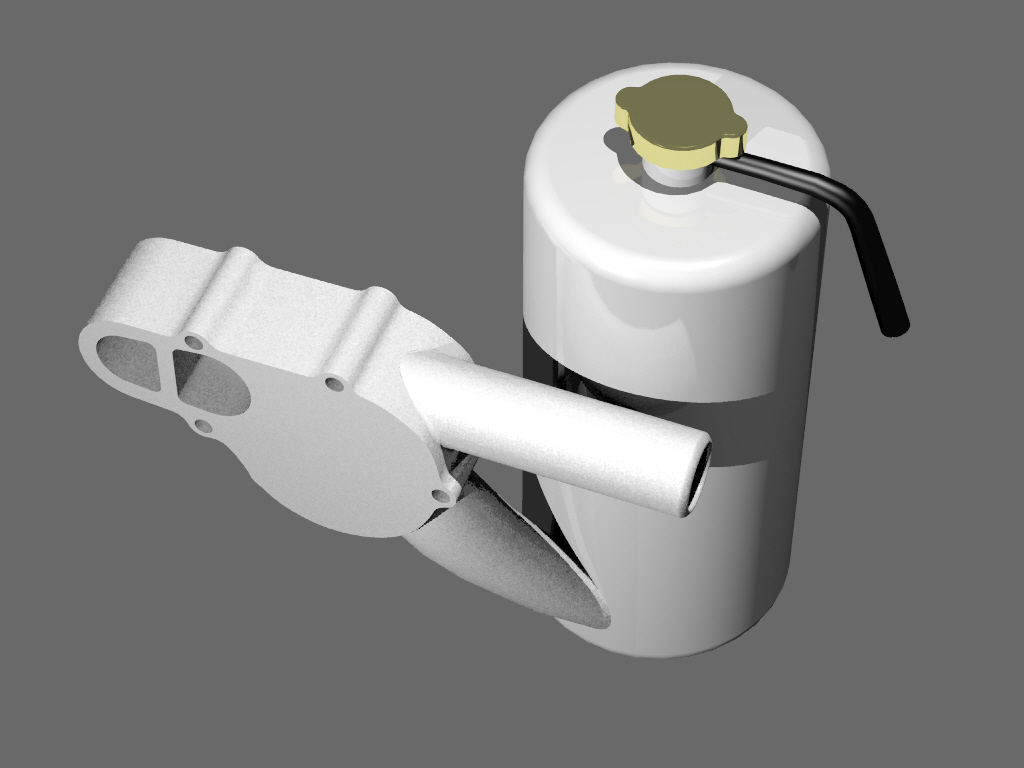
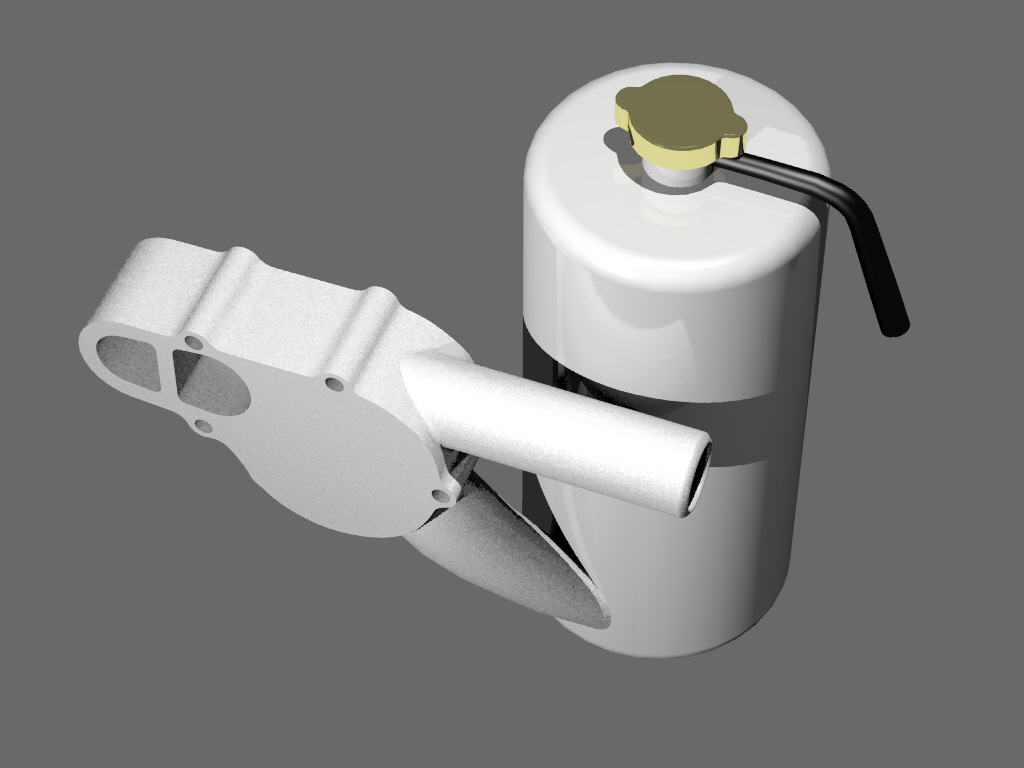
Back on November 11th you sent out this Rhino drawing of a water pump with a
pressure tank incorporated into the pump outlet.  It seems to me that this same
idea, but with the pressure can on the pump *inlet*, would help solve both the pump
cavitation problem (by providing an elastic air spring on the inlet side) as well
as letting one set the system pressure on the pump inlet side (which is always the
system's lowest pressure point).

Can you see a way to accomplish that change?

Russell Kent
Here it is. I think the block outlet pipe will clear the can.
You now have freedom to plumb in from the rad from almost
any direction. (The inlet from the rad is not shown in the rendering.)

Paul Lamar

The AirCraft Rotary Engine NewsLetter.  Powered by Linux.
ACRE NL web site. http://home.earthlink.net/~rotaryeng/
Copyright 1998-2002 All world wide rights reserved.