What wall thickness was the 321 stainless exhaust tubing Keith?
Paul Lamar
Keith Holm wrote:
16 gauge, or .065".
Keith Holm
Powersport Aviation
Wow! .065 thick 321 and it still broke in only four hours. Hard to
believe.
Must have been a defective weld or he cantilevered the entire ridged
exhaust
system off the flange with no braces and it vibrated at a sympathetic
resonant frequency. Either that or that PowerSport PP 13B is one
powerful
motor :)

Tracy got 650 hours out of this .035 thick SS muffler.

 Paul,
There were likely many factors contributing to the exhaust failure.
As I
wrote, the system was unsupported, and likely was in resonance. There
was
also no room to allow for the differential expansion of each header
tube.
The weld did not appear to be defective, but there are problems
associated
with welding thin wall tube directly to a heavier flange. Pictures of
this
will be up soon.  The system probably had closer to 20 hours on it
considering the extensive ground testing that Kerry performed.  You
are
right of course that the Powersport RE-215 is one powerful engine, but
not
in any destructive way!!
Keith Holm
Powersport Aviation

Paul Lamar
Keith,

  Are you saying that the failure was at the point where the head pipes
were welded to the exhaust flanges (at the engine)? If this was reported
before sorry for the repetition - I must have missed it. I'm putting
together a header right now using .065" 321 and had planned on slip
couplings where the primaries enter the collector. Sounds like maybe slips
should be considered at the engine end of the primaries as well.

  Thanks very much for the info on this failure Keith.

Mike Wills
Hello Mike,
No you did not miss it!  I apologize that we do not have more time to
address questions on this list, but current business comes first!  I will
answer your question, and have attached 2 pictures that show the failure
clearly, the remaining pictures and report will be on our website soon.
 I suggest picking up a good book on welding, but in short, you should not
weld the tube to the flange on the outside in a continuous bead.  The tube
should pass through the flange and have a few tacks on the outside.  The
tube should then be welded around its circumference on the back side of the
flange. ( a chamfer here helps)  The flange is then made flat again on a
belt sander.  Powersport takes things a step further by machining/turning
our flanges from 321 to create an integral flange/tube component.  The first
1" of our "tubing" is a machined part of the flange with a thin wall
section.  This thin walled "machined tube" can be welded with minimal stress
to the 16ga exhaust tubing.
Our EGT's are 1,650 @ max power, and close to 1,700 @cruise.  The location
of your probe will give some variation to the readings. Ours are currently
about 12" back.
I hope this helps Mike,

Keith Holm
Powersport Aviation
Keith, sounds like you are running your engine too rich at cruise.
Tracy found he can lean to about 100 degrees lean of peak and the EGT
will drop down to 1450 degrees F or so. You should also benefit greatly
in terms of fuel flow and MPG. Not to mention lower stress on the
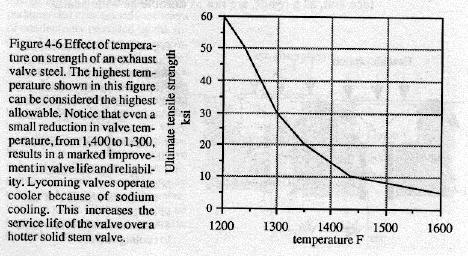
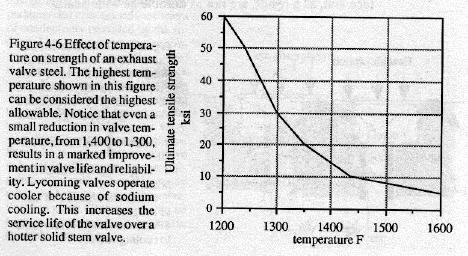
exhaust system. 321 SS is in a steep strength slide at 1700 degrees F.
Tracy feels the reason for the rotaries  ability to run lean is a
outgrowth of the rotating combustion that provides a radial stratified
charge.

Paul Lamar

The AirCraft Rotary Engine NewsLetter.  Powered by Linux.
ACRE NL web site. http://home.earthlink.net/~rotaryeng/
Copyright 1998-2002 All world wide rights reserved.