Sometimes old ideas that have fallen out of favor become viable again
when the economic environment changes or there are some developments
in technology that change the balance back in their favor.
I think turbo compounding's time has come again.
Paul Lamar
 Probably the most practical way to look at turbo compounding in auto
 applications would be in a hybred vehicle. The turbine could drive a
  homopolar alternater at direct drive speeds to charge the electric
 assist modes. This would uncouple the turbo rpm from drive shaft
 rpm and avoid the complexity and losses of clutches and gears.
 On an aircraft the weight and complexity of a hybred would be
 excessive, but you could offload all accessories to the
 electric system. - Vance J
Yes I was thinking that use in a hybrid would be rather a good
application. A small turbo compound all aluminum wankel engine
would save a bunch of size & weight over a small piston engine.
All you would need is a small alternator that would work at
100,000 RPM. Probably not that hard to do. As an intermediate
step one stage of gear reduction would probably work with
an off the shelf alternator.
Paul Lamar
"Michael D. Lilja" wrote:
I have been told by a couple of people as well as reading, one of the reasons the P-51 was so
fast
and efficient (relatively) was that the thrust developed by the cooling system ducting was
used to
offset the cooling system drag.  What if you used the energy of the exhaust to run a turbine
wheel
in the manner of a jet engine and used the power generated to run a fan (in the manner of a
turbo
fan engine.)  That would maybe not only create a higher density atmosphere for combustion
(bleed
air form of turbo charging.)  Blow the rest of this air over all the radiators (oil and
coolant)
and collect their heat energy.  Then in a concentric tube with the exhaust, duct it out the
back
directly as thrust and skip the mechanical connection to the engine all together?  Might be
simpler and easier.  One of the draw backs I can think of would be fitting it in some where.
Just
remember, if you think it has some merit, you heard it here fi
rst!  :-)  Thanks for the wonderful
discussions and forum.  I am also glad to see someone else as interested in turbo compounding
as
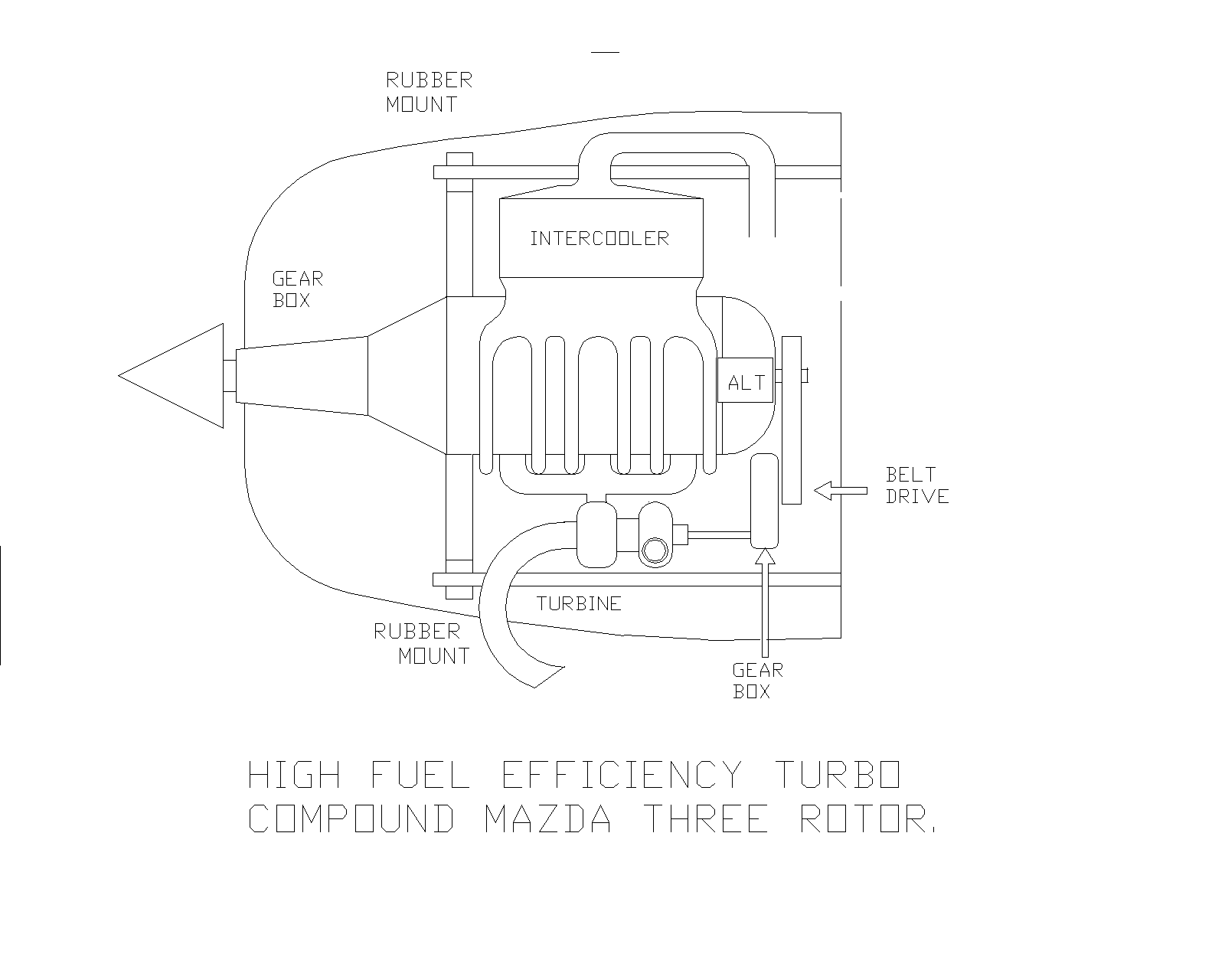
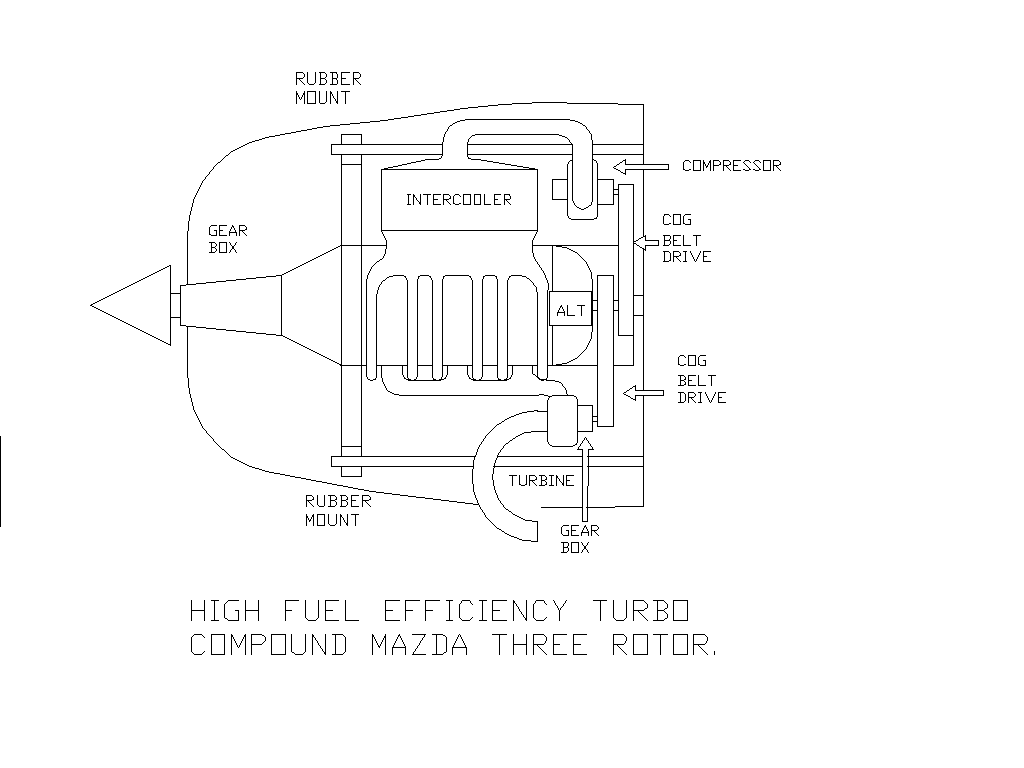
me.  Maybe these two attachments will give you some ideas as well.  The pictures are courtesy
of
Torque Meter
Mike Lilja
Mike I took the liberty of substituting a better picture of the Napier Nomad
I had on file than the one you uploaded. Here is your drawing and
the Nomad picture in question. Too bad the Napier Nomad never went into
production. It was an outstanding turbo compound design.
Paul Lamar
"Michael D. Lilja" wrote:
Thanks for the great picture, Paul!  I agree it is a shame the engine did not go into production.
 But, it was a quite complex and expensive engine.  If we are serious about turbo compunding,
then, I believe, simplicity is the answer.  Hope this helps with the creative juices.

Mike Lilja
I am all for simplicity. Apparently the automotive industry has been
forced into complexity by political forces. Who would have thunk 30 years
ago that almost all engines would be four valves per cylinder with dual
overhead cams. The electronic engine controls would have happened regardless
as they are rather cheap IMHO. Now we have had electric cars that have
come and gone in the short space of five years as I predicted they would.
Currently very expensive and complicated hybrid cars are being tried
and if they are forced on us by tax breaks or other political means
they might survive. IMHO if you take a current tiny (almost all are TINY)
hybrid car and strip out all the heavy and costly electrical stuff
and replace it with a small recip the performance would be better,
the interior volume for passengers and luggage would be superior and
the mileage and emission would be 90% to just as good.

This is the insane environment we now find ourselves where cost and
complexity appear to be less important than political considerations.
I think it is a perfect time to bring back the turbo compound as it
is much less costly and way more simple than a hybrid car. Some sort of
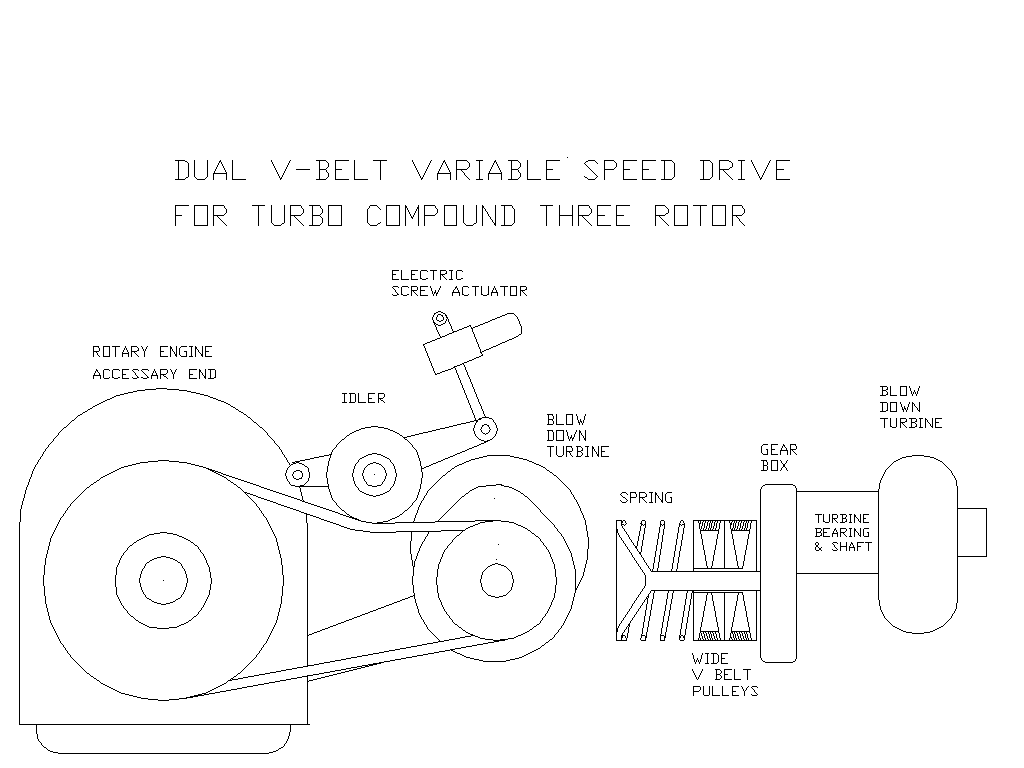
variable turbine gear box might be necessary to derive the full fuel
consumption and emissions benefits but that can be cheaply controlled
with electronics. We discussed all this at length several years ago
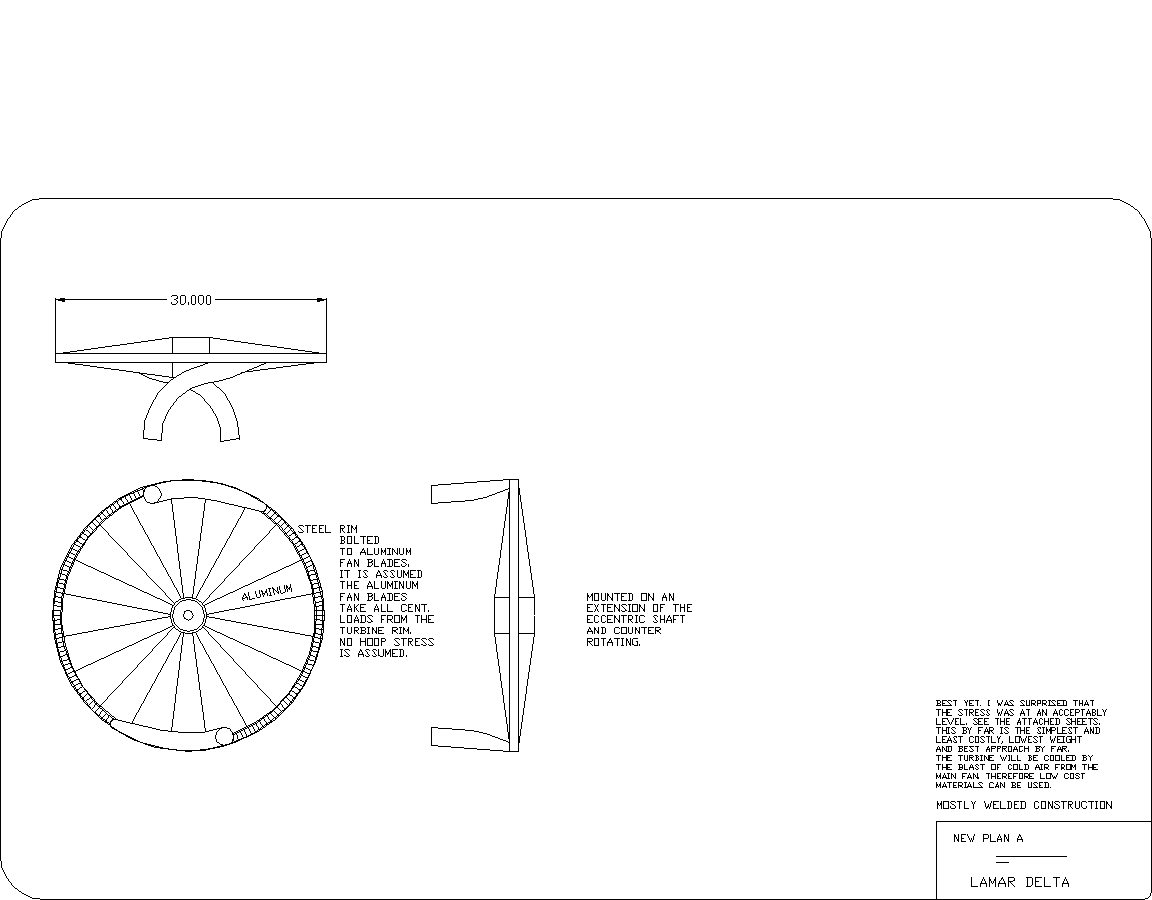
and here are some sketches.

Paul Lamar

The AirCraft Rotary Engine NewsLetter.  Powered by Linux.
ACRE NL web site. http://home.earthlink.net/~rotaryeng/
Copyright 1998-2002 All world wide rights reserved.