Dan Ruggirello wrote:

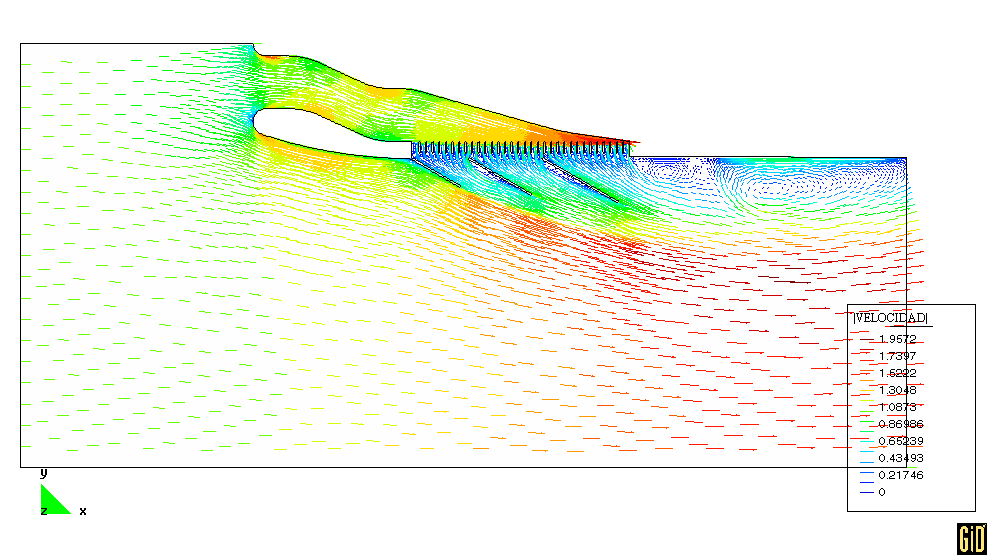
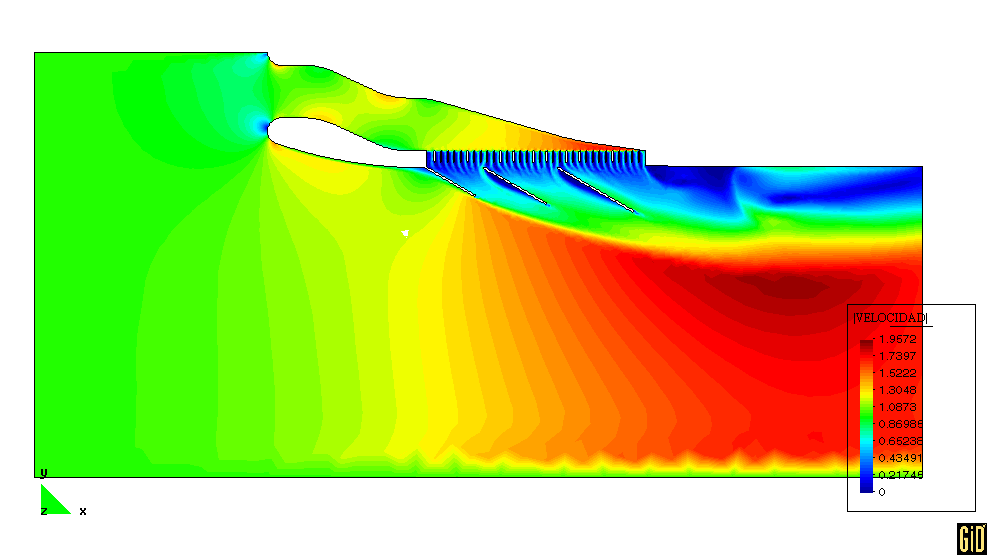
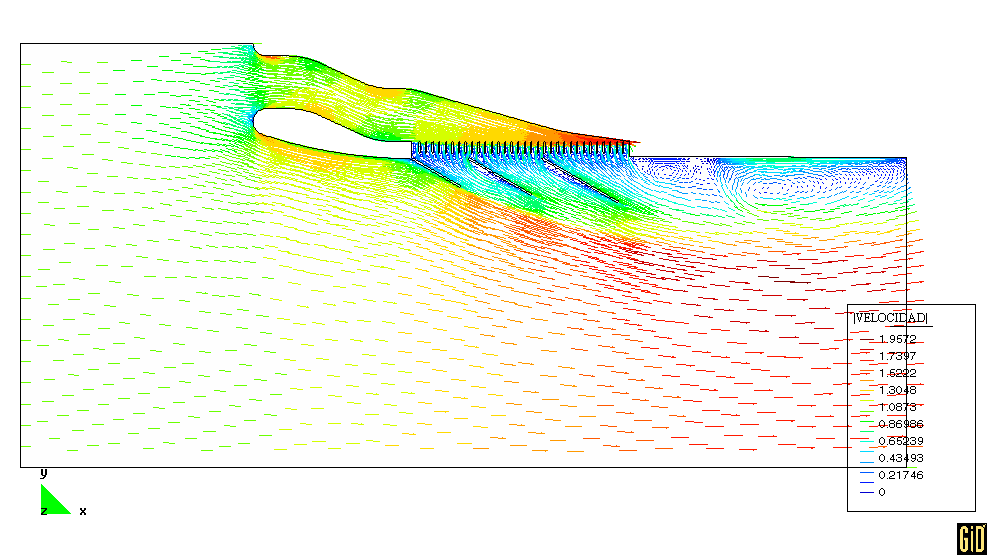
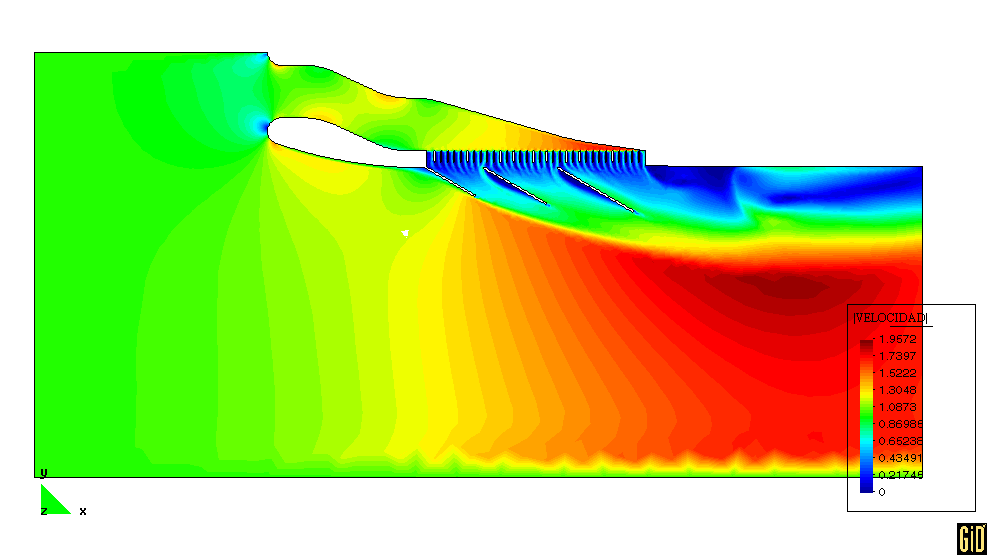
Here are results from using the slip algorithm to help overcome the exagerated boundary layer when
using a high Reynolds number and relatively large element size.  Overall, it seems more realistic
to me.  For example, originaly, the flow seemed very direct from the inlet to the radiator and the
bends in the duct seemed to do nothing for the R6 profile.  These results show the bends are
slightly lower than freestream velocity through the duct but this is a function of how the
boundary layer slip value is chosen.  I chose a rather conservatively large upper bound for
boundary layer thickness (0.20").  A smaller value may be more appropriate.  I don't know.  But I
think overall, you can see how the radiator and exit guide configurations can influence velocity
through the radiator.

Next, I'll run R6 with a 25-33% open area through the radiator and 15 deg of cowl flap and Perry's
configuration.  Would 25-33% open area through an oil cooler seem reasonable?

Dan
Much much more believable Dan. Thanks for rerunning it.

I'll send the second set shortly.

Paul Lamar

The AirCraft Rotary Engine NewsLetter.  Powered by Linux.
ACRE NL web site. http://home.earthlink.net/~rotaryeng/
Copyright 1998-2002 All world wide rights reserved.