Spend a few bucks more Brian and put in teflon. Your
customer will appreciate
it the next time his engine overheats :) Maybe you
can sell those viton rings
to one of your rotary engine building competitors :)

Paul Lamar
"Brian D. Cain" wrote:
I absolutely agree.  Building a high-grade o-ring kit for the 13B has
been a pet project goal of mine for the past several months.  I used the
Hayes Rotary inner water jacket o-rings in my engine for four years
with great success.  I've been sold on them since.
(http://www.teamfc3s.org/forum/members_cars_images.php?img_id=821)
(Fairly large picture; will be difficult to attach in email, Paul; sorry!)
I disassembled this engine because it was exhibiting overheating symptoms
(coolant overflow reservoir filling up and 'overflowing' when engine was
at operating temperature, intermittent water temperature spikes and dips,
etc.)
even though the o-rings were still solid and perfectly intact as you can
see.
Even after hitting water temperatures in excess of 230F degrees on a few
occasions, the o-rings remained in perfectly good shape.  Infact, they
almost
have a taunting look to them as if that wasn't a challenge at all.  :)

Once I get a set of this stuff to replace all of the shortblock o-rings,
I'll
test them out in my own engine, run the snot out of it, and see what
happens.
The ones I'm very interested in permanently replacing are the inner oil
control ring o-rings, both sets of the water jacket o-rings, and those goofy
dime-sized o-rings that rest underneath the factory oil filter stand.  I'm
interested in testing this stuff out thoroughly and then, provided the
results
are good, using these in all of my rebuilds as well as something that can be
sold to a customer looking to beef up the reliability of their engine.  I
think
this is further underscored for the aircraft community that, when having an
engine problem, can't simply just "pull over".

I still have one lingering question though, Paul, about the efficacy of
silicone
for sealing against oil blow-by.  Everything I've read shows that silicone
(unsure of the different 'grades' if there is such a thing) is merely oil
resistant
rather than being proof.  If it's not, and we know teflon is, then that begs
the second question:  how long does the teflon jacketting last under normal
operating conditions?  That's my only one hang-up to using TES for the
oil control o-rings.  If you can answer this, then I'll be sold.
The last set of TES inner water jacket o-rings I purchased were from
McMaster-Carr (http://www.mcmaster.com) -- Part # 9319K239,
$10ea off of the website.
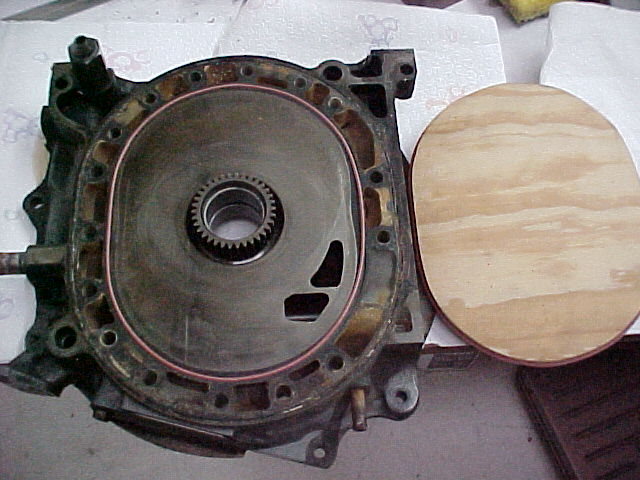
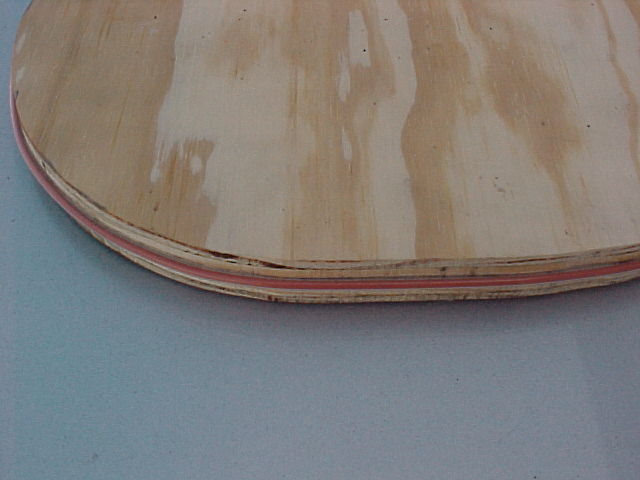
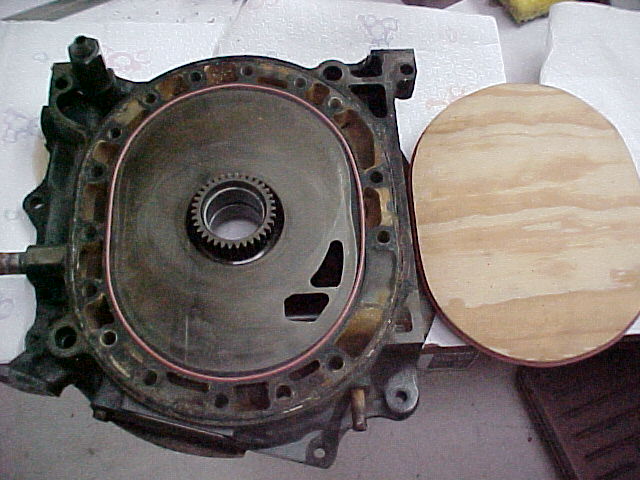
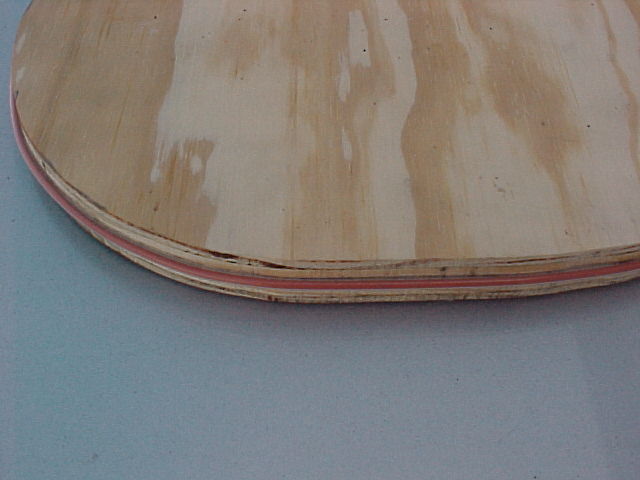
The TES O-rings are stiffer than the stock O-rings. It is harder
to get them to lie in the groove. Even with Vaseline.  When you buy
them they don't come flat. I found that using a plywood
form to pre set the slightly under size TES  O-rings for a few
days  works well. Here is a picture.
That's right.  Sometimes they'll be packaged in a smaller box where the
o-rings
are wrapped around, making them even more difficult to install during
engine assembly day.  I use Hylomar to apply these o-rings as its tackyness
seems
to help hold them in-place.  Placing the o-rings underneath a giant
dictionary the day before (overnight) seems to help, too.  :)
Brian D. Cain
The teflon should protect the silicone  from hydrocarbon attack.

Here are two  picts of the trick I use to make those water O-rings behave.

Chuck Dunlap should have about 20 hours or more on the oil O-rings by now.

Paul Lamar

The AirCraft Rotary Engine NewsLetter.  Powered by Linux.
ACRE NL web site. http://home.earthlink.net/~rotaryeng/
Copyright 1998-2002 All world wide rights reserved.