George, we will use simple gaskets. Or "one" to be exact. We will still
use the
TES o' rings between the rotor housings and the end housings. The end
housing
plates are sealed with Fel-Pro "KARROPAK".
There are only water passages to be sealed, the combustion chambers are
still
sealed with the factory o' rings. The bolts will still use seals like
the factory
does. The water jacket remains the same volume as the factory.
The plates are held together with the tension bolts on the outer
perimeter, and
the rear bearing support, and the front stationary gear bolts secure
them at the
center. There is also four other bolts scattered between these rings of
bolts.
Don't see anyway the housing plates can move, or seperate from heating
and
cooling.
The wear surfaces are "Hard Anodized" to rockwell 55 to 60, the same as
the
factory end housings, and then lapped with optical grade lapping
compound to the
mirror finish neccessary.
Don't understand what you mean about the inlet areas being difficult?

Royce
Royce,
I don't wish to be a knocker mate but I have some suggestions that you may
wish to consider.

Firstly a surface of the side housing wear unevenly and sometimes well below
a surface finish, more so near the spark plugs. However det gun finish would
be very effective here on aluminium. The idea is to get some depth in the
hardened surface.

On the inlet areas - the wall thickness is quite thin here and it may need
you to leave a little more meat in the aluminium wall to get sufficient
surface areas to seal with.

I think I know the stuff your sealing with, it may work and like you say
it's only water here - but one tiny leak !!
George (down under)
Whoops, intended to send this along with the other post.  These claims are echoed
all across the web by many companies and a great deal of them are aerospace
companies hardcoating (hard anodizing) for such compaines as Boeing etc.
Hardcoating is also used on the chamber part of the M-16 military weapon.
A web search for "hard anodizing, or hardcoating" will bring up countless sites.
Royce

http://www.lightmetalscoloring.com/about.html
Hardcoat is extremely tough  and durable. It is used where  abrasion and
corrosion                         resistance, as well as surface  hardness, are
critical factors.
Essentially, hardcoating is a sulfuric acid anodizing  process, with the
electrolyte concentration,
temperature, and electric current parameters altered to produce the hardened
surface.

 After many years of continuous research and process  modifications, our
hardcoated surfaces have
 undergone certified testing and come out with consistently outstanding results.
Wearing qualities
 have actually proven to be superior to those of case  hardened steel or hard
chrome plate.*

Surface hardness has also  proved superior to some steels, registering up to 65
on the Rockwell C scale. Selective and intricate  hardcoating, are a specialty and
we have been  recognized, in the industry, for meeting precise tolerances.

                                     *Courtesy of Aluminum Company of America.
It has been tried over and over again Royce and it does not work.
If it was this simple every engine maker in the world would use it.
You will just waste a lot of your time and money.

Paul Lamar
Paul are you saying that aluminum housings with hard anodized wear surfaces have been
tried on a rotary?
If so who are these companies/people, and how did the housings fail?
What caused the housings to fail?
Royce
I am not sure who said what when. Could be Juergen Bax
in Germany, president of  Wankel Gmbh whom I visited a few years
ago. Could be one of any number of other people I have spoken to
in the last five years. Perhaps Paul Ross at Alturdyne.

As I said the problem is probably related to temp. Aluminum starts loosing
its strength rapidly as the temp rises. You could have a local hot spot
in the end housing around the combustion chamber and once the coating
is breached it does not take long. The bond between the very thin hard
anodize surface and the base aluminum probably breaks down due to compression
fatigue. There is no thickness or plate bending strength in the very thin anodize
coating to distribute the point loads from the end seals. All you
have to do is roll up one microscopic particle of hard anodize and
it will act like a cutting tool.

The bottom line is it is very very expensive to test any kind of coating.
Flight test are out of the question. You are asking for a lot of trouble
and a lot of time and expense. Go with something that is proven.
God knows how much Mazda spent on developing the coatings used in the Lemans
engine with over 100 engineers on staff. Do you have the Mazda Lemans SAE
paper?

The steel inserts in the rotor housings have been used on two million
rotaries.

You are not General Motors :)

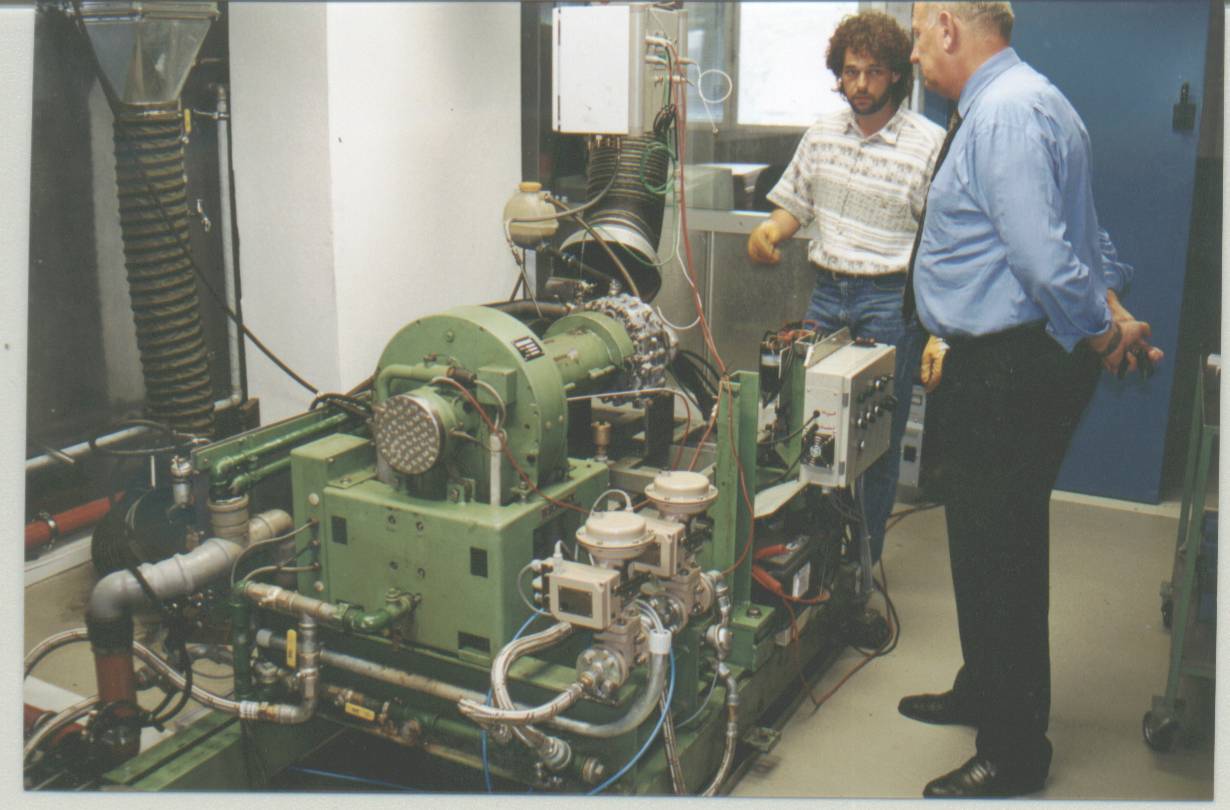
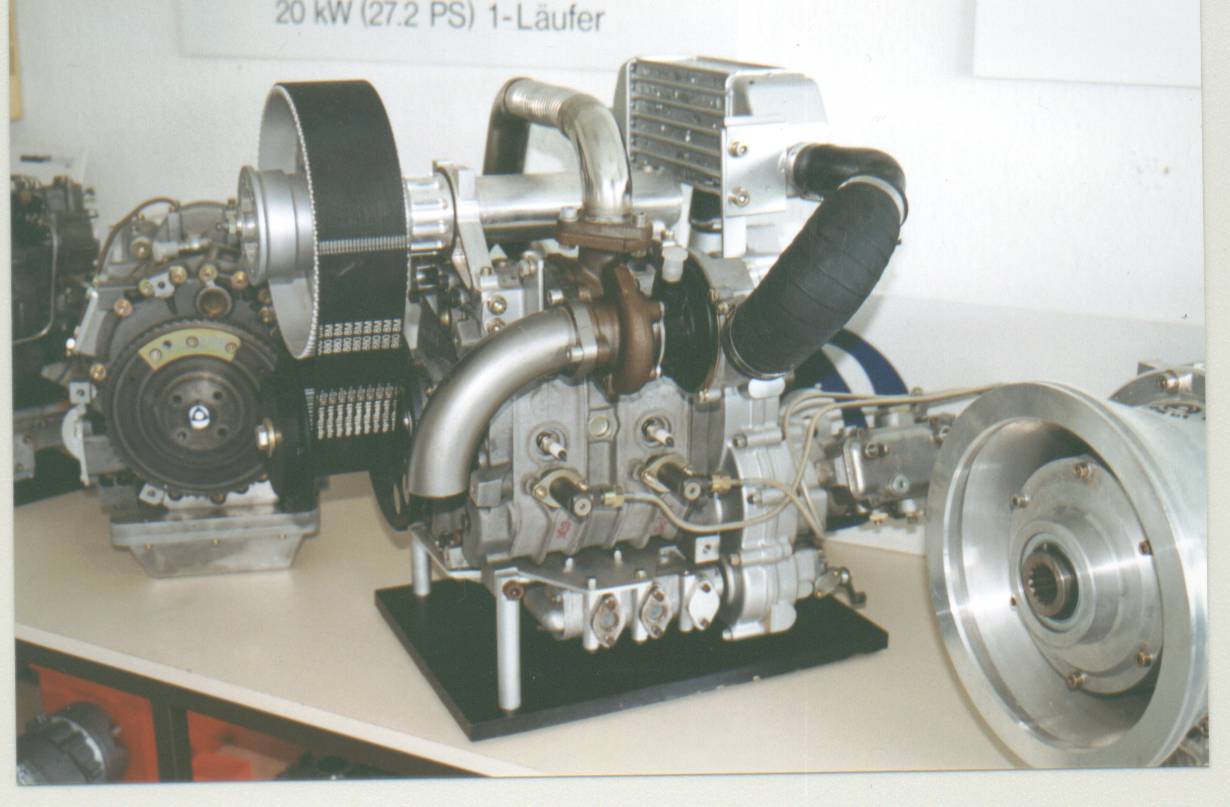
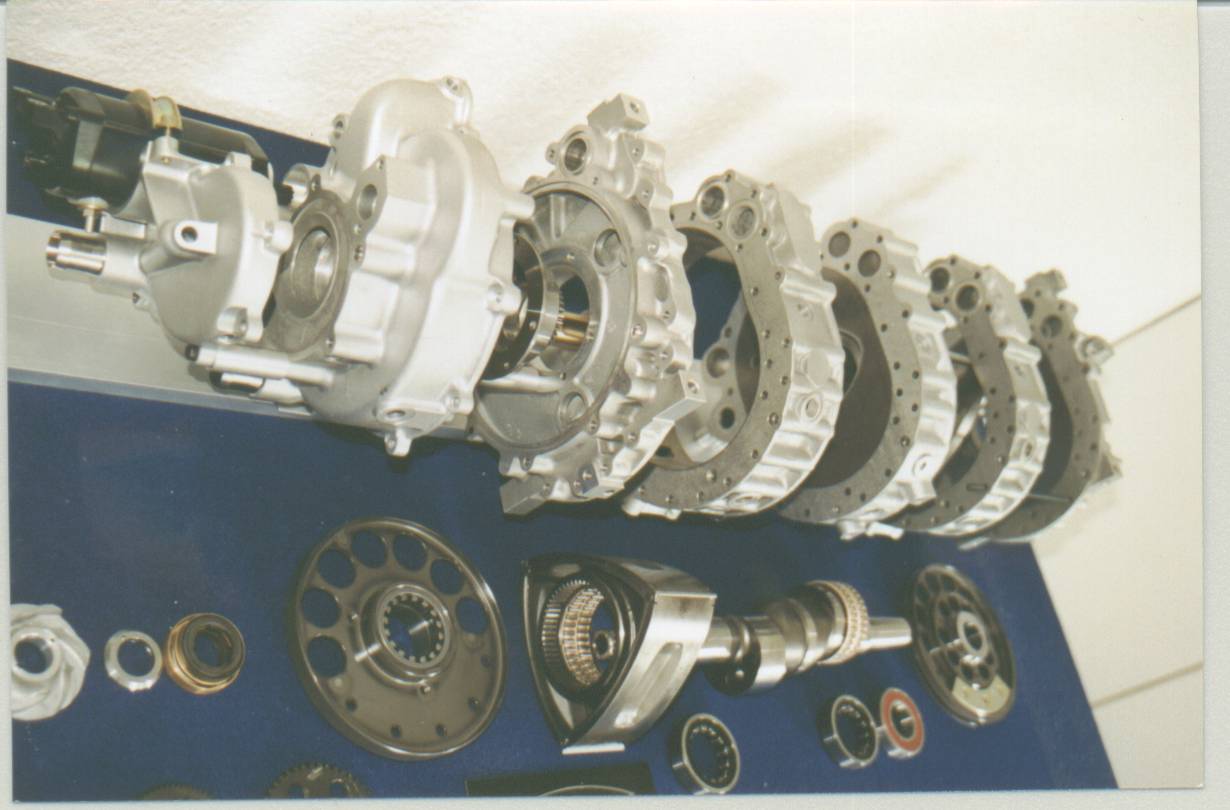
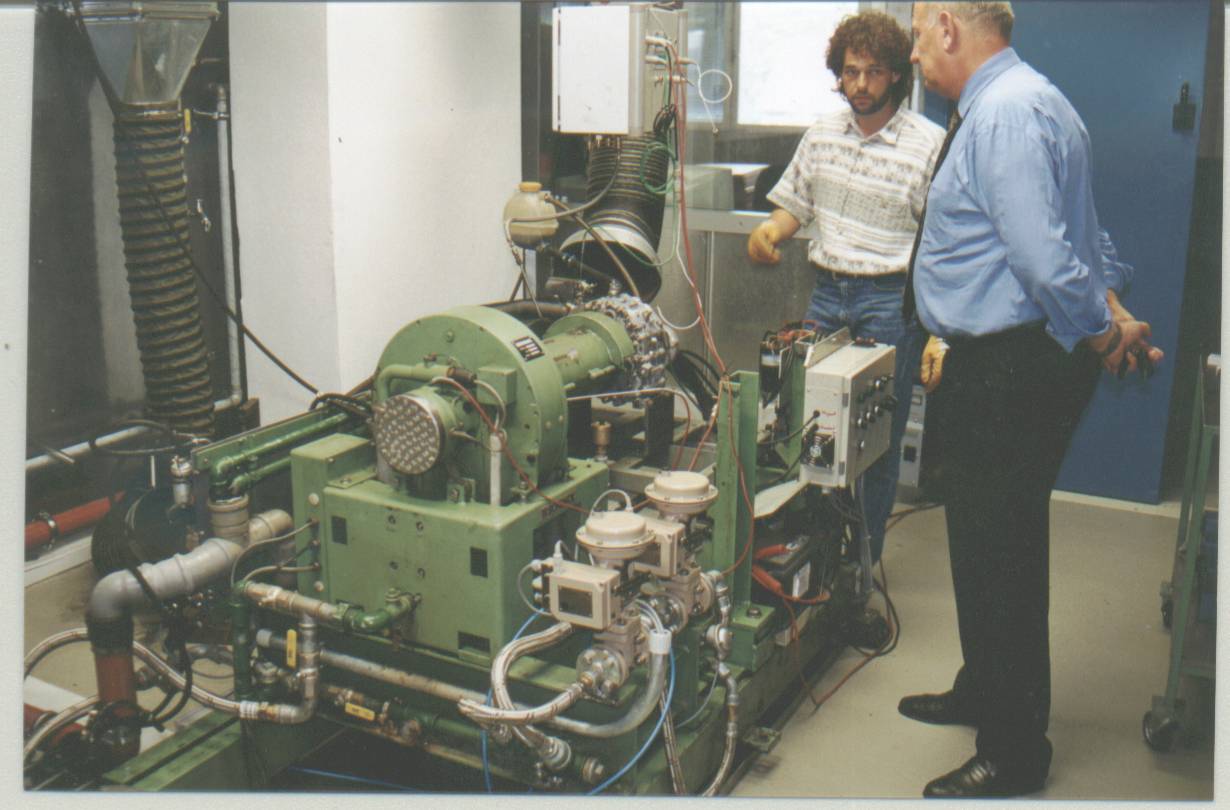
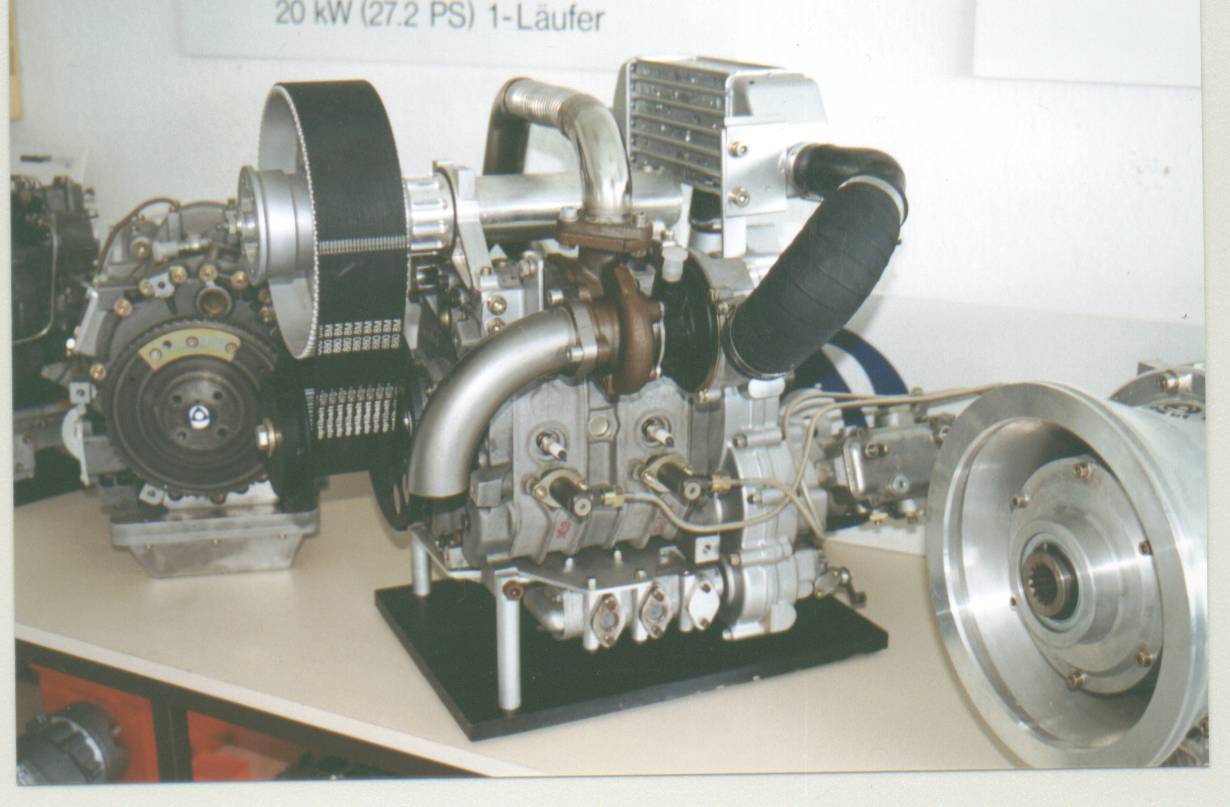
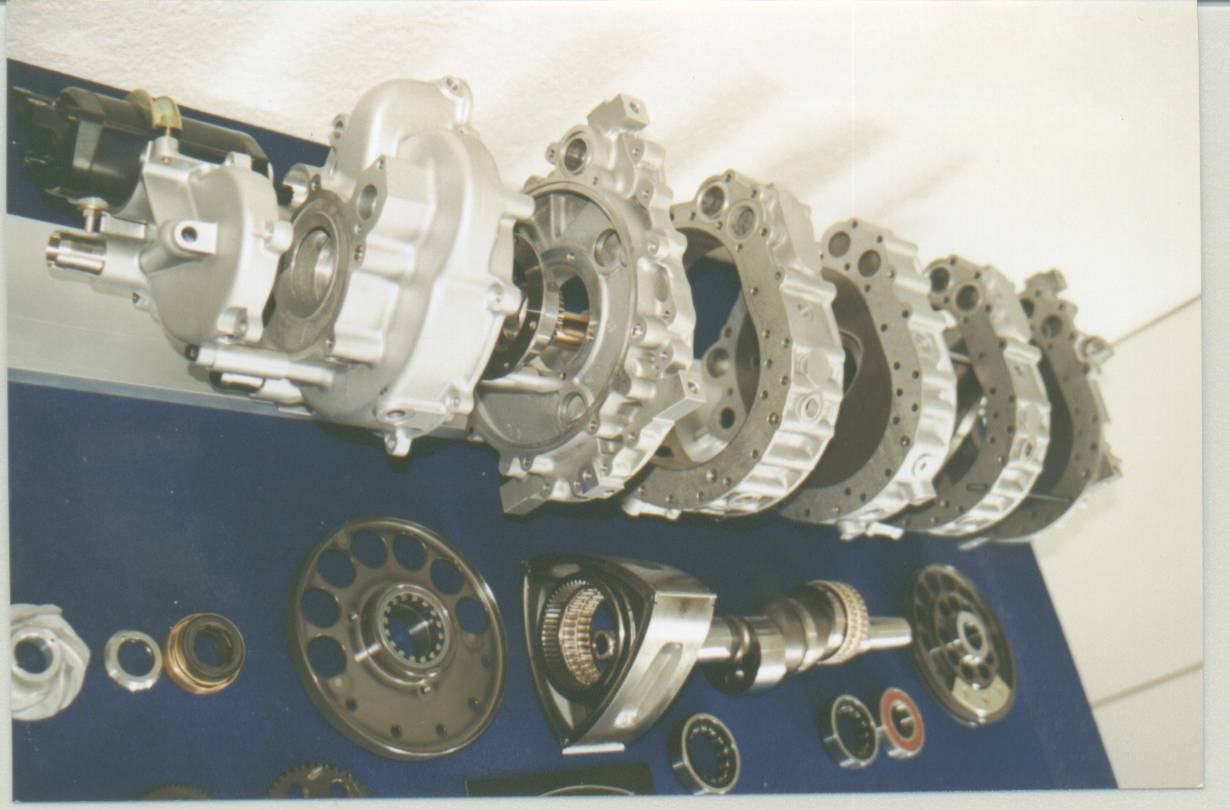
Here are a few photos from my visit to the Wankel factory in 1999.

Paul Lamar

The AirCraft Rotary Engine NewsLetter.  Powered by Linux.
ACRE NL web site. http://home.earthlink.net/~rotaryeng/
Copyright 1998-2003 All world wide rights reserved.