Ian Beadle wrote:

Hi Gang,
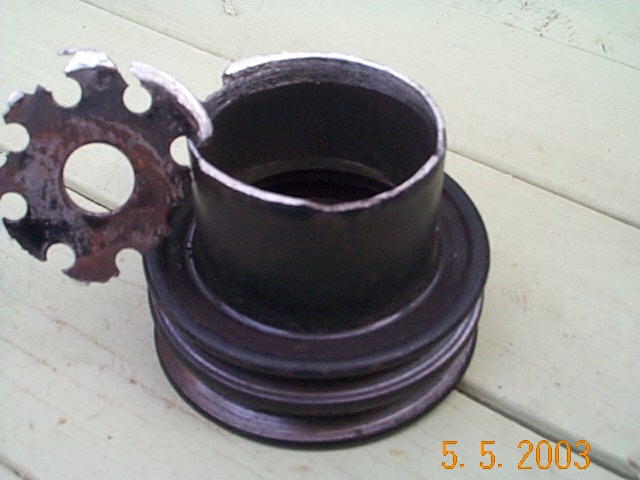
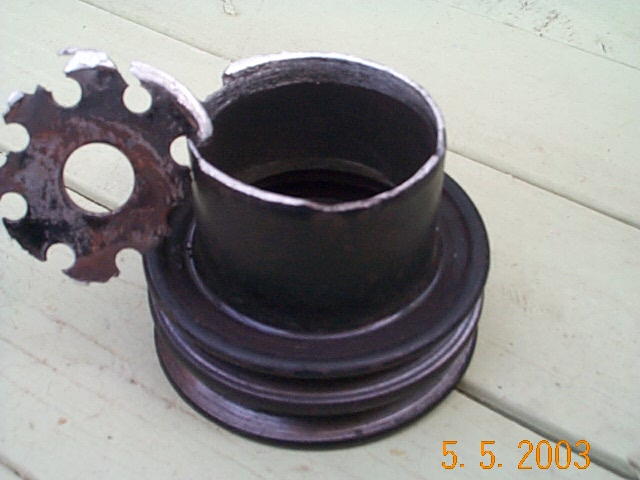
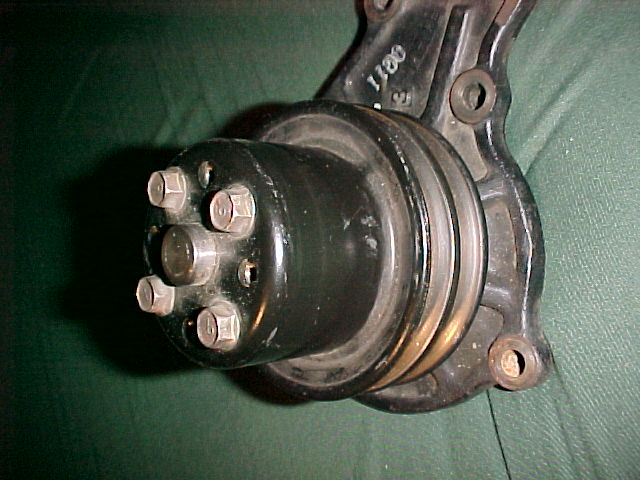
The picture is of my water pump pulley after it failed at 10,000ft. Kinda spoilt my day! I had
been in the air for 3 hours when the gyro tilted and the alternator light came on. When the
coolant temperature started skywards I knew I had a problem. Fortunately I was close to a country
town with an airstrip complete with windsock.
I have no idea why it failed.   The only thing I can think apart from it being damaged in transit
on the engine from Japan is that there are 8 holes in the flange and pulley and I only have 4
bolts.  Any ideas?

Ian RV6A Australia
A. Well first it is mild steel by definition because it is so deeply formed.
Mild steel has a very poor fatigue life compared to 4130. The fatigue
stress level for long life on mild steel is 15,000 psi. For heat treated
4130 steel it is about 65,000 psi. That is strike one.

B. The area of the 90 degree bend is thinner because of the deep drawing
manufacturing process which is the high stress area. Strike two.

C. Any nicks or flaws in this area would cause the fatigue
crack to start near the nick or flaw.

D. The pulley is in severe cyclical bending
due to belt tension and V groove offset from the end of the shaft
which is aggravated by continuos use at high RPM. A classic
case for fatigue  failure. Strike three. Only four bolts
out of the eight does not help.

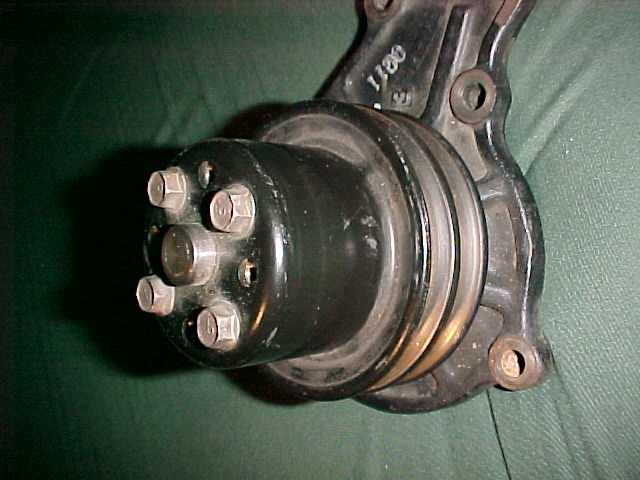
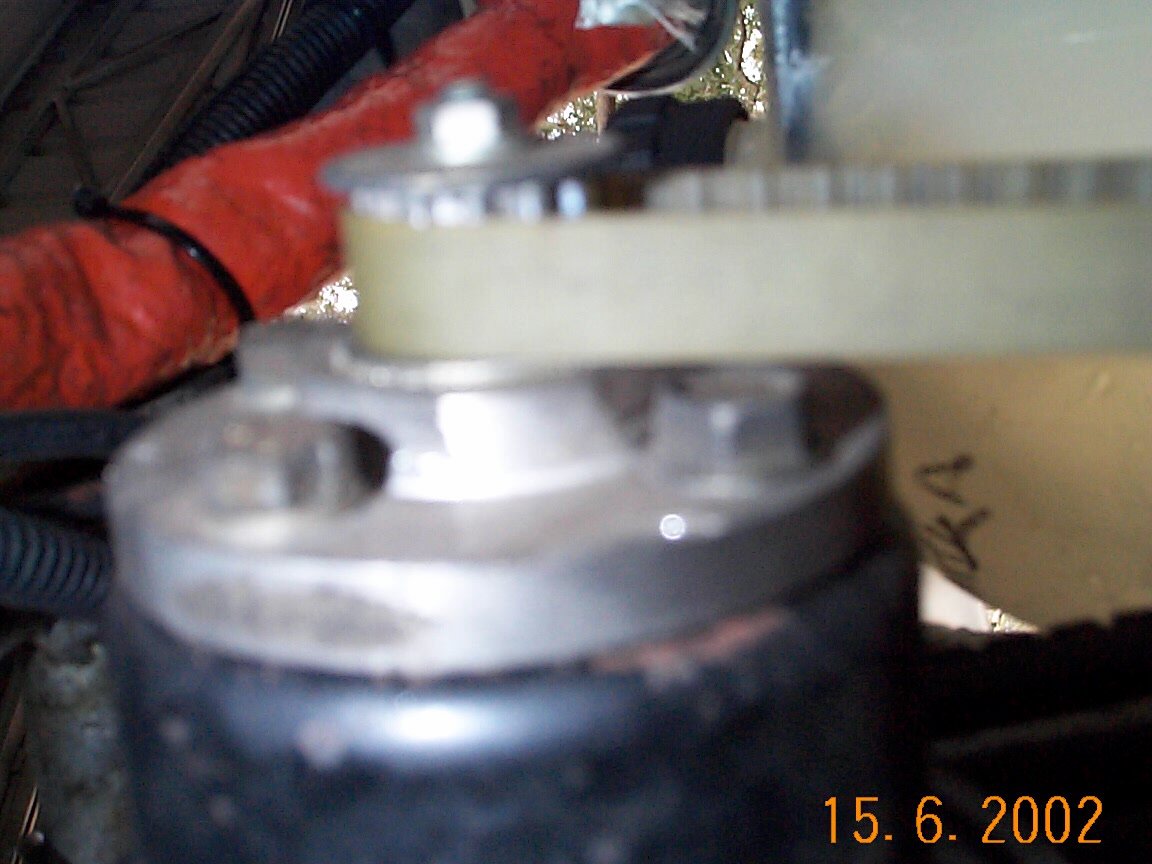
I added a picture of my own to show people what it looked like before
the failure.

The only solution I see is for everybody flying to take their water pump
pulley off and have it magnafluxed right away for cracks. Also make
sure you do not have too much belt tension.

The possible permanent fix would be a 2024 T6 or 6061 T6 thick aluminum billet
pulley at least 1/4 inch thick everywhere. Even that might be subject
to eventual fatigue because of this less than ideal design configuration.
Aluminum fatigue characteristics are not all that great.

Perhaps a heat treated  4130 steel billet pulley would be the ultimate answer.
That would not be cheap to machine. A partial, close fitting, 4130
steel billet cap would also help and would be cheaper than
a complete 4130 steel pulley. A large 4130 washer with eight holes in
it would also help but not as much as a cap.

Moving the V grooves out closer to the end of the shaft would
help this situation but hurt the the shaft outer bearing life.
That would mean changing the pulley on the e-shaft and relocating the
alternator or  relocating the water pump similar to what
Don Dunbar is advocating.

Paul Lamar

The AirCraft Rotary Engine NewsLetter.  Powered by Linux.
ACRE NL web site. http://home.earthlink.net/~rotaryeng/
Copyright 1998-2003 All world wide rights reserved.