I can see using a tuner as a way of tuning once you are in cruise
mode, but
even so, once in cruise do you really care how much HP you can draw
out of
your engine unless you are in a race and willing to burn an extra
2.5gph for
10 MPH? Will tuning the intake increase your BSFC to make it
beneficial in
cruise?
Dan, There are obviously some compromises made in most intakes. Just
getting things to fit is one
problem. There are some constants though. Max power and max rpm are going
to be the same. (we have
no need to rev past the higest power in a plane) The method to make the
variable system work is to
tune the shortest length to max power. Your bush tune is to pull the
length short, go rich for
power, flat pitch and punch it! All the tuning could be done in cruise
when you are less
preoccupied. When at really high altitude you might not be able to get max
rpm for takeoff but I
would then do a full power run-up anyway to set mixture. You could then
try the intake to increase
rpm if possible. You would always test before moving down the runway. Bill
 Jepson

I forgot to answer the BSFC question. Yes there is a close correlation
with volumetric efficiency and BSFC. It so happens that there is
also a close correlation with vol. eff. and the torque peaks.
Tuned runners are all about volumetric efficiency.

Note the almost precise tracking of the torque and BSFC on this
Lemans 4 rotor engine with variable length intakes. Torque down BSFC up.

Paul Lamar
Dan Ruggirello wrote:
You guys make a compelling argument for the variable tuning system. But, for
me it all hinges on an increase is BSFC, or I don't see the need to tune
for cruise.

>From the chart Paul posted, I can see the BSFC inverse relationship to
torque within a tuned
system but I cannot make the leap to say that BSFC decreases when going from
a non-tuned system to a tuned system only because torque and volumetric
efficiency increases from one system to the other.   Turbo charging boosts
your volumetric efficiency and torque but does it decrease BSFC?

I do know for a theoretical Otto fuel-air cycle, you can increase thermal
efficiency by increasing compression ratio and/or the air-fuel ratio.  And
realistically, by minimizing heat losses and leakage and increasing
combustion efficiency.  So the question is-does volumetric efficiency do any
of the above?  I can't see which ones.......can you?

My guess as to why the BSFC varies inversely with torque for the tuned
Lemans system is better combustion efficiency not necessarily because of
volumetric efficiency.  Do you have a BSFC vs torque for a non-tuned rotary?

Dan
Everything is; All other factors being equal.
Turbo chargers complicate the picture so lets talk
about NA.

BSFC is a function of those that you  mentioned and also these.

A.Engine friction. Goes up with RPM.

B.Volumetric efficiency.

The only ones we have control over are VE and engine friction/RPM.

BSFC gets better at lower RPMs when variable pitch
props are used. At less than WOT altitudes if you increase
the pitch and open the throttle you can go  the same speed with the
same HP with less fuel burn. Opening the throttle increases the torque
and improves the volumetric efficiency. Any time the throttle
is partial closed the volumetric efficiency is less than what
it could be.

I have plenty of dyno curves and curves out of aircraft engine
manuals to prove this contention but they are not all scanned in :)

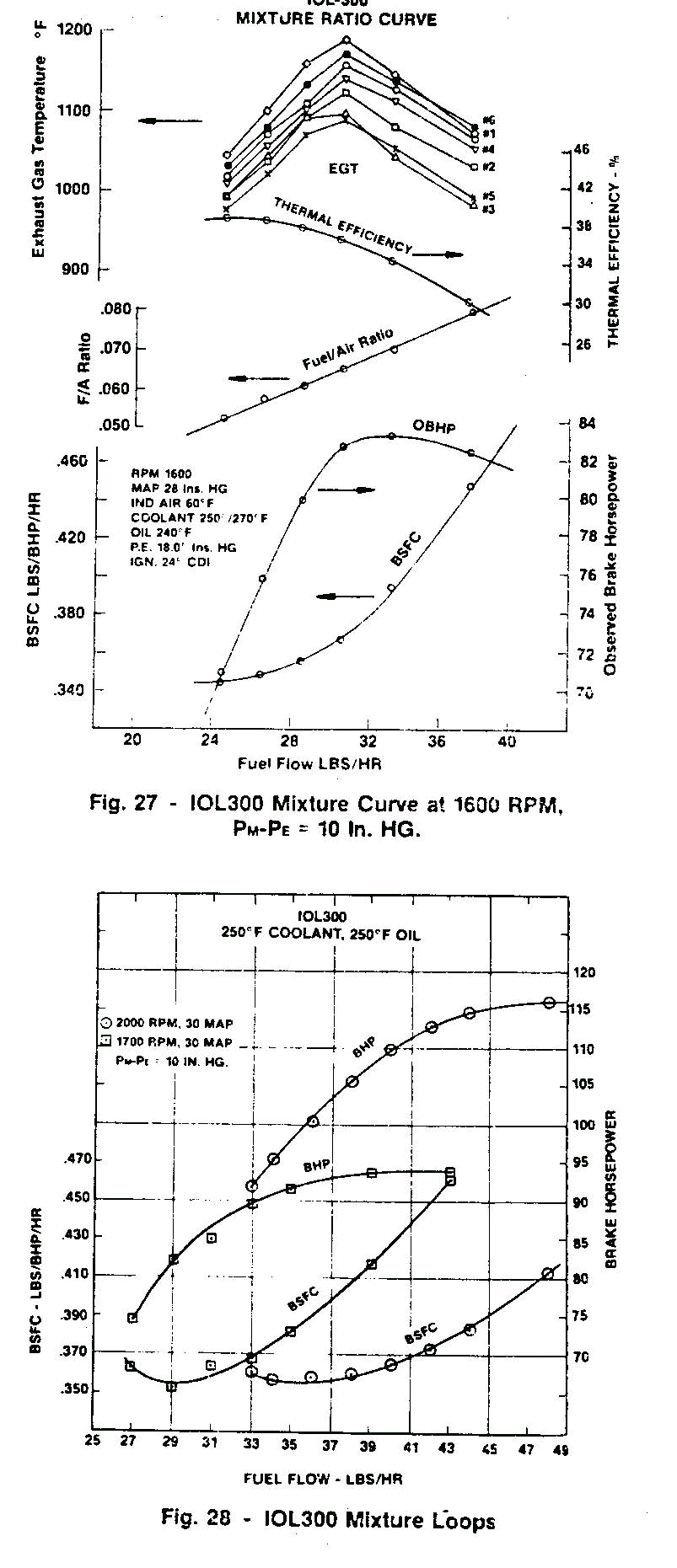
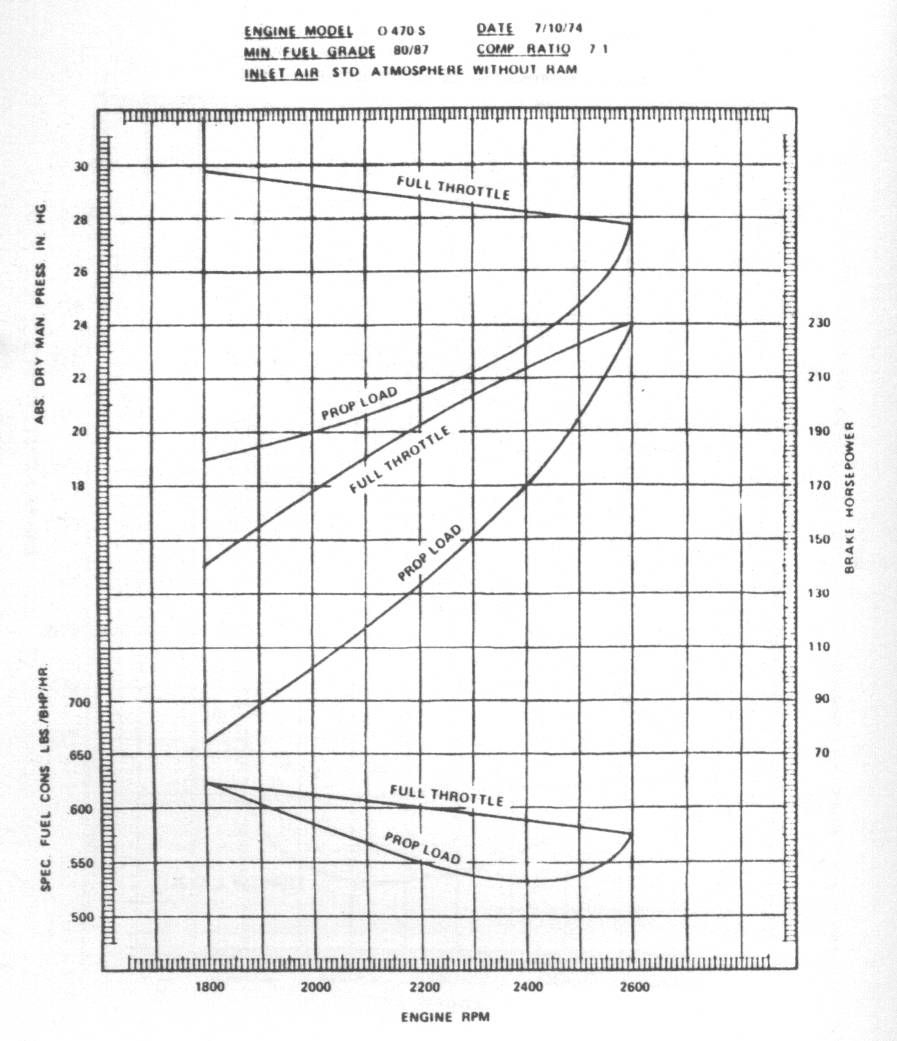
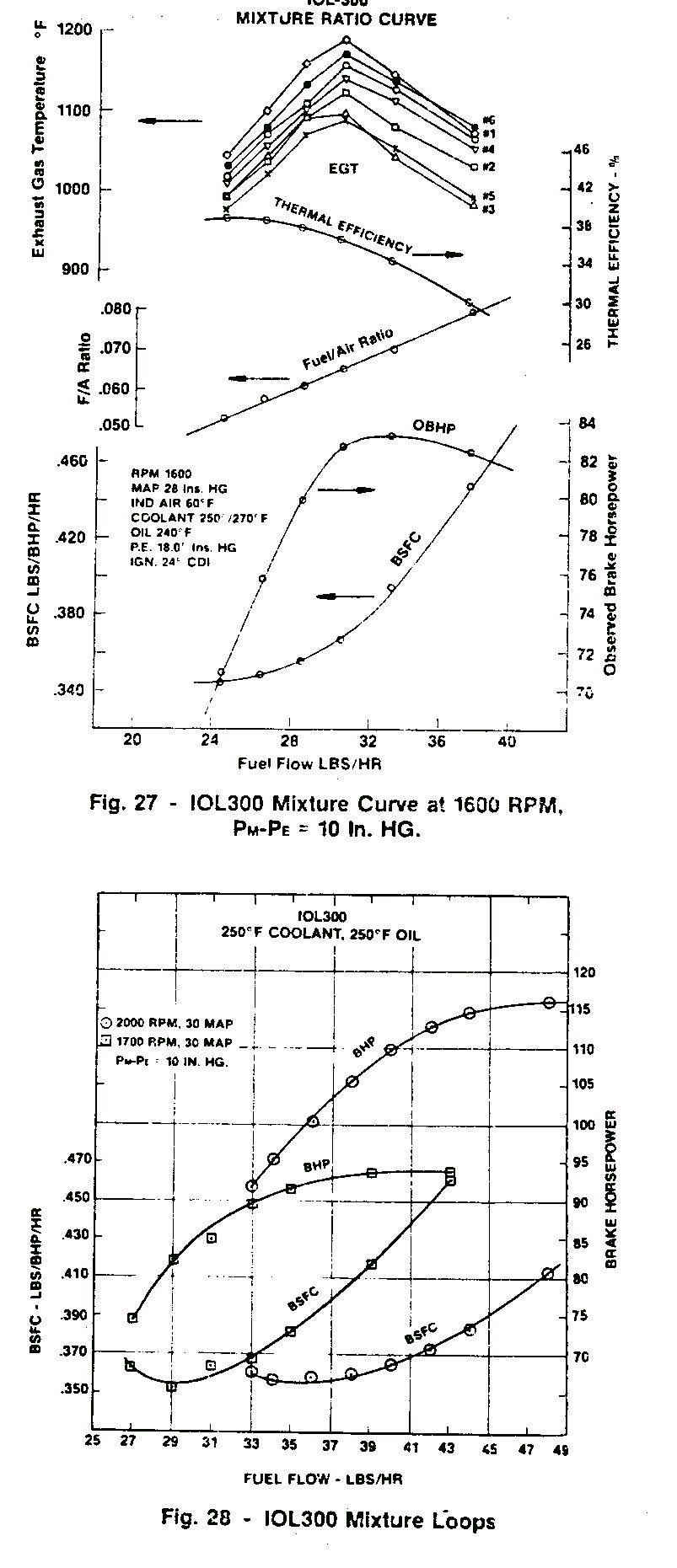
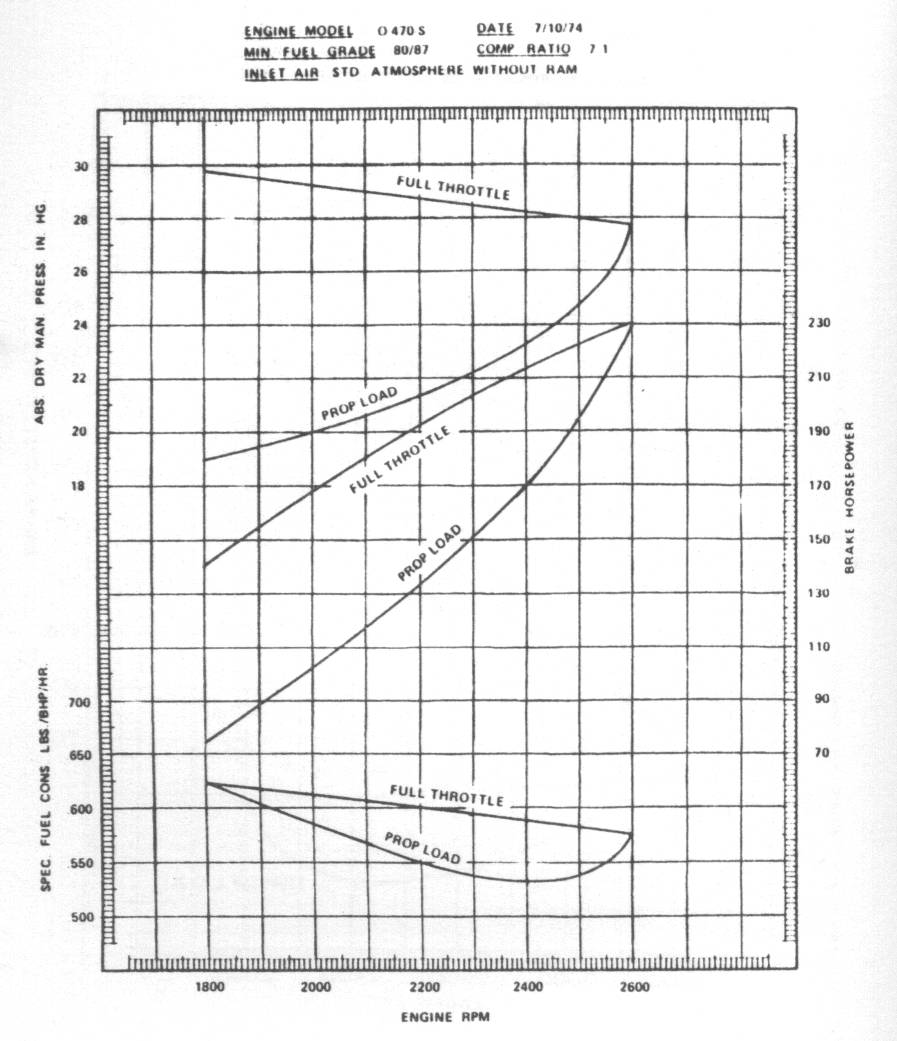
Here is one for the Continental Voyager engine. No torque
curve but that can be calculated from the HP curve. Notice
the HP curves are not a straight lines so torque is dropping
off with RPM. So too is VE.

* SAE Paper # 871042    $12.50 Design and
Development of the Voyager 200/300 Liquid Cooled Aircraft Engine by
R.E. Wilkinson. Twenty pages. Published in 1987. This paper is about
the engine used in the Rutan Voyager around-the-world un-refueled
record holder.  It is by far the most informative
and up to date information on liquid cooled engines there is.

Here is a partial list of engine design books I think
you would find interesting.

*The Internal Combustion Engine in Theory and Practice.

Volume 1: Thermodynamics, Fluid Flow, Performance. Second Edition
Revised.

Volume 2: Combustion, Fuels, Materials, Design. Revised. Charles
Fayette Taylor. The MIT Press Cambridge Massachusetts, and London
England.

*Advanced engine technology by Heinz Heisler. Published by
the SAE in 1995. An up to date treatment of the latest technology
as applied to the piston engine. Be careful there are a few
mis labeled illustrations here and there.

Paul Lamar

The AirCraft Rotary Engine NewsLetter.  Powered by Linux.
ACRE NL web site. http://home.earthlink.net/~rotaryeng/
Copyright 1998-2003 All world wide rights reserved.