Perhaps he overstated the case but you must admit with the conventional
thermostat closed there is no circulation in the block and you could still have
cold and hot spots.
Paul, I believe this statement is in error. With the thermostat closed
in most systems there is still flow through the block, but not the radiator.
While not a rotary problem, some of the reverse flow systems are
designed to lower the across the block delta t. As you have mentioned
the cooling passages in the rotary allow some manipulation to even
rotor housing temps. Bill Jepson
There is a little bit of flow yes. Most conventional thermostats
have tiny holes. Assume for the moment there is no hole.
How (other than convection currents) would water circulate around
inside the block?

This is not the case in the Rotary however as the thermostat
opens a bypass passages so the water pump always circulate water in
the block when the thermostat is "closed". BTW I noticed
that there is no wire spring in the rotaries lower hose.

The big problem with most automotive cooling systems,
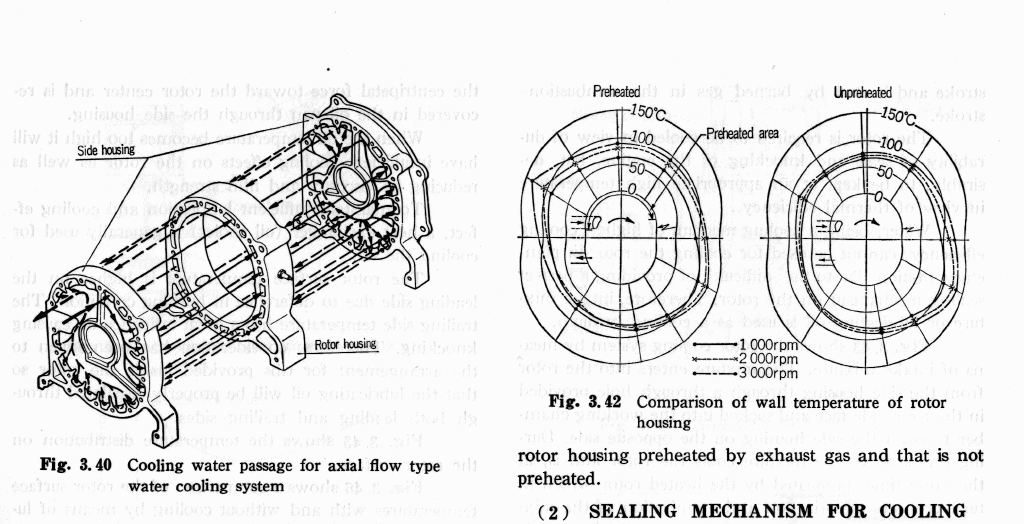
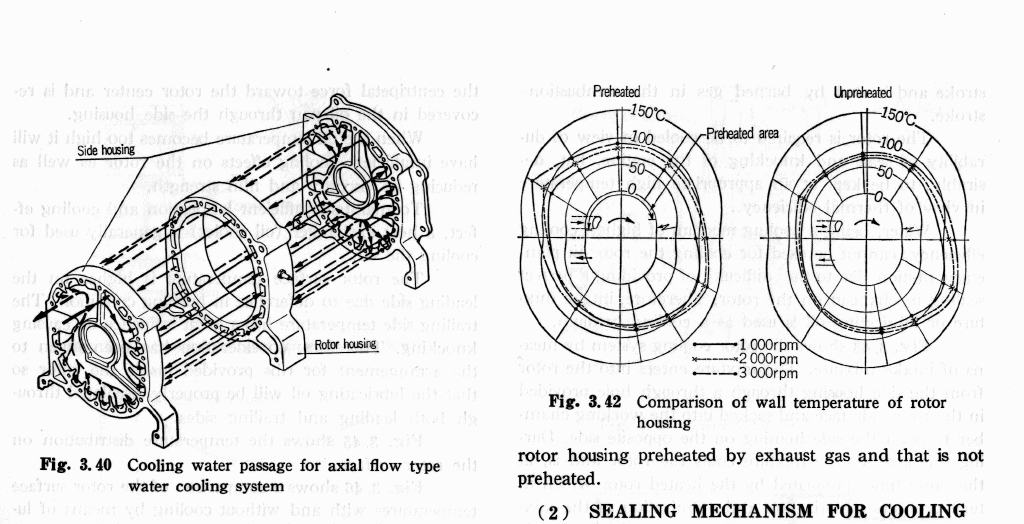
and this applies to the rotary as well, is that they are serial. Water goes in
one end and comes out the other. It is called axial flow by Mazda.
This is why the 13B rear rotor runs hotter than the front rotor.

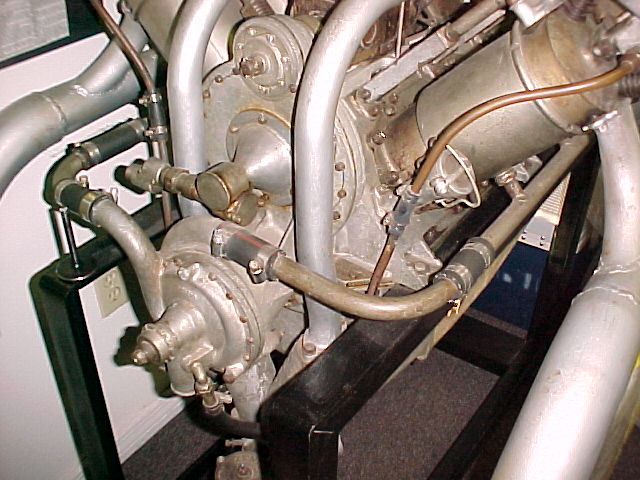
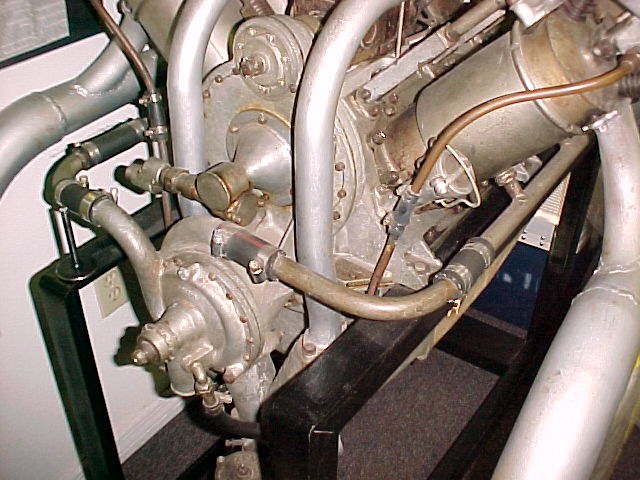
Heavy duty liquid cooled aircraft and truck engines are parallel.
Cold water goes to all cylinders simultaneously through a distribution manifold.
Here is a real old OX5 example. The Chevy big block was modified by Orenda
to have parallel cooling with cast in manifolds on either side of
the block. Continental also uses parallel cooling on their liquid
cooled aircraft engines.

Paul Lamar

The AirCraft Rotary Engine NewsLetter.  Powered by Linux.
ACRE NL web site. http://home.earthlink.net/~rotaryeng/
Copyright 1998-2003 All world wide rights reserved.