Al Gietzen wrote:
Just kicking this around - What exactly to we want our coolant
pressure
sender to tell us?

I have a system with a fill tube connected on the inlet side of the
pump
where I'm putting a 24# cap. The over flow goes from there to a 1
1/2
qt bottle with a 15# cap, which also has a level sensor that tells
me
when the bottle is empty. Any overflow from that cap goes
overboard.
The idea here is to always have positive pressure on the inlet side
of
the pump.

I was going to put the pressure sender on the outlet side of the
pump,
which gives me a pretty good idea of the pressure in the block (but
what
good is that?), and if that pressure went to zero it would tell me I
had
a catastrophic loss of coolant.

A racing friend thought maybe better to know the pump inlet
pressure,
thinking if that went to zero I could know I lost coolant, or a
pressure
cap (or both) failed, or it would just tell me if I should worry
about
pump cavitation.

Or maybe the place you want to know the pressure is in the block,
like
at the heater hose outlet.

Or maybe it doesn't matter; if all it's going to tell you is whether
you
had loss of coolant. And there will likely be other things that
will
tell that rather quickly as well.  Maybe we don't need a pressure
sender.

Comments?

Al Gietzen
I would like to see three pressure measurements. Out of the pump. Out
of
the
block and in to the pump. It is handy to pre flight the systems for
leaks
when the engine is cold by pumping up the system to about 30 psi and
watching
the pressure gauges. This works for external as well as internal
leaks.
Paul Lamar
Peter Cowan/Lexy Cameron wrote:
Hello Paul.
Your point is good about checking for leaks but one sender anywhere will
do
that. What are your reasons  and uses for two other senders?
Peter
Well we would like to correlate the pressure drops with our water pump
testing
to determine the degree of restriction in the block and radiators. Vance
is building a
3 HP water pump dyno and along with my test and his test we should be able
to get
some sort of overall mathematical handle on the cooling system. There are
so many variables that it is hard to sort it all out. Ed Anderson is
working
on measuring the temp of the cooling fluid as it goes into and out of the
engine
and/or as it comes out of the radiators.

Paul Lamar
Fair enough but isn't what you are describing a one time upfront analysis
rather than an ongoing operational need?
Peter
Yes but you might be able to tell if the rad is clogging up :)
It is cheap to do. Pressure gages in this range are under $10 each.
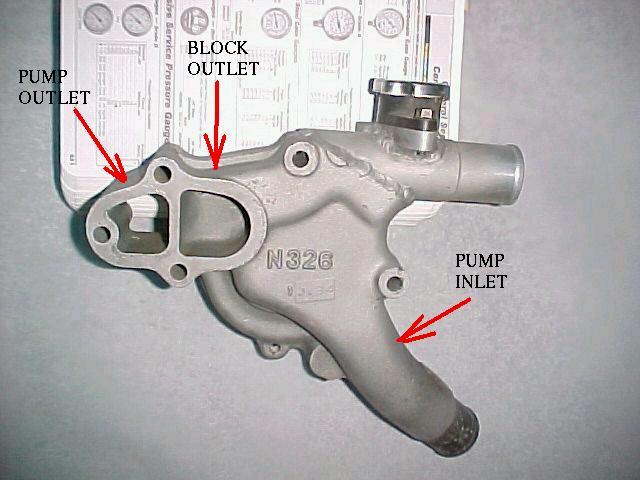
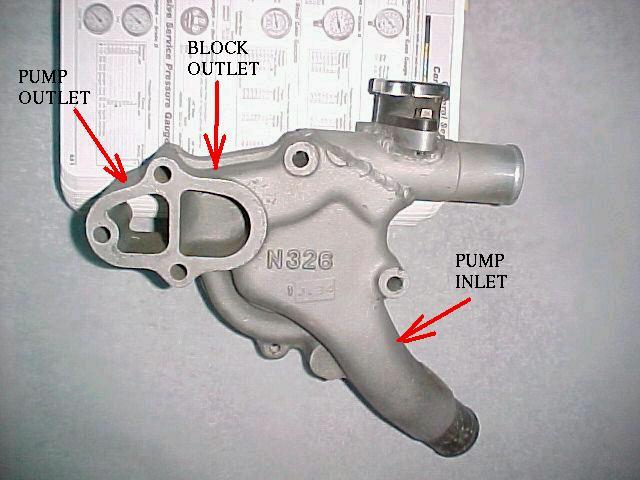
You can get all the pressure taps from the water pump alone.

Paul Lamar

The AirCraft Rotary Engine NewsLetter.  Powered by Linux.
ACRE NL web site. http://home.earthlink.net/~rotaryeng/
Copyright 1998-2003 All world wide rights reserved.