It has been shown on the canards (certainly on the Velocity) that
there
is good pressure recovery on the fuselage as you get back to about
the
cowling cut line. Even NACA scoops at that location are effective,
so
I
would guess that those scoops on your Speed Queen would work well.
Velocitys are cooling IO540s with two NACA scoops at the top of the
going in at the cowling cut.

Al
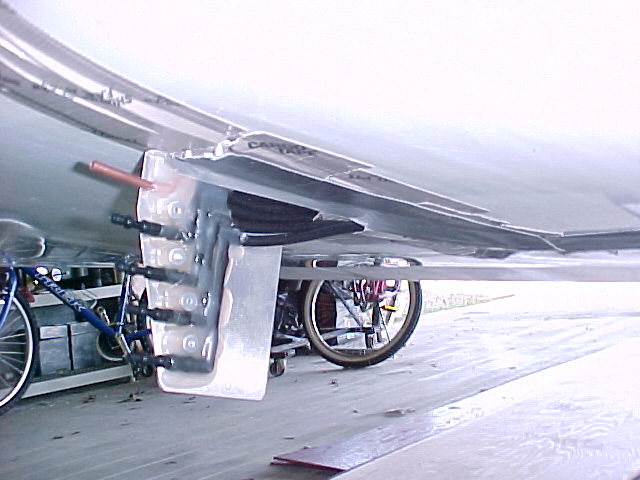
I talked to a guy at OSH and he differs with that conclusion.
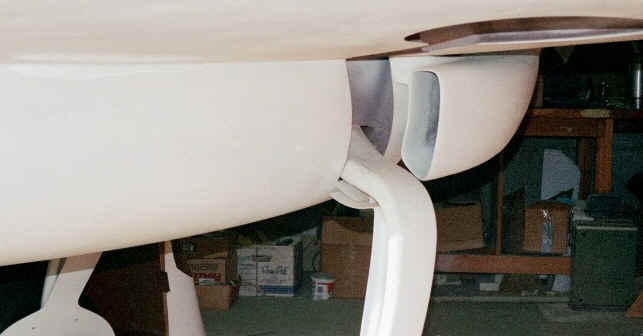
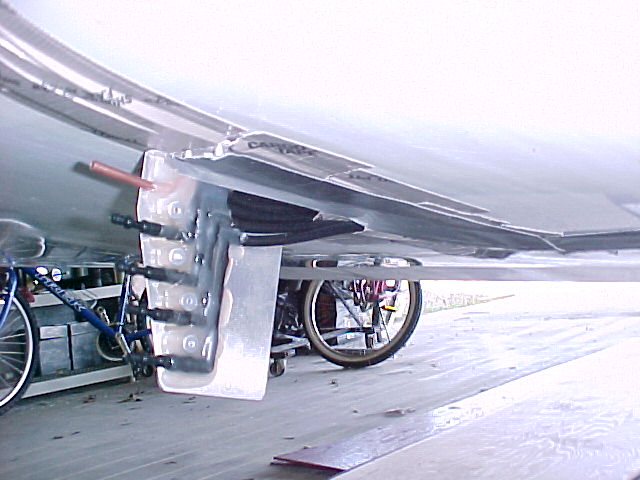
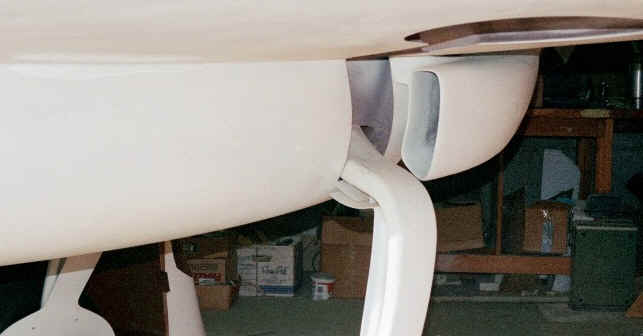
In fact he added arm pit scoops. Here are some pictures.

I want to reiterate on here for the umpteenth time that the inventors
of the NACA scoops do not recommend them for cooling heat exchangers.
The pressure drop through an air cooled engine is far less than
the pressure drop through a heat exchanger. You have been on here for
long while Al, you have seen the scanned in quotes from the original
NACA
papers and I can't understand why you don't accept that.
Al wrote:
Au contrar; I do accept that.  What we are talking about here is the
SQ
scoops, which are external scoops.
Al
Paul wrote:
The IO 540 installation you speak of has two thrust augmentors
and a boundary layer bleeds  for the poorly placed NACA scoops.
The thrust augmentors improve the situation by providing a bit of
suction. I will upload those picture in a moment.
Paul Lamar
The scoops you refer to there are also not of what we speak; I have no
idea about that configuration.  The stock  cooling scoops now
used, and are flying on a number of Velocitys (air cooled IO360s and
IO
540s) are NACA scoops which begin in the top of the fuselage ahead of
the cowling, with the entrance at the cowling cut line. No augmenters
involved.  The only photo I could find is attached.  If you went by
the
Velocity booth I imagine you saw them on their airplane, or if you
check
the parts list of what is included in the kit you will find "2 NACA
inlet scoops for engine cooling"

Al
So what? It is not a liquid cooled engine!!!! If Velocity wants to
violate the
application rules of NACA ducts that is up to them. I would just like
to help people design a rotary engine liquid cooling system that works.
Way too often people find that the cooling system they designed for
the rotary engine does not work well under all conditions.  Tom Parkes
is the most recent victim.

Paul Lamar
Paul;
Our goal is the same.  I have no interest in just making controversy.
Velocity made the change from armpit scoops under the strakes to the
NACA scoops on top of the fuselage because they worked better.  There
are other cases of EZ's that found what I might call a quasi--NACA scoop
on top worked better than the prior armpit scoops.  Analysis of the
pressure distribution on a fuselage typical of the canards show
relatively high pressure; about the same as on the bottom, when you get
that far back on the fuselage.  And because the pressure is increasing,
the boundary layer is being squeezed out, flowing at an angle down the
sides of the fuselage.

So; in the case under discussion, the SQ, it is reasonable to believe
the external scoops on top, which are already there,  would work, and
may work better than armpit scoops.  Maybe not better than a P-51 style
scoop underneath, that we don't know.

My personal opinion is that the reason the Velocity armpit scoops didn't
work as well was because of a poorly designed scoop, not because of the
placement.  I chose to put a p-51 style scoop under the strake (armpit).
I don't know yet whether it will work well.

Al
I find it really hard to believe that the pressure is increasing
on the top of the Velocity cabin. In fact I am willing to bet lots
of money it is not. If one does not have experience measuring pressures
it is easy to make a mistake. I would like to see pictures of just how
the pressure was measured up there. Did they use porous foam for example?
It would be real easy to use an air velocity rake to determine the thickness
of the boundary layer and porous foam static pressure taps if someone has
a flying Cozy or Velocity.

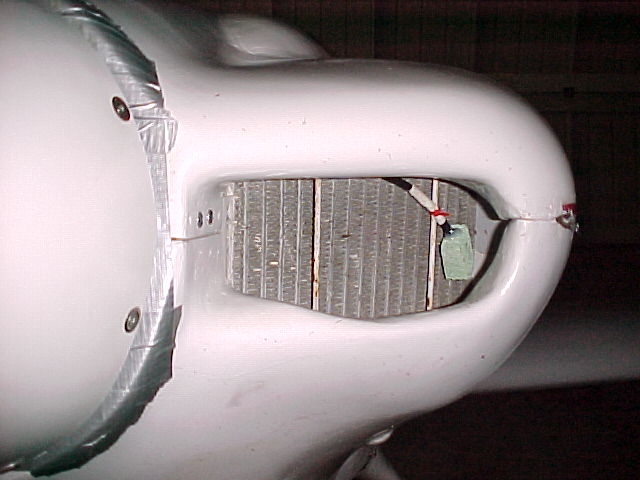
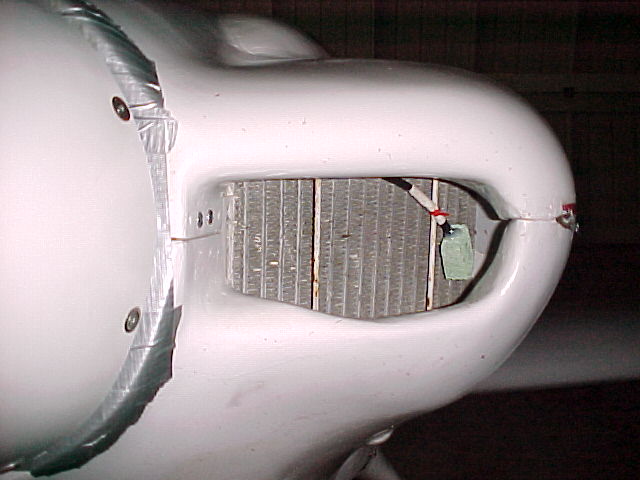
Pictures: Velocity rake on Tracy airplane wing and static pressure tap using porus
foam  in left cowl opening.

Paul Lamar

The AirCraft Rotary Engine NewsLetter.  Powered by Linux.
ACRE NL web site. http://home.earthlink.net/~rotaryeng/
Copyright 1998-2003 All world wide rights reserved.